


-(1).jpeg)

NBA mock draft 2026: Point guard soars up first-round projection


The 2026 NBA Draft was always destined to trigger a massive tanking race. This class clearly had three potential No. 1 overall picks from the very start the process, and all three are living up to the hype to start their one-and-done college seasons. The depth of this freshmen class has also impressed, with North Carolina forward Caleb Wilson dominating on both ends with his high-motor, breakneck style, and Houston point guard Kingston Flemings emerging as a legit top-5 pick in his own right as the biggest surprise of the year so far. He would have even gone No. 4 in this mock draft before the Wizards made the Trae Young trade with the Hawks.
It isn’t just freshmen that makes this draft class special. A group of upperclassmen led by Michigan’s Yaxel Lendeborg, Iowa State’s Joshua Jefferson, Iowa’s Bennett Stirtz, and Florida’s Thomas Haugh are proving that staying in college for a few years won’t kill your draft stock in the NIL era.
This is our fourth 2026 NBA mock draft. Check out our initial board in June, our comprehensive first in-season mock in Nov., and our Dec. update. Here’s our latest projection of the first-round of the 2026 NBA Draft, followed by analysis on the draft’s biggest themes after the table.
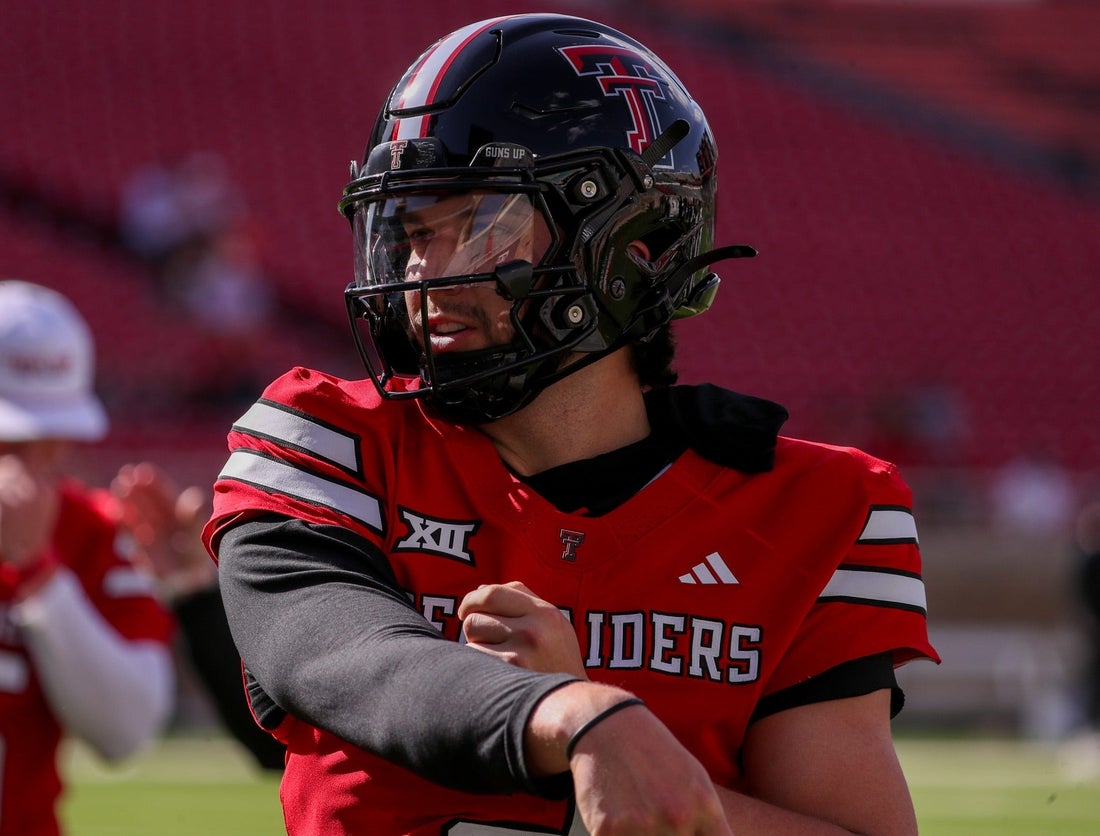
Pick Team Player Position School Age 1 Indiana Pacers Cameron Boozer Forward Duke Freshman 2 Atlanta Hawks Darryn Peterson Guard Kansas Freshman 3 Sacramento Kings AJ Dybantsa Wing BYU Freshman 4 Washington Wizards Caleb Wilson Forward North Carolina Freshman 5 Brooklyn Nets Kingston Flemings Guard Houston Freshman 6 Charlotte Hornets Jayden Quaintance Center/Forward Kentucky Sophomore 7 Utah Jazz Koa Peat Forward Arizona Freshman 8 Oklahoma City Thunder Hannes Steinbach Forward/Center Washington Freshman 9 Dallas Mavericks Mikel Brown Jr. Guard Louisville Freshman 10 Memphis Grizzlies Joshua Jefferson Forward Iowa State Senior 11 Milwaukee Bucks Yaxel Lendeborg Forward Michigan Senior 12 Portland Trail Blazers Labaron Philon Guard Alabama Sophomore 13 San Antonio Spurs Braylon Mullins Guard UConn Freshman 14 Chicago Bulls Patrick Ngongba II Center Duke Sophomore 15 Golden State Warriors Thomas Haugh Forward Florida Junior 16 Atlanta Hawks Keaton Wagler Wing Illinois Freshman 17 Memphis Grizzlies Tyler Tanner Guard Vanderbilt Sophomore 18 Miami Heat Nate Ament Wing Tennessee Freshman 19 Oklahoma City Thunder Bennett Stirtz Guard Iowa Senior 20 Toronto Raptors Karim Lopez Forward NZ Breakers Born 2007 21 Charlotte Hornets Darius Acuff Guard Arkansas Freshman 22 Minnesota Timberwolves Sergio de Larrea Guard Valencia Born 2005 23 Boston Celtics Aday Mara Center Michigan Junior 24 Oklahoma City Thunder Morez Johnson Center/Forward Michigan Sophomore 25 New York Knicks Christian Anderson Guard Texas Tech Sophomore 26 Denver Nuggets Cameron Carr Wing Baylor Junior 27 Los Angeles Lakers Dailyn Swain Wing Texas Junior 28 Cleveland Cavaliers Malachi Moreno Center Kentucky Freshman 29 Detroit Pistons Tounde Yessoufou Wing Baylor Freshman 30 Washington Wizards Chris Cenac Jr. Center/Forward Houston Freshman
Let’s get into the race for No. 1 overall, Flemings’ breakout, and the group of upperclassmen that could still get drafted in the first-round..
Why I have Cameron Boozer ahead of Darryn Peterson and A.J. Dybantsa
Boozer, Peterson, and Dybantsa are all worthy No. 1 overall picks, and I really believe they will all be key players on a USA Basketball Olympic team one day (yes, I know this was said about Zion Williamson and Ja Morant once upon a time, too). The only thing that would really surprise me out of this draft is if someone other than one of the big-three eventually turns into the best player in the class. Dybantsa has been No. 3 on my board despite possibly having the highest scoring upside of the bunch because I trust him the least to contribute in the other aspects of the game. Boozer and Peterson is nearly a dead-even race, but when in doubt go with the player with superior size, strength, and feel for the game.
It’s easy to envision Peterson’s success in the NBA because we’ve seen players like him before. He’s been compared to everyone from Kobe Bryant to Anthony Edwards to a souped up Devin Booker, and all of those comps feel fair. Boozer is something a little different: he looks like a throwback, post-scoring power forward at first blush who lacks the athletic explosiveness to protect the rim or score over length. While there’s some truth to that, a deeper look reveals the many ways Boozer influences winning, which should be sustainable even against the best competition in the world.
Stop asking what Boozer can’t do and start seeing everything he can do. At 6’9, 250 pounds, he’s a good enough driver to spend most of his time on-ball where he can punish smaller defenders off the bounce with his bully-ball drives or launch into a step-back three when given an opening:
Boozer scores efficiently from just about everywhere, and he can handle a good deal of the shot-creation burden himself. He makes 70 percent at the rim with only 40 percent of those field goals coming off of assists. He’s making 37.5 percent of his threes with about 23 percent of those looks being self-created. He makes 77 percent of his free throws, and can go to his mid-range game in a pinch. Boozer’s ability to combine high scoring volume (29 points per 40 minutes) with elite efficiency (67 percent true shooting) is the first part of his star make-up. What elevates him to No. 1 is all the different ways he can impact winning without being a scorer.
Boozer is a fantastic passer with a super-computer mind. He has a 26.8 percent rate with a +2 assist-to-turnover ratio right now, and his numbers are even slightly better than the against top-50 competition. He attracts so much defensive attention as a scorer, and because he can map the floor so well and see over the defense for any pass, he rarely has to force his own offense. Putting the ball in Boozer’s hands feels like a guaranteed way to manufacture a good look: he’s either scoring one-on-one or he knows exactly where the double is coming from and can quickly rotate the ball. He also has a way of kickstarting more efficient transition opportunities for the offense with his awesome outlet passing:
Boozer is also a monster on the glass who will generate extra looks as an offensive rebounder and handle business on the defensive glass. No, he’s not a natural rim protector, and he also lacks NBA size for a five, so he’s probably position-locked at the four. Will he be quick enough to defender the bigger wings that typically play the four in the NBA since he won’t have a ton of value as a roaming, weak-side shot-blocker? It’s a fair question, but one I’m less concerned with these days. What wins in the NBA is scoring efficiency and generating extra possessions, and I trust Boozer to have a huge impact on his team in both areas.
My guess is that Boozer is far more likely go No. 3 than No. 1 overall. Peterson and Dybantsa are just more traditional archetypes — the next Kobe Bryant! the next Tracy McGrady! — and both are really damn good. Boozer feels like something we haven’t really seen before, but not in an outwardly special way like with Victor Wenbanyama’s height, flexibility, and length. Instead, Boozer maximizes the value of every possession and helps get more of them when he doesn’t have the ball. There’s a reason why he’s one of the greatest winners ever in high school ball, and it’s already translating to college, too. I don’t see why it wouldn’t keep translating to the NBA. The fact that he’s also the youngest of the ‘big three’ with a July 2007 birthday shows that he’s far from maxed out as a player, too.
Kingston Flemings is a top-5 talent
There was always going to be a feeling of disappointment for the teams that just miss out on the top-3 in the lottery, but this college season has at least inspired new confidence in the players directly behind them. I’d now say there’s a solid Tier 2 of this draft class with Houston point guard Kingston Flemings, North Carolina forward Caleb Wilson, and Kentucky center Jayden Quiantance. It’s a group that offers something for everyone.
Flemings has surged to the top of a loaded point guard class in my eyes for his quick-twitch creation ability and disruptive defense. The 6’3 guard can dust his man off the dribble with excellent standstill burst and violent change of direction. His mid-range pull-up shot is a deadly weapon, and it feels almost impossible to keep him from getting to his spots when he wants it. He’s a very good live-dribble passer who always keeps his eyes up while probing the defense, and his 32 percent assist rate plus 2.8 assist-to-turnover ratio are encouraging signs of his ability to find open teammates and limit mistakes. Flemings scores efficiently just about everywhere: 72 percent at the rim, 40 percent from mid-range, 42 percent from deep. When the game slows down in the biggest moments, Flemings has the juice to create his own look against a set defense.
It’s hard to find point guards this talented offensively who also get after it on the defensive end as much as Flemings does. He’s feisty at the point of attack and plays a little bigger than his height because of his length (rumored to be between 6’7 and 6’9). His 4.2 percent steal rate is a highly encouraging sign that shows his athleticism and his smarts for knowing when to take chances.
I’m a bit worried that Flemings is a low-volume three-point shooter and doesn’t get to the line all that much. If he falls to a 35 percent instead of a 42 percent three-point shooter, his package of skills doesn’t look quite as appealing. Still, Flemings is so hard to contain off the bounce, and that’s not going anywhere. He has been ultra productive in both high school and college, and he’s immediately playing a winning role on a great team at Houston. He checks a lot of boxes for a guard playing off a bigger initiator at the next level, and he doesn’t take much off the table.
Keaton Wagler and Tyler Tanner claim their first-round spot
Wagler was only ranked No. 150 in his recruiting class when he arrived at Illinois coming out of Kansas City, but there have been whispers that he was far outpacing his pedigree from the moment he stepped on campus. He’s blown up over the last month with a string of terrific performances against legit competition, showing that he can be a high-feel player with driving, passing, and shooting at his disposal, plus a little more creation ability than anyone would have thought.
Wagler lacks of the elite burst that often marks five-star recruits, but he makes up for it by being sharp with his movements and decision-making. He fits the mold of a connective wing who can do a little bit of everything despite the lack of a signature skill: he’s making 40.6 percent of his threes (with nearly 30 percent being unassisted), he has multiple double-digit assist games recently with a +2.8 assist-to-turnover ratio, and his self-created finishing has been outstanding in low volume with a 73 percent mark at the rim with only 21 percent of his rim attempts coming off an assist. It’s shocking that Wagler has a higher free throw rate than Cameron Boozer right now (56 percent vs. 54 percent). I’m not sold on his defense quite yet and I wish he hit the defensive glass with more might, but there’s so much to like about Wagler’s play right now if it can sustain over the next two months.
Tyler Tanner has no right to be an NBA prospect, but he’s been so damn good for Vanderbilt that it’s impossible to ignore. The sophomore guard looks like an outlier in every sense: at 6-foot, 160 pounds, he should be way too small for the next level, but he plays significantly bigger than his size with extremely disruptive defense, elite scoring efficiency, and pristine decision-making. Tanner has so many eye-popping numbers: 66 percent true shooting, a 4.7 percent steal rate, and a +3.7 assist-to-turnover ratio — all elite metrics at any size, let alone 160 pounds. His burst as a ball handler has been excellent, and he certainly passes the eye test for shiftiness for an NBA guard. He also plays with so much physicality for someone so small. I’m a tad worried he’ll have to show outlier shooting touch to thrive in the next level, and while he might be there with a 43 percent three-point stroke and 87 percent mark from the foul line, I still want to see a bigger sample. Vanderbilt looks built to last to me as a potential Final Four contender, so Tanner should keep getting plenty of opportunities to prove himself against top competition.
There will be a real upperclassmen presence in the first-round
Expect to see more upperclassmen in this and future NBA drafts with more talent staying in college due to the NIL. This mock features two seniors in the lottery and another in the top-20, plus four juniors all going in the first-round. Let’s focus on the two lottery picks:
- Joshua Jefferson, F, Iowa State: Jefferson at No. 10 to the Grizzlies is by far my spiciest projection in this mock, but let’s have some fun. The 6’9 senior forward has been playing like a First-Team All-American for the undefeated Cyclones, and he brings a fascinating skill set for someone his size. Jefferson cracked the top-20 of my list of the best players in March Madness last season, and he’s taken a significant step forward in some key areas this year. Jefferson is a fantastic passer, a hoss on the defensive glass, and has good instincts as an off-ball defender. The big leap this season has been his outside shooting: he’s hitting 39 percent from three on low volume, but it’s still encouraging for his future utility as a floor spacer. Jefferson is mostly really strong and really smart, and that’s a good archetype to bet on.
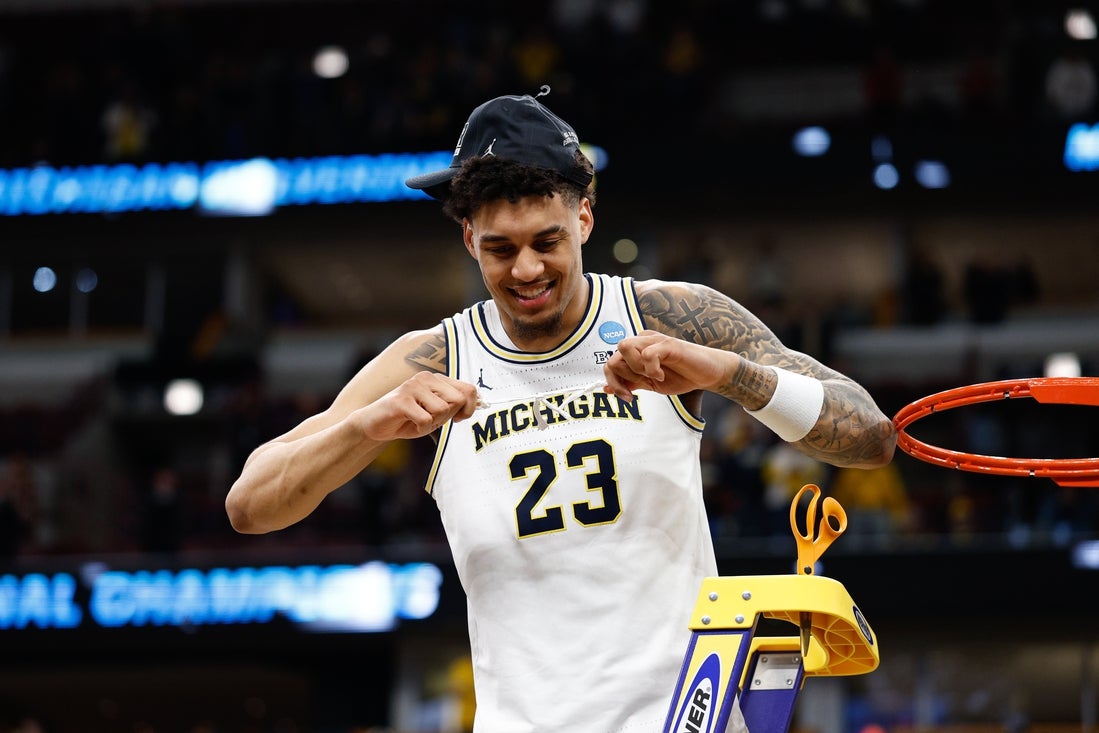
- Yaxel Lendeborg, F, Michigan: Lendeborg bypassed a chance to enter last year’s draft for an NIL payday with his transfer to Michigan, and it’s paying off brilliantly. The Wolverines could be an all-time wagon in college hoops, and the senior has been their leading man, dominating both ends of the floor while playing more off-the-ball than ever. He has an excellent intersection of size and strength after measuring with a 7’4 wingspan at the combine, and he’s showing some serious perimeter skill by knocking down 35 percent of his threes on nine attempts per 100 possessions. He makes plays on the defensive end (5.7 percent block rate, 2.6 percent steal rate) and hits the defensive glass enough, and he also has always been a good passer (20 percent assist rate). His skill level is really impressive for someone his size, so much so that teams will overlook the fact that he’s older than fifth-year NBA pro Josh Giddey. His age certainly caps his upside, but Lendeborg can step into a rotation for a contender right now, and that’s worth taking in the top-half of the first-round.
Sound off on your favorite prospects in the comments
I’ll jump in there and answer any questions. I’ve covered the NBA draft here for more than a decade, and this feels like one of the strongest classes since I’ve been doing it. The 2025 rookie class is killing, and 2026 has a chance to be every bit as good.
What's Your Reaction?
 Like
0
Like
0
 Dislike
0
Dislike
0
 Love
0
Love
0
 Funny
0
Funny
0
 Angry
0
Angry
0
 Sad
0
Sad
0
 Wow
0
Wow
0