



![[Watch] Ishan Kishan signs a fan's bald head, video leaves netizens in stitches](https://media.crictracker.com/media/attachments/1785075410254_Ishan-Kishan.jpeg)







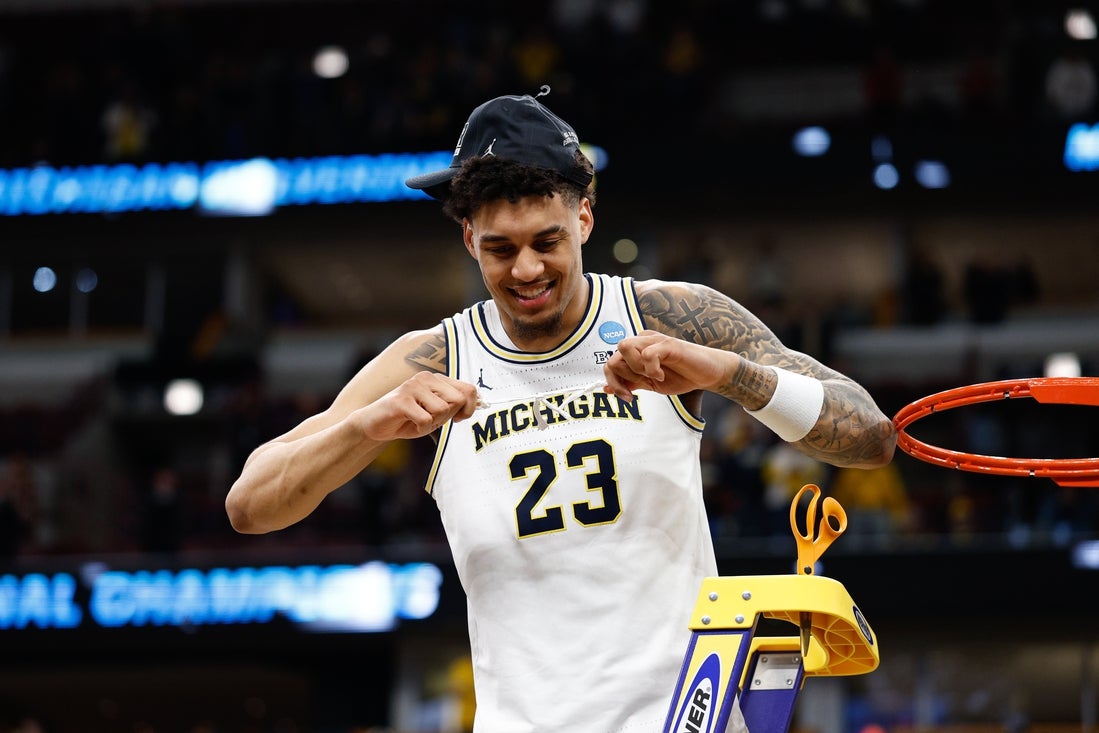
Miami-Ohio has March Madness’ most polarizing resume, but there’s an easy solution


In the 64-team NCAA Tournament era of college basketball — which dates back to 1985 — only seven teams have won their first 28 games of a season.
The first six of those — 1990-91 UNLV, 2004-05 Illinois, 2013-14 Wichita State, 2014-15 Kentucky, 2016-17 Gonzaga and 2020-21 Gonzaga and —all earned No.1 seeds from the NCAA Tournament Selection Committee.
The seventh member of that elite group is this year’s Miami University Redhawks. They will not be receiving a No. 1 seed on Selection Sunday, and there are more than a few people who believe Travis Steele’s team doesn’t deserve to see its name included in the tournament field at all.
The Redhawks won their first 31 games (although the Committee will only recognize the 28 wins that came against Division-I opponents) this season, becoming just the eighth team since 1975-76 to end a regular season without a loss. Miami’s first defeat of the season came Thursday afternoon when 8th-seeded UMass pulled off an 87-83 stunner in the quarterfinals of the Mid-American Conference Tournament.
Instantly, a debate began to rage throughout the sports world, one which is unlikely to settle down until the early hours of Sunday evening.
Simply put, there is zero precedent for a team with an NCAA Tournament resume like Miami’s.
The 31-1 record is as gaudy as a blemished mark can be, but there are problems below the surface. For starters, Miami played just the 269th-toughest schedule in a sport that features 365 teams. The lack of schedule pop isn’t entirely Miami’s fault — as showcased by Matt Brown of Extra Points — but the fact that this team played 32 games and not one of them presented a Quad-I opportunity is something the Committee still has to take into consideration.
Predictive metrics, which seem to increase in importance every year, all believe that Miami wouldn’t even be flirting with an NCAA Tournament bid if it played in a better conference or had been able to piece together a more challenging non-conference schedule. The three predictives that the Committee looks at — Ken Pom, T-Rank and BPI — have the Redhawks ranked 90th, 85th and 90th, respectively. That’s good for an average of 88.3.
On the flip side, the three resume rankings that the Committee utilizes have Miami at 21st, 40th and 50th, for an average of 37.0. While predictive and resume rankings are fairly frequently at odds during this time of the season, there’s never been a case before where the disparity has been this extreme.
Here’s the even better news for the Redhawks: Last month, when select members of the media met for a mock NCAA Tournament selection exercise, NCAA Vice President of Basketball Dan Gavitt told those in attendance that the wins above bubble metric would be prioritized by the Committee, especially when it comes to selecting which teams make the field and which teams are left out.
Miami entered Thursday with a highly respectable wins above bubble ranking of 33. Compare that with the ranking of power conference bubble teams like NC State (43) or Auburn (44), and you’d think the Redhawks would be in pretty good shape to receive an at-large bid on Selection Sunday. Probably. Maybe. Who knows?
The only gap larger than the one between Miami’s predictive and resume rankings is the one between college basketball fans who believe the Redhawks haven’t done enough to warrant inclusion in March Madness and those who cant’t wrap their mind around the idea of a 31-1 team being relegated to the NIT.
There seems to be no middle ground on this one. Both sides are equally passionate, and equally unwilling to listen to any argument to the contrary.
Here’s just a sampling of my Twitter mentions on the topic:


After analyzing all the information we have at our disposal, there seems to be a common sense play for the Committee to make here.
If Wins Above Bubble is saying the Redhawks deserve to be selected, but the predictive metrics are saying they should be very poorly seeded, it would seem as though the best way to try and satisfy both extremes would be to put Miami in the field, but send them to the First Four in Dayton for a Tuesday or Wednesday night game. In this scenario, the little guy with the gaudy record doesn’t get left behind, but the little guy who hasn’t beaten a top 65 opponent all season finally has to prove it in order to make it into the tournament’s main draw.
In the NIL transfer portal era, the notion that college basketball is leaving behind the Cinderella stories that have largely defined the sport for the past 50 years has never been more prevalent. Excluding a 31-1 team from any conference would drive that point (or fear) home stronger than any other piece of news from last five years has.
Chasing fairness through evolved evaluation tools is important, but so is maintaining your soul. We’ve never seen a situation like Miami’s in large part because we’ve never seen an era like this in college basketball.
What's Your Reaction?
 Like
0
Like
0
 Dislike
0
Dislike
0
 Love
0
Love
0
 Funny
0
Funny
0
 Angry
0
Angry
0
 Sad
0
Sad
0
 Wow
0
Wow
0