

-(1).jpeg)

Eagles can follow Seahawks blueprint to stifle 49ers’ offense, win NFC Wild Card Game

When the Philadelphia Eagles are on, they can play like the best team in the NFL.
They have a Super Bowl MVP-winning quarterback, a running game capable of ripping off huge plays, a trio of elite pass catchers with sky-high ceilings, and arguably the best defense in the NFL, run by a man who basically created the blueprint for the modern two-high defensive scheme but continues to innovate on it deep into his 60s.
And yet, the Eagles are also a team that has multiple games where they failed to complete a pass in the second half, have an coordinator who runs arguably the least creative offense left in the NFL playoffs, and a number of players who seem more concerned with their individual stats than winning, with a quiet quarter leading to headlines regardless of any game’s final score.
Is that the kind of strategy a team can ride to the Super Bowl, establishing a South Philadelphia dynasty after just toppling one in Kansas City last February? It’s hard to say.
Fortunately, the Eagles don’t have to reinvent the wheel in order to beat Kyle Shanahan and his San Francisco 49ers in the Wild Card Round of the 2026 NFL Playoffs. No, all they really have to do is follow the blueprint Mike Macdonald and the Seattle Seahawks laid out in Week 18, and the Birds would be able to live to play another week, where they will face off against the Chicago Bears at Soldier Field.
The Eagles don’t have to reinvent the wheel to beat the 49ers in Week 19
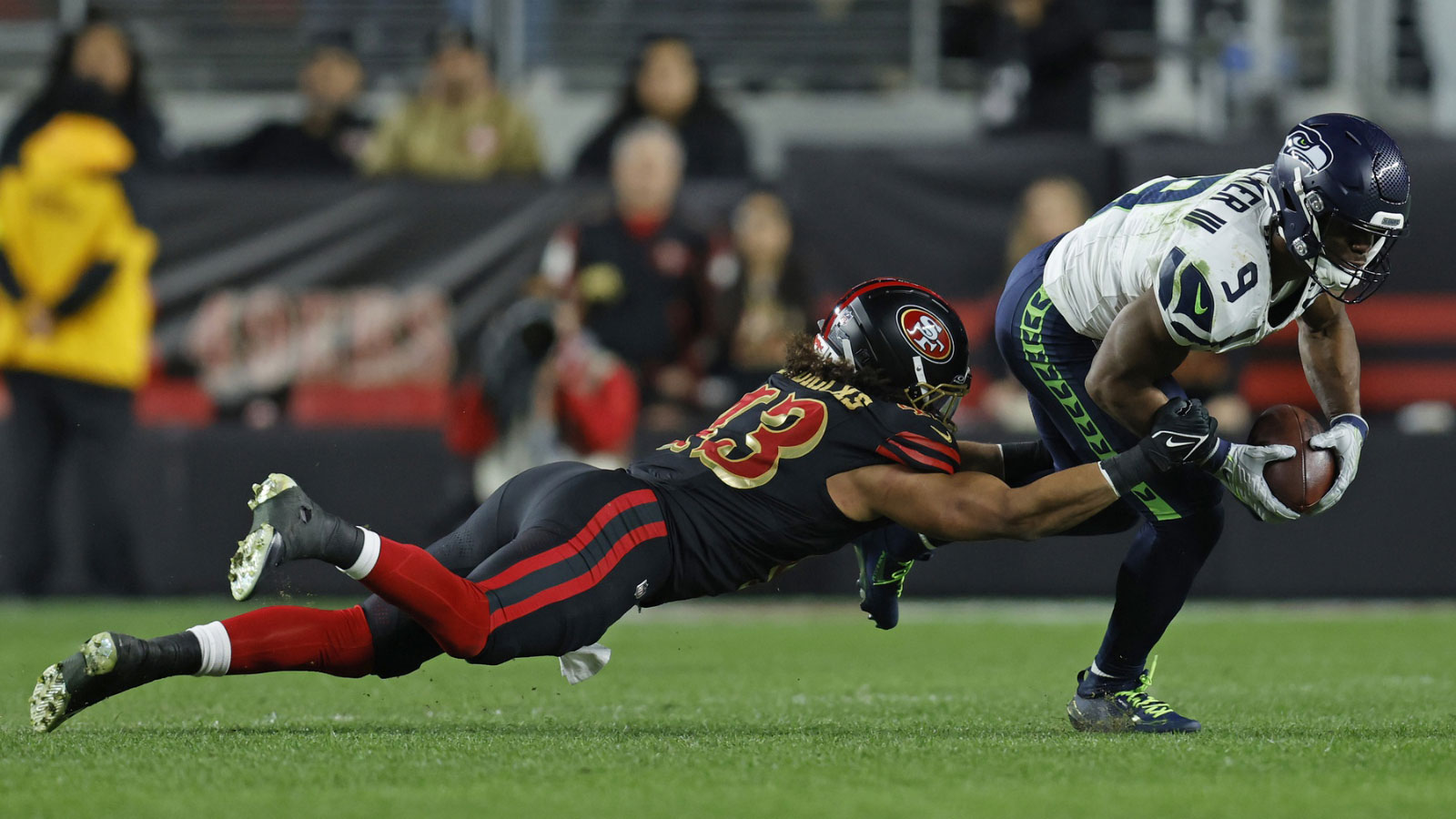
With the No. 1 seed, home field advantage, and the NFC West Pennant up for grabs in Week 18, the Seattle Seahawks took the field against the 49ers with a pretty simple strategy: control the time of possession battle.
On paper, a simple enough strategy, right? But even when the 49ers saw it coming, they really didn’t have a way to flip the script and force their division rivals to play their game.
Receiving the ball to start things off, the Seahawks weren’t able to score on their first drive of Week 18, but they did possess the ball for 7:37, turning the ball over in the red zone after failing to score a touchdown on fourth and goal. The 49ers then possessed the ball for 1:31, going three and out after a two-yard run, a five-yard pass, and an incomplete pass on 3rd-and-3 at their own 12-yard line to send the ball back to the Seahawks, who scored a touchdown on three plays. From there, the 49ers only had one drive that lasted more than three minutes before halftime, scoring a field goal on their final drive of the first half.
From there, well, it might as well have been the Eagles’ game against the Buffalo Bills. Even though the Seahawks only put three more points on the board, they ran 35 plays versus just 22 for the 49ers, thanks to a strong rushing attack from Kenneth Walker III and Zach Charbonnet, and possessed the ball for almost 19 minutes as they wore out the clock.
The 49ers, despite having the best running back in the game and a quarterback who was dealing with a hand injury, only ran the ball seven times in the second half when they were within two scores of a win, and were forced to win the game through the air against one of the best defensive secondaries in the NFL.
San Francisco’s best drive of the second half ended in an interception at Seattle’s six-yard line, and in the end, even a missed field goal on the penultimate drive of the game by the Seahawks was irrelevant, as the 49ers turned over the ball on downs with 1:55 left to play and flew back to Santa Clarita as a Wild Card team.
What can the Eagles learn from this showdown? Well, for one, they simply can’t have the sort of two-minute, three-play drives that end in a Braden Mann punt if they are going to put pressure on the 49ers. Running the ball is a nice way to chew up clock, sure, but Hurts has been a very effective short-yardage passer for his entire career, and has found plenty of recent success throwing to Dallas Goedert. Keeping the clock running with short passing plays across the middle of the field, instead of a constant spamming out passes to the sidelines, could chew up the clock even if a drive doesn’t end in points.
Conversely, the Seahawks were able to force the 49ers to stop the clock from ticking when they were on offense, using their very impressive, though decidedly less Fangio-esque pass defense to limit a passing game that was already without key players. Taking away easy early options forced Purdy to think more in the pocket and ultimately limited him to zero passes of over 20 yards in the second half.
Could the Eagles make Purdy’s life harder by rushing him with exotic looks? Sure, but the Seahawks only sacked Purdy once in the second half of Week 18 and three overall. If the Eagles can hold things down with their back seven, Fangio may not need to blitz much to force Purdy out of his comfort zone.
In the past, the Eagles won games with a very simple strategy: play good defense, control the clock with their running game, and hit deep passes when opposing defenses overcommitted up front. While they don’t have the same caliber offensive line this season as their last two Super Bowl runs, especially if Lane Johnson can’t go, and have fallen victim to some poor playcalling all season long, if they just remain committed to winning the time of possession battle, they will likely win the game too, even if it isn’t an exciting shootout.
The post Eagles can follow Seahawks blueprint to stifle 49ers’ offense, win NFC Wild Card Game appeared first on ClutchPoints.
What's Your Reaction?
 Like
0
Like
0
 Dislike
0
Dislike
0
 Love
0
Love
0
 Funny
0
Funny
0
 Angry
0
Angry
0
 Sad
0
Sad
0
 Wow
0
Wow
0