
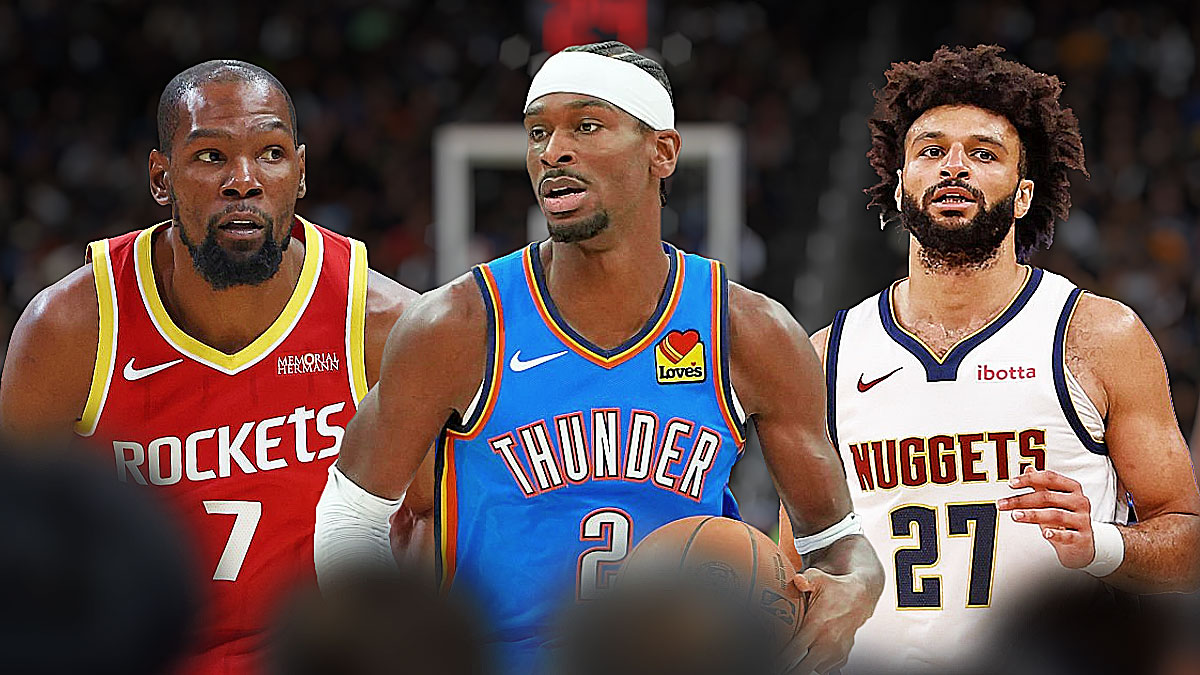
The NBA’s best clutch scorers enter this season with a problem that last year’s highlights cannot solve: delivering again. A Dimers study projects lower clutch efficiency for all 10 players in its supplied table, including Shai Gilgeous-Alexander, Jamal Murray, and Kevin Durant. The takeaway deserves attention, but it also demands some restraint. A forecast of lower efficiency does not establish that a star has lost his nerve.
That distinction should guide this entire conversation. The study examines how exceptional results carry into another season. Its findings challenge the expectation that players can reproduce their strongest numbers whenever the schedule resets. They do not give us permission to turn every missed shot into a verdict about somebody’s ability to handle pressure.
Dimers built its projections using 315 historical clutch player-seasons. Its broader research covers regular-season action from 2016-17 through 2025-26, plus games through November 11 this season. That provides a substantial historical foundation. Still, the projection describes an expected outcome, while the games will determine each player’s actual results.
SGA GAME-WINNER VS. THE NUGGETS 🎯🔥 pic.twitter.com/KP6U0RXSW7
— SportsCenter (@SportsCenter) March 10, 2026
What do the NBA’s clutch projections actually show?
Gilgeous-Alexander contributed 175 points in last season’s clutch situations with a 66.8% true shooting percentage. Dimers projects 61.1% this year. Murray follows a steeper projected path, moving from 68.6% to 58.4% after contributing 166 clutch points. Durant’s forecast falls from 67.2% to 59.7%, following a season with 146 points under those conditions.
Those percentages need their proper label. True shooting incorporates scoring from inside the arc, beyond it, and at the foul line. Calling Murray’s projected 58.4% a field-goal percentage would give readers a different impression of what the model measures. Precision matters especially when the entire argument rests on efficiency.
The same care applies to the rankings. The supplied table orders players by their clutch point totals. Tyrese Maxey’s fifth-place position reflects his 144 points, rather than establishing him as the league’s fifth-best closer by every possible measure. Scoring volume and scoring efficiency answer different questions, even when both help describe a player’s production.
Nikola Jokic supplies the most useful contrast within the projections. He contributed 155 points in clutch situations and posted 62.2% true shooting last season. His forecast lands at 61.6%, a decline of only 0.6 percentage points. Murray’s projected reduction reaches 10.2 points. Both face a lower estimate, but treating those forecasts as equivalent would erase the distinction that makes Denver’s entries interesting.
Anthony Edwards and James Harden each face projected declines of 10.6 percentage points. Cade Cunningham, Jalen Brunson, and Deni Avdija also receive lower forecasts. Across the table, the direction stays consistent. The size of the adjustment varies considerably, which should discourage sweeping claims about every player facing the same problem.
Why does the early-season sample require patience?
Maxey offers an immediate reason to resist declaring the model correct before the season develops. Through the study’s cutoff, he had 28 clutch points and an 80.1% true shooting mark. That exceeds both his previous season’s 59.3% and his projected 56.0%. His opening production deserves recognition on its own terms.
It does not settle the larger question. The methodology notes that nobody had attempted more than 22 clutch shots in the current sample. Such limited opportunities give us an opening snapshot, with plenty of room for the picture to change. Maxey has started exceptionally well. Claiming that he has already disproved a season-long projection would ask those early numbers to carry too much weight.
The study’s definition also narrows what readers should take from it. Clutch situations cover the closing five minutes of regulation or overtime when the margin sits within five points before a play. These numbers address that particular window. They cannot independently summarize every important possession or every responsibility a player handles late.
Free throws add another consideration. According to the methodology, they account for 26% of clutch scoring because teams that trail intentionally foul. A strong early efficiency figure can therefore owe much to foul-line production. Those points count, but readers should understand what contributes to the number before imagining it represents nothing except difficult jumpers.
Article Continues BelowThe historical selection criteria matter here, too. For its annual efficiency comparison, Dimers required players to record at least 40 clutch shots in consecutive seasons. That threshold explains who qualified for that analysis. It does not make every late-game scorer part of the comparison.
What should teams take from the findings?
Dimers CEO Adam Fiske connects the results to shared responsibility, arguing that clubs benefit when several players can handle decisive scoring duties. That recommendation gives the study its strongest editorial direction. Trusting a proven scorer and preparing other options can coexist. Last season’s excellence offers evidence of what somebody accomplished, without promising an identical return.
Denver’s two entries illustrate that discussion without requiring an invented solution. The model projects a substantial adjustment for Murray and a much smaller one for Jokic. That difference supports examining each player individually. It does not establish how Denver should allocate particular possessions, or prove that either player will match the forecast.
The useful response is to keep expectations grounded. Celebrate what Gilgeous-Alexander delivered. Recognize Maxey’s opening surge. Consider the projected declines for Murray and Durant without presenting them as completed events. The numbers give us reasons to question automatic assumptions, and the methodology gives us reasons to question overconfident conclusions.
Clutch reputations will face another season of evidence. Fans can appreciate a star’s previous work while leaving room for new results. That is the test these projections put in front of the NBA: understanding the difference between trusting a player and expecting last year’s efficiency to repeat on demand.