
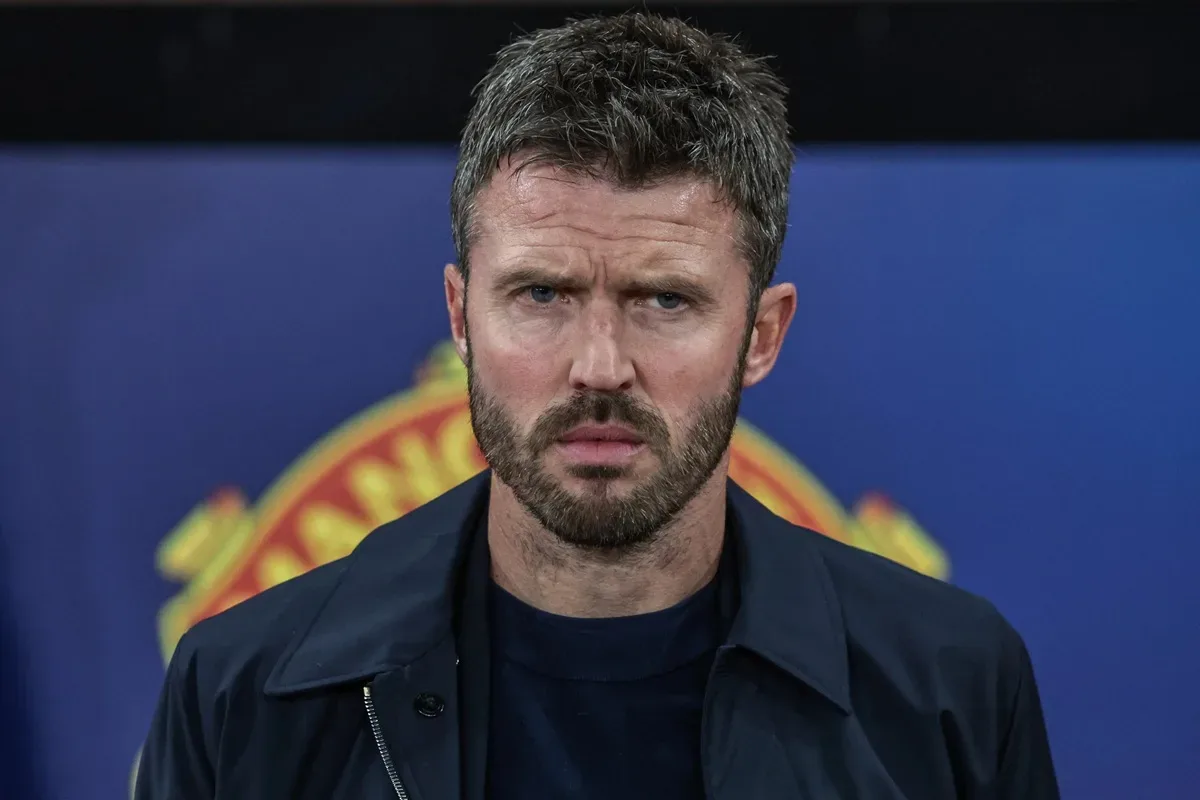
Michael CarrickâÂÂs honeymoon period is well and truly over; another lead slipped away in a 3-2 defeat to Brighton in the Carabao Cup.
His footballing ideology doesnâÂÂt suit the squad, and heâÂÂs taken the majority of the blame for the recent defeats. His counter-attacking-based style as interim manager worked a charm, so why has he changed it?
Where do the Red Devils go from here?
CarrickâÂÂs style of play is nullifying his attacking threat
As caretaker manager, Carrick had United playing swift counter-attacking football. It won him games against elite rivals such as Arsenal, Liverpool and Manchester City, so what has changed?
Since being appointed head coach, Carrick has tried to control games with a possession-style tactic, but it does not suit any one of UnitedâÂÂs front line.
Single-handedly nullifying Bruno Fernandes, Bryan Mbeumo, Matheus Cunha and Benjamin Sesko.
In victories against rivals, Carrick had his team soak up pressure and launch counter-attacks by finding Fernandes in the 10 ÃÂ and having Sesko, Cunha and Mbeumo find space in the middle of the pitch and penalty area.
With this new style of play, Fernandes has to drop deeper and keep the ball in the lower half of the oppositionâÂÂs third, preventing the record-breaking Premier League assister from creating chances.
Embed from Getty ImagesCuhna and Mbeumo are being driven further out wide; neither player is deemed to be a winger, and theyâÂÂre suited to playing as an inside forward.
Both players were prolific under Ruben Amorim and Carrick as the Caretaker, but neither player looks like they can get involved under the new system. Mbeumo is driven too far out wide and is not aided by Diogo Dalot on the right flank.
Cuhna and Marcus Rashford invert and swap positions too often in the match, leaving mass confusion on the left. RashfordâÂÂs return to the squad has bolstered the front line in some aspects; however, itâÂÂs disrupted the rhythm of Cuhna extensively.
The five goals scored against Ipswich stemmed from their opponent becoming flummoxed and outraged at a VAR decision that went against them. Taking that match out of the equation, United look abysmal in front of goal or at creating clear-cut opportunities.
The midfield is too slow despite additions
Another major concern is the midfield, despite it being addressed in the summer transfer window. Kobbie Mainoo is clearly the only midfielder whoâÂÂs physical and fast enough to control possession.
Youri Tielemans, despite his class with the ball and elite passing range, is extremely slow and lacks physical attributes compared to Mainoo.
Andrey Santos doesnâÂÂt fit the system; he lacks control of the ball when receiving it with his back to goal. HeâÂÂs much better with first-time passes into Fernandes, which transpired often in pre-season.
Santos was supposedly a Casemiro replacement, but he lacks any of the defensive tenacity his Brazilian counterpart has. Santos wouldâÂÂve been elite in AmorimâÂÂs system as an eight. Yet on first assessment, it seems United have wasted money on his services.
Carlos Baleba is yet to feature as he recovers from an injury; his pace injection may relieve pressure on Mainoo, Tielemans and Santos; nevertheless, heâÂÂs another midfielder who struggles with ball retention.
So why these players were signed is a question on the minds of many Manchester United fans: is it Carrick or the Ownership?
Embed from Getty ImagesThe defensive structure and lack of cohesion create unwanted stress
Carrick has inherited a defence which struggles with fitness, leadership and consistency. But his passing out from the back and making centre-backs essentially become right or left halves to let the full-back surge forward is creating chaos.
When any of UnitedâÂÂs central defenders receive the ball, they push into wide positions, leaving huge gaps in the final third that arenâÂÂt covered by a midfielder dropping deep.
Due to the lacklustre full-backs at Old Trafford, the centre-backs turn back inside and are instantly swarmed by the oppositionâÂÂs offensive press.
Dalot is the main culprit in the defensive issues; he inverts too often, suffocating the middle of the park and leaving gaping areas of width open, which teams exploit.
UnitedâÂÂs shape also struggles to deal with wing-backs or overloads into channels, as proven against Hull, Brighton and Everton, who all transitioned into a formation with wing-backs.
This exploited the frailties in the defensive line, which struggles to stop crosses or mark players at the back post. Proven in the Manchester Derby this past weekend, when United failed to stop a cross resulting in Erling HaalandâÂÂs controversial winner.
Why has Carrick changed his style?
In pre-season, Carrick was interviewed about how he wanted his side to play after getting the head coach role.
He hinted at how he managed his Middlesbrough side and wanted to install the same style of play at United. But it is clearly not working.
Sides know to sit back in a deep shape with five players in a defensive line and two midfielders pushing towards the ball carrier. United struggle to dictate the play and, more concerningly, canâÂÂt create clear-cut opportunities.
When he played counter-attacking football, Fernandes could send early balls in behind backlines, into channels and create from anywhere on the pitch. Now he is isolated and forced to slow down play, which eliminates the potency of his extreme passing range and chance creation.
United were miles better when soaking up pressure rather than inviting pressure. For Carrick to save his job, itâÂÂs beneficial for him to re-evaluate his squad and play to its strengths.
While Carrick will have a lot of plaudits and take most of the blame, the ownership also must be held accountable for the failure of the football club.
For more football content, click here.

World In Sport Forum
Continue the discussion
Join other fans in the World In Sport Forum and debate the biggest talking points from this article.