
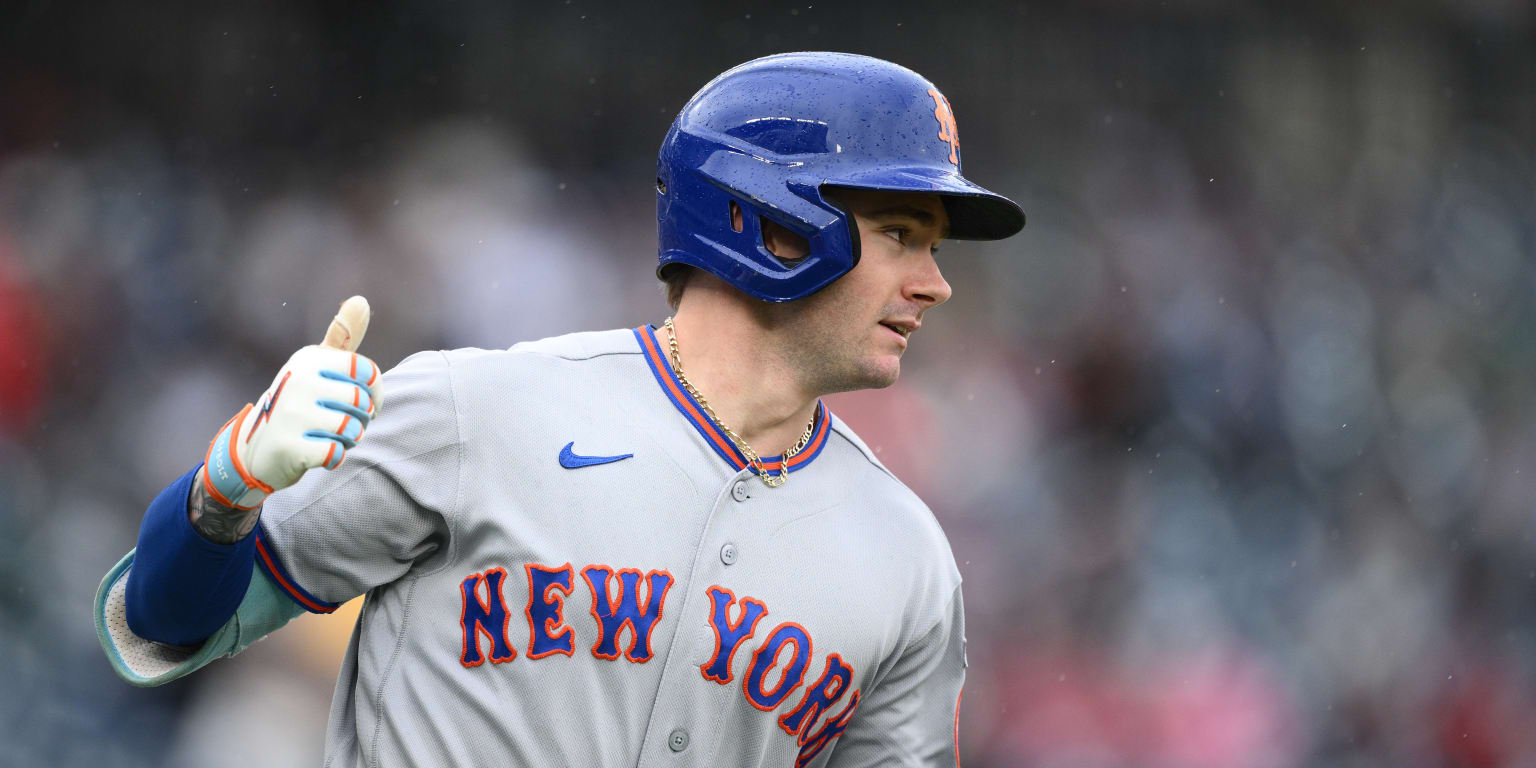
Despite a 74-88 record and a Trade Deadline sell-off in 2026, a young Mets core started playing better baseball in the second half of the season. They went 34-31 (.523 win percentage) after the All-Star break, compared to 40-57 (.412 W%) pre-All-Star break.
That improvement was powered in part by a high-upside group of outfielders in Queens. Carson Benge’s excellent second half put him in the conversation for National League Rookie of the Year. Fellow newcomer A.J. Ewing finished second on the team with 3.1 Baseball-Reference WAR. And, as is expected, Juan Soto produced when healthy.
Entering a pivotal year for the Mets, that trio will have to step up again. Soto is Soto, and Benge’s breakout has been well-documented. Thus, Ewing is perhaps the X-factor after a solid debut. What’s next for the 22-year-old?
Let’s dive in.
What happened in 2026?
120 G, 11 HR, 43 RBI, 25 SB, .252/.324/.376
A 2023 fourth-round Draft pick (via the compensatory pick the Mets received after Jacob deGrom left in free agency), Ewing started slowly on offense in his early taste of pro ball but skyrocketed to Top 100 prospect status by the start of this season. He posted a .961 OPS in 30 games between Double-A and Triple-A, leading to his MLB debut on May 12 at just 21 years old.
Ewing’s first game was historic. He walked thrice, tripled, stole a base and drove in two runs -- the first player with that stat line in a debut since at least 1900. His only out was a 102.3 mph flyout to the warning track.
Though his offense was a bit hot and cold through the year as he worked to a 97 wRC+, that first game is what things are supposed to look like for Ewing: patient at-bats, havoc on the bases and enough pop to do damage.
Really, that’s mostly how it went for the Ohio native. Outside of a brutal August in which he slashed just .171/.243/.219, Ewing had a 116 wRC+, meaning he was 16% better than average at the plate. He followed the down month with his best work in September, posting a season-high .861 OPS and four homers in 23 games.
Add in that Ewing played elite defense (mostly in center field), and you can see the makings of a breakout star. He was worth plus-six Fielding Run Value, plus-five Outs Above Average and 10 Defensive Runs Saved. His arm strength (92.2 mph) and sprint speed (29.4 feet per second) both graded in the upper-10th percentile, too.
Key stat
26.7% chase rate
Ewing chased outside the strike zone considerably less than average, ranking in the 69th percentile across MLB. While that’s not groundbreaking on the surface, remember: He has 70-grade speed.
That decisive eye helped turn in a solid walk rate (9.3%). More times on base -- however they come -- is good news for someone who set the Mets’ franchise record for steals by a rookie.
Biggest question for 2027
What’s his offensive ceiling?
Anyone with Ewing’s defensive acumen -- at a premium position -- can be a productive player, even with average offense. But Ewing has the tools to excel at the plate.
Despite a slight 5-foot-10, 160-pound frame and a swing speed that finished in the 26th percentile (70.4 mph), Ewing logged an average exit velocity (89.6 mph) and a hard-hit rate (42.3%) that were both above average. How can he improve on that even further?
Eight of the top 10 year-over-year risers in home runs from 2025 to 2026 saw at least some increase in average bat speed. Six of those eight saw their swing speed increase by at least one full mile per hour. Ewing may never reach Junior Caminero levels, but at just 22 years old, one can imagine there’s room to fill his frame and add some bat speed.
Ewing could pull the ball more, too. MLB’s top sluggers tend to pull the ball in the air, and Ewing’s pulled air ball rate (13.2%) was below average in his debut. Ewing’s speed will allow him to succeed with an all-fields approach, so he shouldn’t necessarily abandon it completely. But more slug could help him unlock a new level.
Another speedy, defense-first National League center fielder followed a similar blueprint this season. He increased his bat speed by 2.4 mph, pulled the ball in the air at a 34% rate and walked 11.4% of the time. While bigger than Ewing, he’s still not particularly imposing at 6-foot and 184 pounds.
That player, of course, is likely NL MVP Pete Crow-Armstrong. We’re not placing MVP-level expectations on Ewing by any means, but his introduction to the Major Leagues was encouraging. And there’s a clear path to him taking another leap.