
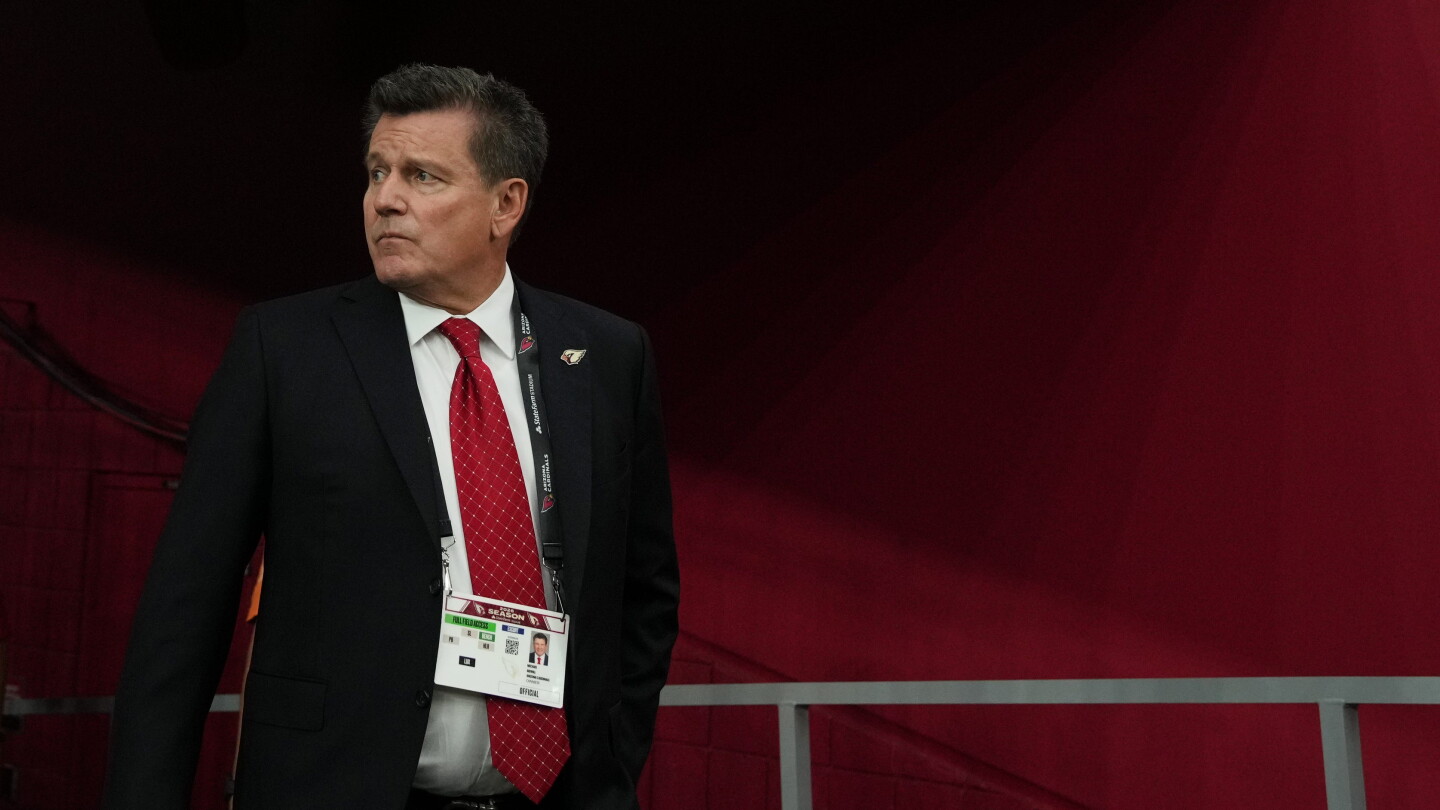
On the same day the Cardinals set the franchise record for consecutive home losses at nine, word has emerged of another lawsuit against the team and owner Michael Bidwill.
Via Theo Mackie of the Arizona Republic, former executive assistant Kendra Hogue and former assistant coach Don Shumpert filed a joint lawsuit in Arizona state court on May 26 against the Cardinals, Bidwill and others. The lawsuit includes claims of racial discrimination, retaliation, defamation, and constructive termination.
The defendants removed the case to federal court on June 1. On September 19, federal judge John Hinderaker sent the case to arbitration, with the Commissioner selecting the arbitrator.
And so begins the latest fight over whether the league will be permitted to rely on contracts of adhesion that refer lawsuits against the teams to the secret, rigged, kangaroo court of arbitration. Although the tide has been sharply turning against the league’s efforts to stack the judicial deck in its favor with mandatory arbitration clauses that let the Commissioner control the process, different judges will bring different perspectives to such cases.
Hinderaker, for instance, was appointed to the bench by President Trump during his first term. That wouldn’t have happened if Hinderaker hadn’t been perceived as the kind of judge who will, in cases like this, align with pro-business interests.
Throughout the American legal community, federal judges who are appointed by Republican presidents are regarded as being pro-business, and federal judges who are appointed by Democratic presidents are regarded as having a pro-worker mindset. (Every time I make this observation, multiple non-lawyers bristle. That doesn’t make the assertion inaccurate. I practiced for 18 years; it’s a fundamental truth of civil practice in the United States.)
Arizona falls under the U.S. Court of Appeals for the Ninth Circuit, which has a history of pro-worker rulings. This gives the plaintiffs in this case a better chance (eventually) at persuading a randomly-assigned three-judge panel to regard the NFL’s arbitration clause in the same way the Second Circuit did in the Brian Flores case.
The Cardinals are also a defendant in the Flores case, due to the firing of coach Steve Wilks after only one season.
The Flores case started the same way as this case is starting, with the federal judge choosing to enforce the NFL’s arbitration clause. More than four years later, most of the claims in the Flores case are on track to be resolved not by the league’s hand-picked arbitrator but in open court.