
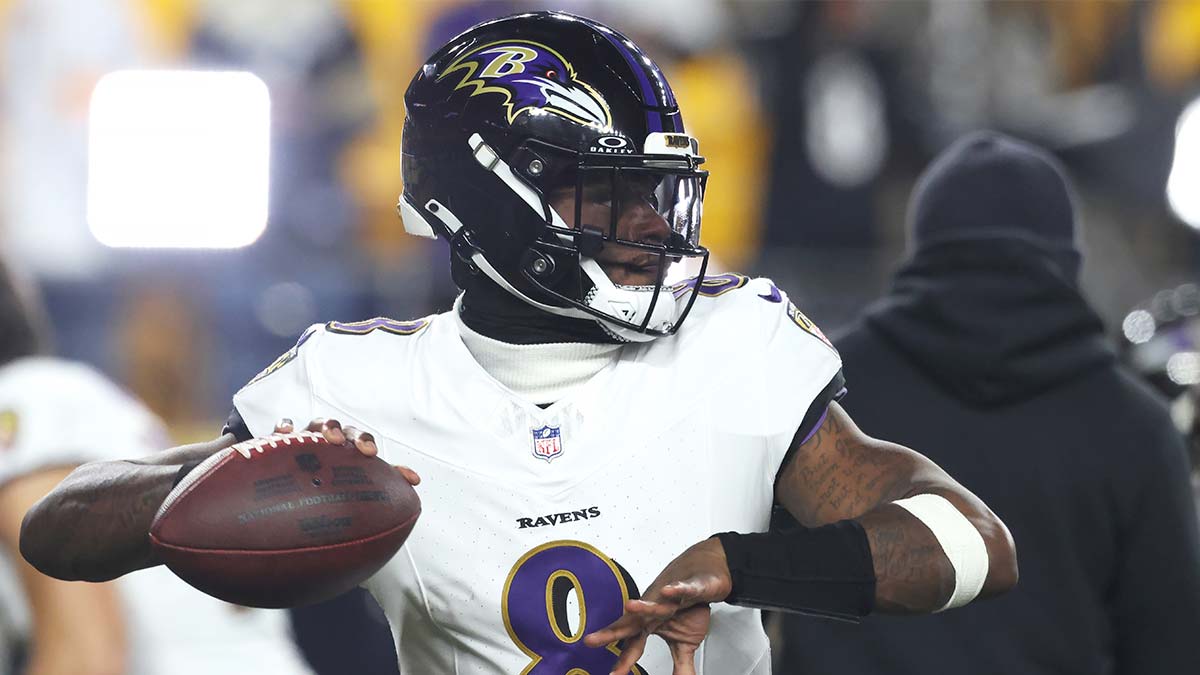
The Baltimore Ravens will officially be without Lamar Jackson on Sunday night, as the two-time MVP has been ruled out against the Atlanta Falcons after missing the entire week of practice with the ankle injury he suffered during last Sunday’s 24-18 victory over Tennessee, when he was unable to return after halftime and Tyler Huntley took over for the remainder of the game. Baltimore will now start Huntley in Atlanta while trying to protect its 3-1 record, creating an immediate shift in the fantasy outlook for an offense that has produced many of its biggest plays through Jackson’s combination of downfield passing and mobility.
Huntley completed eight of nine passes for 63 yards and added 16 rushing yards after replacing Jackson against Tennessee, operating efficiently while Baltimore protected a halftime advantage, and although a full start gives him considerably more opportunity, it also introduces uncertainty for a passing game that has been among the league’s most explosive when its MVP quarterback is available. Jackson is not the only important name on Baltimore’s final injury report, as Zay Flowers is questionable with a foot injury after practicing on a limited basis throughout the week, while starting center Cam Jurgens has been ruled out with a concussion and guard Andrew Vorhees is also questionable because of a foot injury; Mark Andrews and Rashod Bateman finished the week as full participants without game designations, leaving most of the receiving group available unless Flowers suffers a late setback.
Baltimore's injuries reshape the fantasy hierarchy
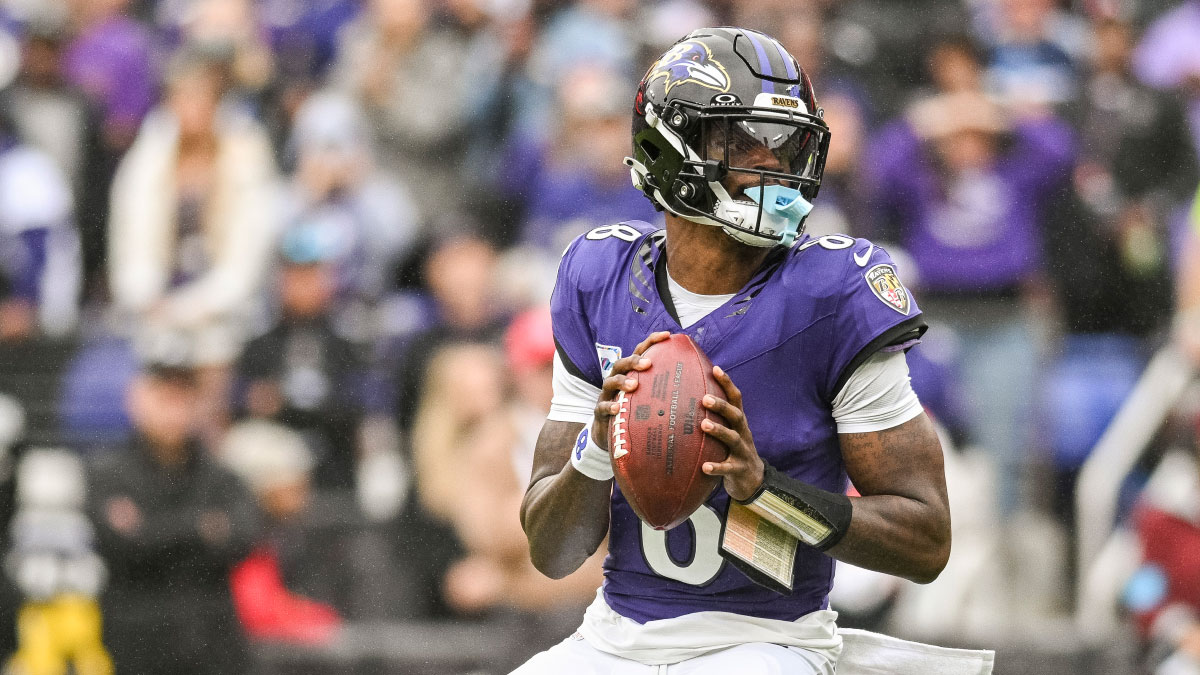
Derrick Henry remains the safest Ravens player to trust even with one of the most difficult rushing matchups on the Week 5 schedule, since Atlanta has allowed only 48.3 rushing yards per game, the best mark in the NFL entering the weekend, which should lower expectations for efficiency without creating any real reason to bench one of football’s most productive touchdown scorers.
Henry has 374 rushing yards and seven touchdowns through four games, and Jackson’s absence could reinforce his workload because Baltimore has every incentive to keep Huntley out of obvious passing situations by leaning on the part of the offense that has already been producing more than 150 rushing yards per game. The offensive-line injuries make that approach somewhat more difficult, particularly with Jurgens unavailable against a Falcons front that has played extremely well through the opening month, yet a workload in the range of 18 to 22 carries combined with goal-line opportunities still gives Henry a strong RB1/2 profile even if the final yardage total falls below his usual ceiling.
Flowers requires more attention before kickoff because the foot injury introduces another layer of risk beyond the quarterback change, though his role should remain valuable if Baltimore clears him without any indication of a snap restriction. He enters Sunday night with 352 receiving yards despite missing one game and is coming off eight catches for 118 yards and a touchdown against Tennessee, a performance that reinforced how heavily the Ravens rely on his ability to create separation and produce after the catch.
Huntley is unlikely to replicate Jackson’s willingness or ability to consistently challenge defenses downfield, which naturally lowers the chances of another explosive receiving line, but Baltimore can still keep Flowers involved through quick crossers, screens, and intermediate concepts that allow him to create yardage without asking the backup quarterback to repeatedly hold the ball against pressure. If he is active and expected to handle his normal workload, Flowers remains usable as a WR2 or strong flex in most formats, while managers with another Sunday night option should keep an eye on Baltimore’s inactive list because the foot issue matters more to his projection than the quarterback change by itself.
Tyler Huntley changes the outlook for Baltimore's passing game
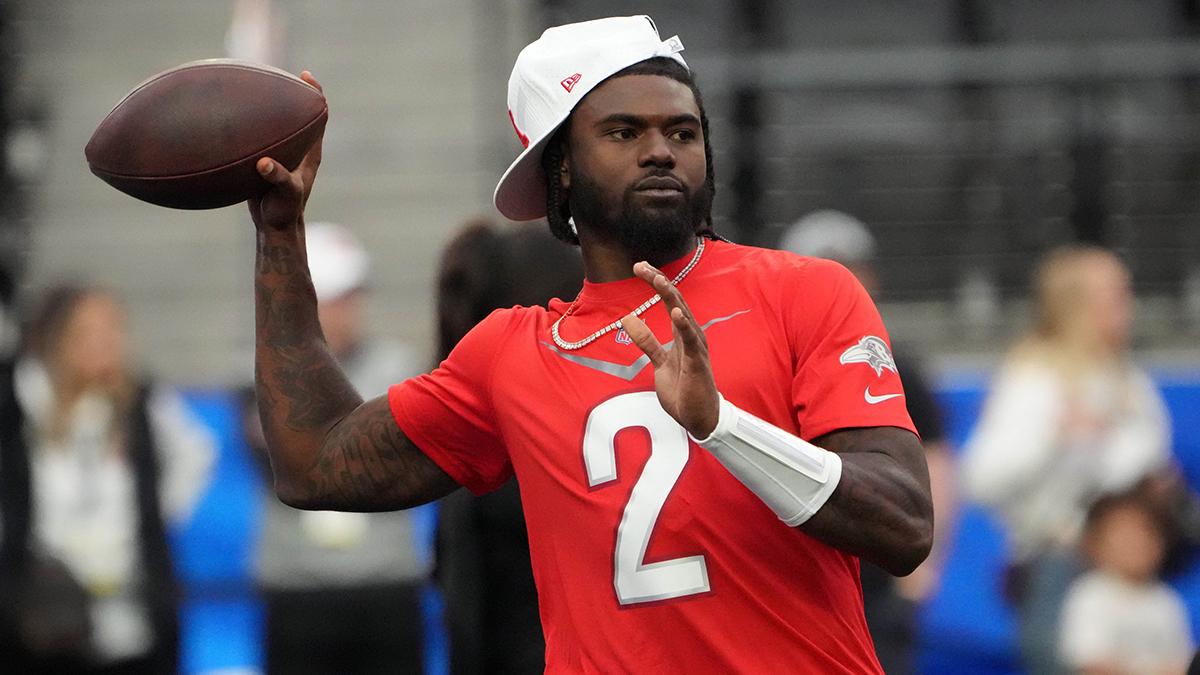
Huntley becomes a legitimate fantasy consideration primarily in superflex and two-quarterback formats because his rushing ability gives him a floor that many backups cannot provide, while his experience in Baltimore’s system should make the transition smoother than it would be with an untested quarterback making his first prime-time start. His 63 passing yards against Tennessee offer limited predictive value because the Ravens were already protecting a lead when he entered, whereas Sunday night in Atlanta could require a more aggressive approach against a Falcons offense that has scored 80 points over its last two games and may force Baltimore to continue throwing deeper into the second half.
That possibility raises Huntley’s ceiling slightly, though he still belongs closer to the QB20 range than the automatic-start tier in conventional one-quarterback leagues, where managers should prefer a passer with a more established weekly volume if one is available. His rushing production can rescue an otherwise modest passing line, making him a reasonable replacement for teams dealing with injuries or difficult bye-week decisions, but fantasy managers should not approach this game expecting anything close to Jackson’s normal production.
Article Continues BelowAndrews becomes more interesting under these circumstances because Baltimore may naturally lean further into intermediate routes and shorter throws, areas of the field where the veteran tight end can remain productive without requiring Huntley to push the ball vertically. He scored against Tennessee before Jackson exited and reached 500 career receptions on the touchdown, while the hand issue that appeared on the injury report did not prevent him from practicing fully by the end of the week, leaving no medical reason to move him out of lineups.
His ceiling takes a hit with Jackson unavailable, yet tight end remains volatile enough that an established red-zone option with a secure offensive role still belongs in most starting lineups, particularly if Baltimore uses quicker concepts to protect Huntley from Atlanta’s pressure. Bateman is a more difficult case because his fantasy value depends more heavily on downfield opportunities, and although his shoulder issue is no longer a concern after consecutive full practices, the quarterback change makes his target quality much less predictable; deeper-league managers can still consider him, especially if Flowers is ruled inactive, but 10- and 12-team formats should generally favor receivers with more reliable volume.
Baltimore’s D/ST also carries more risk than usual because Atlanta has found a much better offensive rhythm over the past two weeks and returns home after scoring 45 points against New Orleans, which makes this a difficult spot to rely on the Ravens purely because of their defensive reputation. An offense missing its starting quarterback can also create shorter fields and additional defensive snaps if possessions end quickly, so fantasy managers should consider the broader game environment rather than assuming Baltimore’s defense will benefit automatically from facing a familiar-looking matchup.
For fantasy purposes, Jackson’s absence should lower projections across the offense without forcing a complete retreat from Baltimore’s primary options, since Henry still owns a workload strong enough to survive the matchup, Flowers remains startable if his foot allows him to handle his normal role, Andrews stays viable at a thin position, and Huntley offers his clearest value in formats where rushing production can compensate for modest passing volume. The final variable is Flowers’ status before kickoff, because once Baltimore confirms whether its top receiver can play without limitations, the rest of the Ravens’ Week 5 fantasy picture becomes considerably easier to manage.