
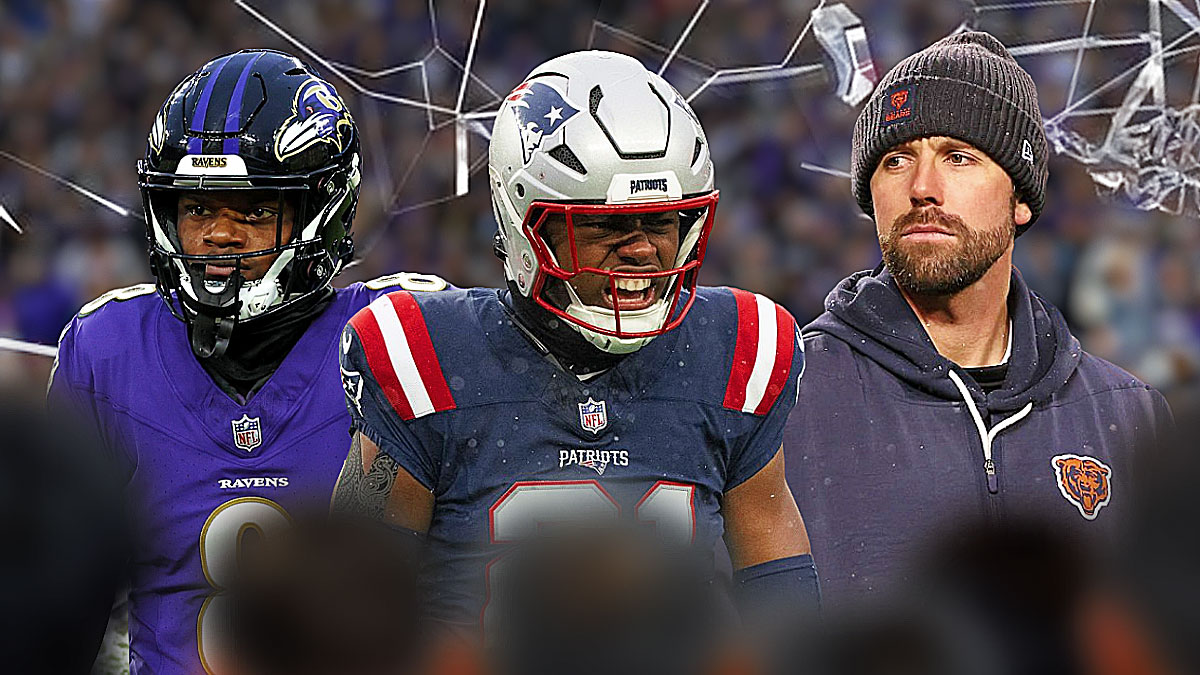
The Baltimore Ravens did not lose to the New Orleans Saints because they were outclassed for 60 minutes. They lost because they stopped playing winning football when it mattered most. Baltimore led 14-3 at halftime. The Ravens carried a 17-9 advantage into the fourth quarter. They appeared to have the Saints exactly where they wanted them. Instead, New Orleans stormed back with 15 unanswered fourth-quarter points to steal a 24-17 victory. Tyler Shough engineered the comeback. Chris Olave delivered the biggest catches. Julian Blackmon ended Baltimore's final possession with an interception. The Ravens managed only three points after halftime and had just 96 seconds of possession in the fourth quarter before their final desperate drive. It was a collapse that exposed failures across the operation. However, three figures deserve the heaviest scrutiny.
OC Declan Doyle

The first problem was Baltimore's inability to maintain offensive control. Declan Doyle's second-half offense became too dependent on Lamar Jackson creating something extraordinary. Derrick Henry was not utilized enough to make New Orleans pay. Henry finished with 16 carries for 68 yards and a touchdown. Baltimore, though, managed only three points after halftime. The Ravens also failed to record a first down on their final two possessions before Jackson's last drive.
With a lead, an explosive quarterback, and one of the NFL's most powerful running backs, Baltimore had a straightforward path available.Instead, the Ravens struggled to sustain drives. They allowed New Orleans to keep getting opportunities. The Saints ultimately controlled 32:32 of possession compared with Baltimore's 27:15. That disparity became especially damaging late, when Baltimore's defense desperately needed a breather.
Doyle deserves criticism for failing to manufacture that breathing room. They needed to maintain offensive tempo and dictate the terms. Once Baltimore stopped consistently producing first downs, the entire game changed.
Second Half Defense
The second culprit is harder to isolate because Baltimore's defense actually did plenty well early. The Ravens held New Orleans to 298 total yards and only 65 rushing yards. That is normally a winning defensive performance. However, the Saints converted the opportunities that mattered, particularly in the fourth quarter. That's when Shough repeatedly extended drives and found Olave in critical situations.
The most damaging sequence came with Baltimore protecting a 17-9 lead. Shough eventually connected with Olave on a 22-yard touchdown pass with 9:42 remaining. Afterwards, New Orleans converted a two-point try through Travis Etienne to make it 17-17.
That was the moment Baltimore's defense needed to slam the door. Instead, the Saints marched again. Shough completed 27 of 34 passes for 252 yards and one touchdown. Olave caught eight passes for 86 yards. More importantly, New Orleans repeatedly converted the high-leverage plays that had eluded Baltimore. Shough's game-winning 1-yard touchdown came with 1:28 remaining. That was after the Saints converted a crucial third down through tight end Juwan Johnson. The defense basically collapsed situationally.
QB Lamar Jackson
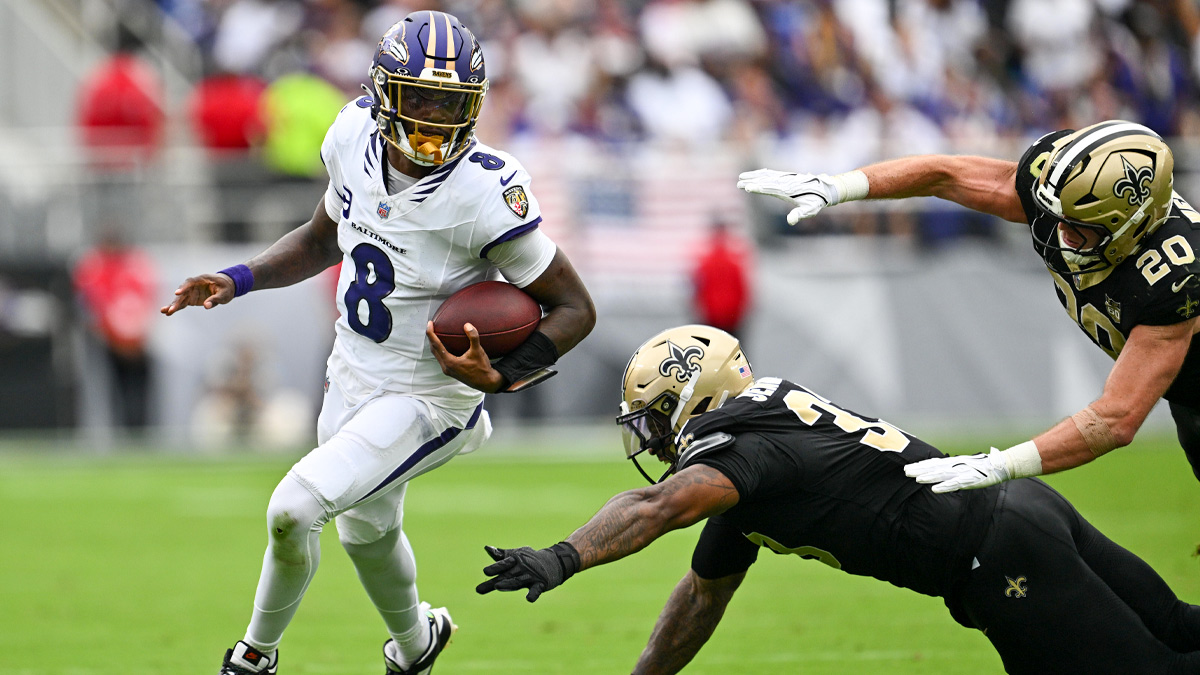
Then there is Jackson. The two-time MVP was not the primary reason Baltimore lost. He completed 21 of 31 passes for 235 yards and a touchdown while adding 34 rushing yards. Rashod Bateman produced seven catches for 88 yards and a score, helping compensate for the absence of Zay Flowers. That said, franchise quarterbacks are ultimately judged by what happens when everything becomes chaotic.
Jackson had one final opportunity after Shough put New Orleans ahead. Baltimore moved into Saints territory. They reached the New Orleans 37-yard line with 13 seconds remaining. That was enough time for one more calculated attempt to move closer or create a potential game-tying opportunity. Instead, Jackson's deep pass was intercepted by Blackmon with 21 seconds remaining. That ended Baltimore's comeback hopes.
Jackson needed to give Baltimore another chance. The Ravens just needed to preserve possession and maximize the final opportunity. The interception meant the game ended before Baltimore could even seriously threaten a tying score.
Team-wide failure
Blaming one person for this defeat would miss the larger problem. Doyle failed to sustain the offense. The defense failed to close out multiple critical situations. Jackson committed the final and most visible mistake. Together, those failures transformed a game Baltimore controlled for much of the afternoon into a stunning home defeat.
The Ravens are now 1-1. This loss exposes a problem Baltimore cannot afford to repeat: when the opponent makes its fourth-quarter push, the Ravens must have an answer. Against New Orleans, they had none.