
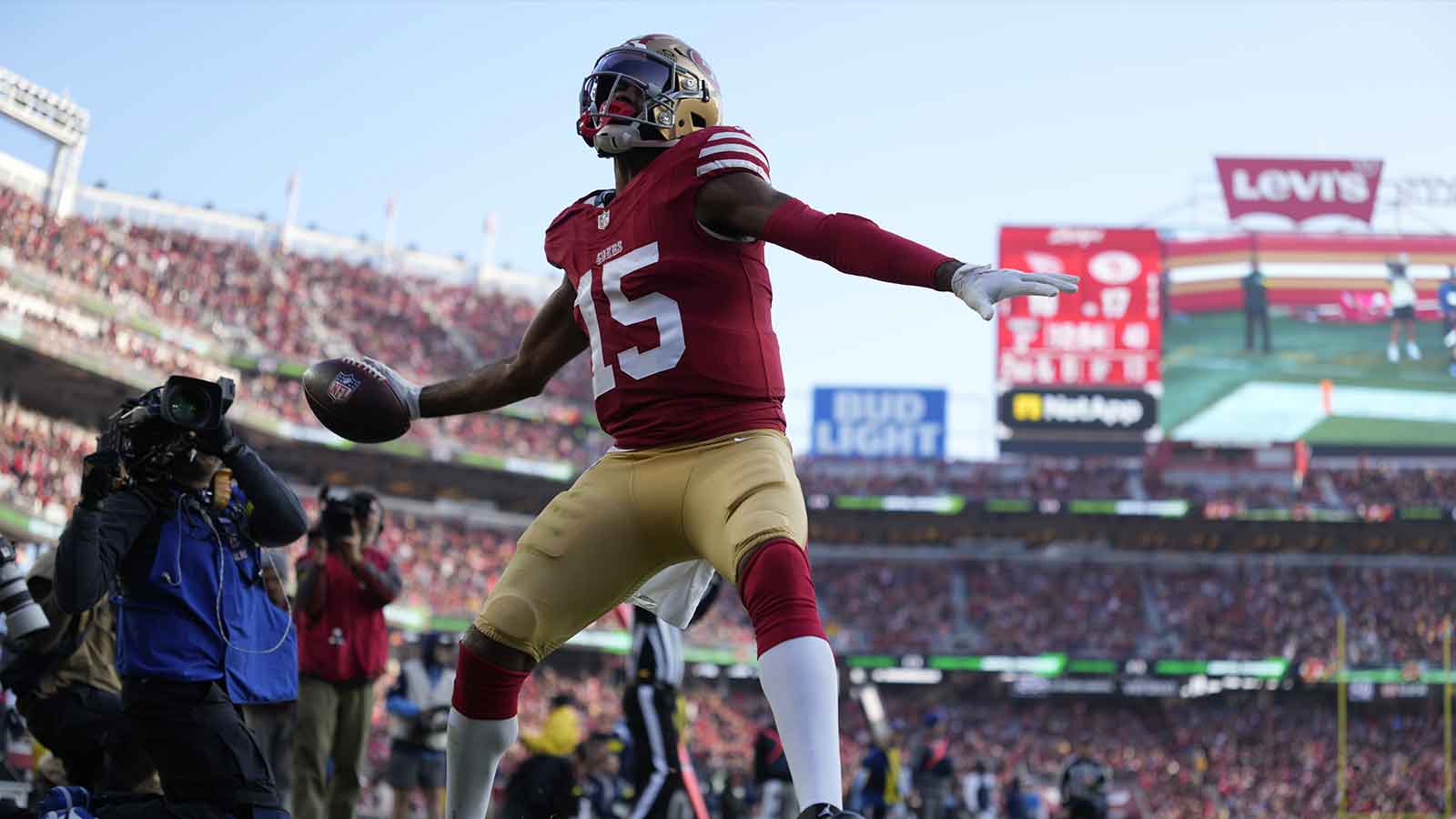
The Minnesota Vikings have little reason to reconsider their quarterback situation as the NFL trade deadline approaches on November 10. Despite speculation about potential reunions with Kirk Cousins or Daniel Jones, reports from Tom Pelissero and Adam Schefter indicate that neither move is realistic. Minnesota has committed to Kyler Murray, whose arrival has helped the team start the season with six straight wins. The Vikings' undefeated start presents a new challenge for general manager Nolan Teasley.
With Kevin O'Connell's team emerging as a serious contender in the NFC, Minnesota must balance its immediate championship aspirations with the need to recover draft capital and address positions that may become problematic later in the season.
Three players warrant attention, although their chances of being traded depend on factors beyond their statistical performance.
3. Jauan Jennings

Jauan Jennings has come remarkably close to leaving Minnesota, making his situation one of the more unusual developments ahead of the trade deadline, and his familiarity with San Francisco's offensive system should make the transition relatively easy, especially with the 49ers dealing with several receiver injuries. In contrast, Minnesota's offensive situation has been quite different.
Jennings signed a one-year, $8 million contract during the offseason, hoping to contribute alongside the Vikings' established receiving talent. However, through his first five appearances, he managed only four receptions for 43 yards on eight targets. These numbers are particularly disappointing given his frequent presence on the field, as Jennings has participated in over 70 percent of Minnesota's offensive snaps, yet his involvement in the passing game has remained limited.
The Vikings have primarily relied on their defense and running game, while quarterback Justin Murray has generally favored shorter, controlled passing opportunities. As a result, Jennings has spent considerable time contributing to the offense without receiving the targets that previously made him productive. His expiring contract adds another layer for Minnesota to consider its options. The organization may have little incentive to retain a veteran receiver beyond this season if his role continues to be so limited, especially when another team might provide draft compensation.
The unsuccessful negotiations with San Francisco demonstrate that the Vikings are open to discussing a deal, but they also reveal the biggest obstacle to moving Jennings: his own preference. There is no indication that he would accept a trade elsewhere, and Minnesota should not assume that his rejection of the San Francisco deal signifies a desire to leave under different circumstances.
2. Jay Ward
Jay Ward entered the 2026 season with the chance to build on the defensive experience he gained during the previous year. However, the fourth-year safety has found himself mostly excluded from Brian Flores' regular defensive rotation. Ward became an important contributor during the second half of the 2025 season, showcasing enough versatility to manage different roles in Minnesota's secondary. His physicality and understanding of Flores' demanding system provided the Vikings with an additional option when injuries and personnel changes necessitated adjustments.
Unfortunately, that experience has not translated into meaningful playing time this season. In the first five games, Ward has played only two defensive snaps, with the majority of his responsibilities focused on special teams. His limited involvement is particularly notable, as the Vikings continue to carry several safeties on their active roster.
Harrison Smith remains a reliable veteran presence, while Joshua Metellus has emerged as one of the most versatile contributors on the defense. Additionally, younger defensive backs are competing for playing time, making it increasingly difficult for Ward to find a path to regular participation.
Ward's situation raises a straightforward question about roster value for General Manager Kwesi Adofo-Mensah. The Vikings must decide whether to retain an experienced reserve who understands Flores' system or to explore the possibility of trading him to another team that might offer compensation for a player with prior starting experience. At 26, he is young enough to attract interest from teams looking for more than a temporary replacement. His familiarity with various coverage responsibilities could be appealing to a defense dealing with injuries or seeking greater flexibility in its secondary.
A modest transaction could benefit both sides if the management believes the remaining secondary can handle Ward's departure.
1. Ivan Pace Jr.
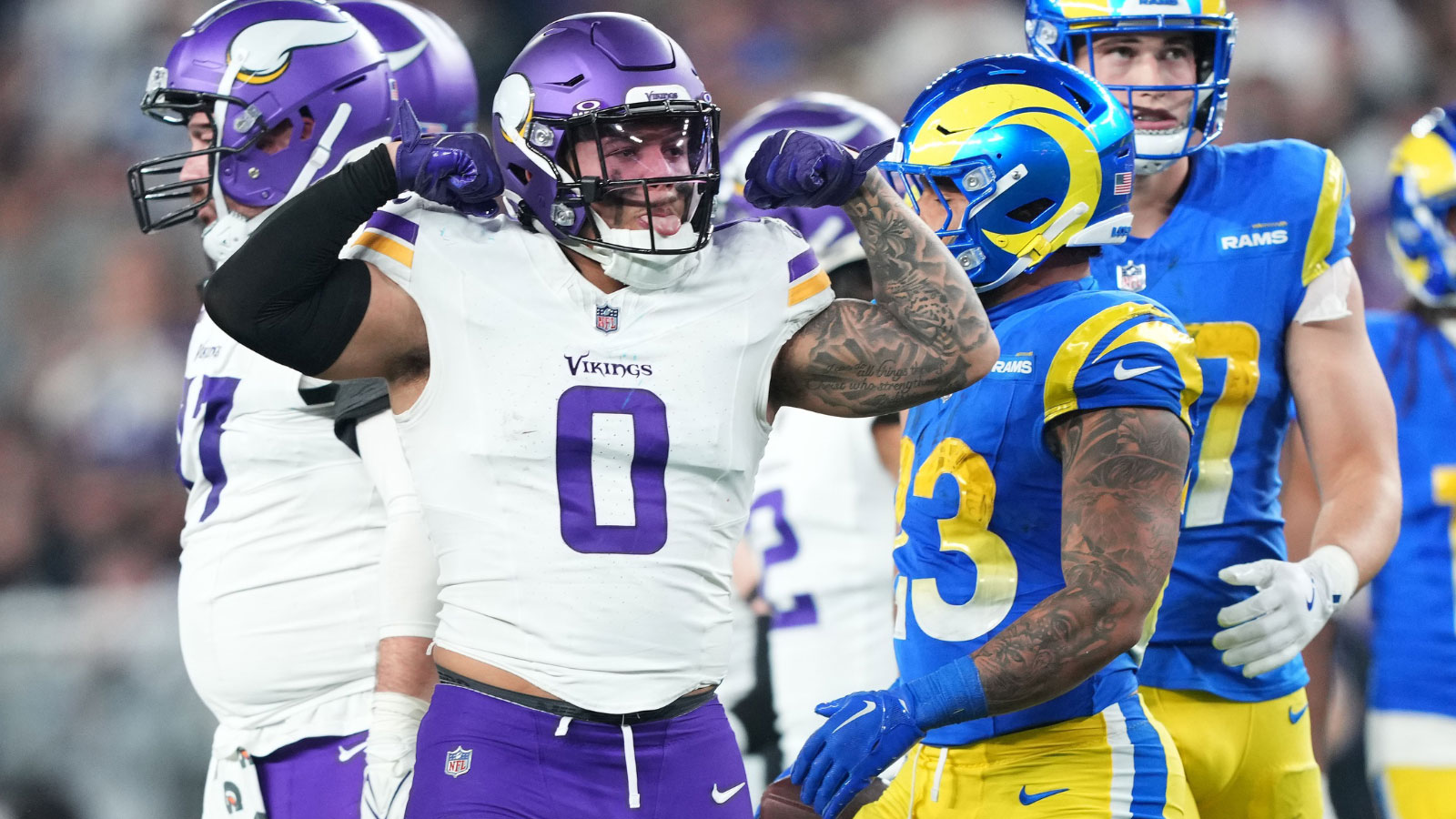
Ivan Pace Jr. is the most compelling trade candidate on the Minnesota Vikings' roster due to his diminished defensive role and a contract situation that makes a trade easier to justify.
Article Continues BelowPace seemed poised to become a permanent fixture in the Vikings' defense after joining the team as an undrafted rookie in 2023. In his first season, he recorded 102 tackles, 2.5 sacks, and an interception while starting in 11 games. He continued to showcase his ability to pressure quarterbacks in 2024, adding three sacks and establishing himself as an aggressive linebacker capable of contributing near the line of scrimmage. However, in 2025, his role began to change when Eric Wilson took on a larger role alongside Blake Cashman. Although Pace remained involved, his defensive opportunities became less frequent as the coaching staff adjusted the rotation. This trend has persisted into the current season.
After five appearances this year, Pace has played just 47 defensive snaps, while contributing 113 snaps on special teams. He has recorded 12 combined tackles during this stretch, with his defensive involvement largely limited to specialized assignments. The Vikings have also invested a second-round draft pick in Jake Golday, adding another young linebacker who might eventually take on a larger role, and while Pace remains a valuable contributor, his current responsibilities are significantly smaller than those he handled during his first two NFL seasons. His contract situation is particularly noteworthy. Minnesota retained him on a one-year restricted free-agent tender worth approximately $3.5 million, leaving his future beyond 2026 uncertain. A trade would allow another team to acquire an experienced linebacker without the burden of a substantial multiyear commitment.
For a team struggling to defend against the run or generate pressure with its linebacker rotation, Pace could provide immediate assistance. His prior production indicates he can handle greater responsibilities than what the Vikings currently require from him. The Vikings could also benefit financially from a trade while recovering a draft selection or using Pace as part of negotiations involving another position. However, there are limits to what they should expect in return. His reduced playing time means that a premium draft pick would be unrealistic, and opposing teams will recognize that the Vikings have successfully established a strong defensive rotation without relying heavily on him.
Nonetheless, a later-round selection could provide valuable resources to a front office looking to build sustainable depth through future drafts. The main argument against trading Pace lies in his significance on special teams and the potential for injuries at linebacker. Minnesota's defensive success relies on maintaining experienced players who can execute the assignments expected by defensive coordinator Brian Flores without extensive preparation.
Pace is already familiar with those responsibilities, and his knowledge of the organization would be difficult to replace immediately, but Minnesota must weigh whether retaining an experienced defender in a limited role is more valuable than trading him to a team that is prepared to utilize him more regularly. Among the three candidates, Pace presents the strongest combination of an expiring contract, established NFL experience, and a reduced defensive role. These factors make him the most realistic option for a trade before the November 10 deadline.
With Jennings facing a complicated future after a rejected trade and Ward struggling to earn defensive opportunities, Pace stands out as the clearest candidate for a transaction that could benefit both teams.