
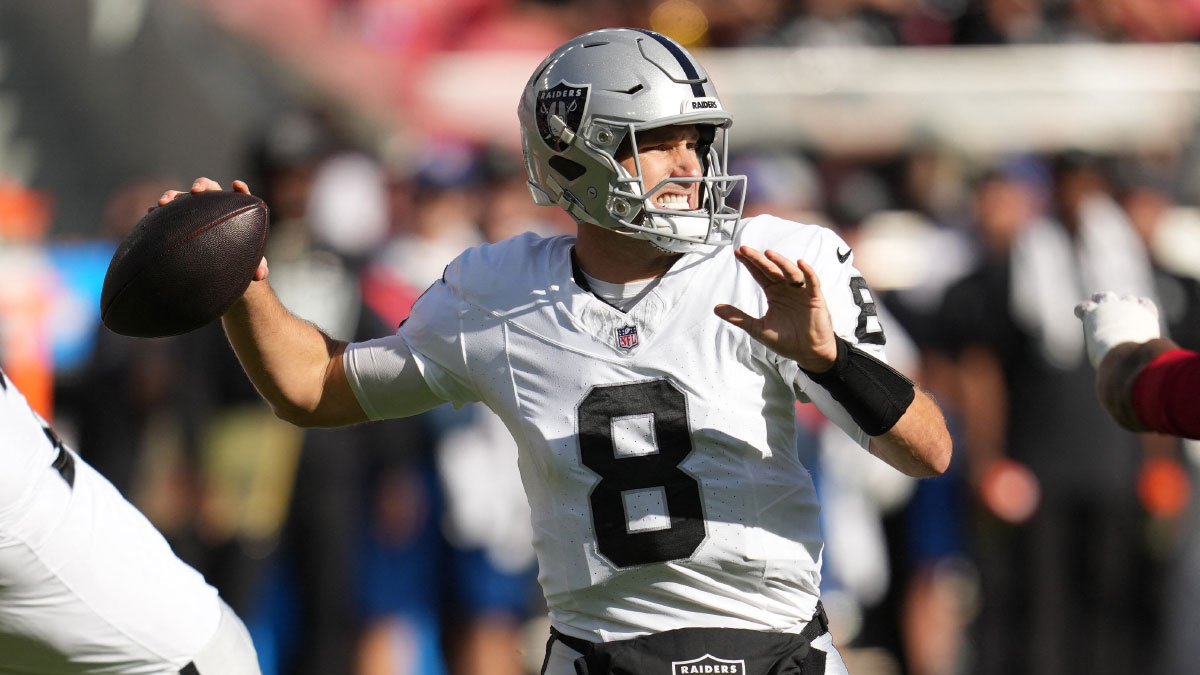
The Las Vegas Raiders’ 38-17 loss to the San Francisco 49ers featured enough breakdowns to spread accountability across the roster. Their defense surrendered three opening touchdown drives, and their offense committed five second-half turnovers. That combination turned a difficult road assignment into a defeat that dropped Las Vegas to 4-5.
But the blame should not be distributed equally. Kirk Cousins bears the greatest individual responsibility for the collapse, while the defense deserves the harshest collective criticism for allowing San Francisco to dictate the game before the turnovers arrived.
This was not simply an afternoon when a superior opponent made more plays. The Raiders repeatedly helped the 49ers turn manageable problems into decisive advantages.
Kirk Cousins’ turnovers destroyed the comeback chances
Cousins sits atop the blame list because his most damaging mistake arrived when Las Vegas still had an opportunity to regroup.
Trailing 21-10 at halftime, the Raiders opened the third quarter with a botched play-action exchange. Cousins recovered the loose football, then attempted a pass toward Tre Tucker as the receiver broke upfield. Rookie linebacker Jaden Dugger intercepted it and returned it 35 yards for a touchdown.
49ers PICK-6 🗣️
LVvsSF on FOX/FOX One
Stream on @NFLPlus pic.twitter.com/WzFsbaFdGL— NFL (@NFL) November 8, 2026
The initial mishandling was bad. The decision afterward was worse. Once the play’s timing disintegrated, Cousins needed to prioritize avoiding a catastrophic outcome rather than salvaging the original design.
Instead, an 11-point deficit became an 18-point hole without San Francisco’s offense touching the ball.
Cousins finished with three interceptions, including another costly throw intercepted by Renardo Green near the end zone. His final interception came on a desperate fourth-down attempt, but the earlier mistakes carried far greater consequences.
A veteran quarterback cannot guarantee a comeback. He can, however, avoid handing the opponent points while erasing his own team’s scoring opportunities. Cousins failed that standard.
The defense let Brock Purdy control the afternoon
The offense’s meltdown should not become an excuse for a defense that was already struggling badly.
San Francisco scored touchdowns on its first three possessions, with every drive lasting at least 12 plays. The 49ers controlled possession for more than 20 minutes before halftime, demonstrating sustained superiority rather than relying on a handful of explosive mistakes.
That distinction matters. Long touchdown drives indicate repeated failures to win early downs, contain the quarterback and finish possessions.
Brock Purdy repeatedly extended plays with his mobility and scored on a one-yard run. He finished with 232 passing yards, two touchdown passes and 40 rushing yards.
Las Vegas also allowed Jordan Watkins to catch all four targets for 86 yards, including a 37-yard touchdown. San Francisco generated that production despite playing without injured receivers Mike Evans, Deebo Samuel and Christian Kirk.
The Raiders needed to make the replacement targets prove themselves. Instead, they allowed the 49ers to operate comfortably across multiple phases.
Brock Bowers and Michael Mayer wasted valuable opportunities
Bowers deserves recognition for helping keep the offense competitive, including a 21-yard touchdown reception. However, both he and Michael Mayer lost fumbles during the third quarter, compounding Cousins’ opening mistake.
Those giveaways matter because the Raiders were not completely incapable of moving the football. According to the team’s recap, three second-half turnovers occurred in field-goal territory.
Mayer also committed offensive pass interference on a potential touchdown during a later possession, pushing Las Vegas backward before Green’s interception.
Ultimately, Cousins deserves the most individual criticism, but this defeat exposed interconnected failures, a defense that could not establish control, a quarterback who amplified adversity and trusted targets who failed to protect scoring chances.