
I was with Joe Torre long after the last game he managed for the Yankees, Game 6 of the 2003 World Series. Torre’s Yankees had just lost to Josh Beckett and the Marlins, 2-0. Beckett, just 23, had just pitched one of the dominant closeout games in Series history. He went the distance at Yankee Stadium on three days' rest, outpitched Andy Pettitte, stood there on the mound all night long and basically said, "Here it comes, see if you can hit it."
The Yankees couldn’t. Beckett struck out nine that night, including Derek Jeter to open the clincher, as he buzzsawed his way through the Yankees captain's lineup like a No. 4 train rumbling its way to the Stadium's 161 Street stop.
Now it really was very late at the old Stadium, and Torre was taking the long walk from his office to the other end of the hallway to congratulate Marlins manager Jack McKeon, who was a month shy of his 73rd birthday and had just rode Beckett all the way to the top of the mountain in baseball at last. And Torre, all class even on a tough night like this, was on his way to honor a great baseball man even older than he was.
“I waited a long time to make it to the front of the line,” Torre said, moving slowly on old catcher’s knees. “Jack waited longer.”
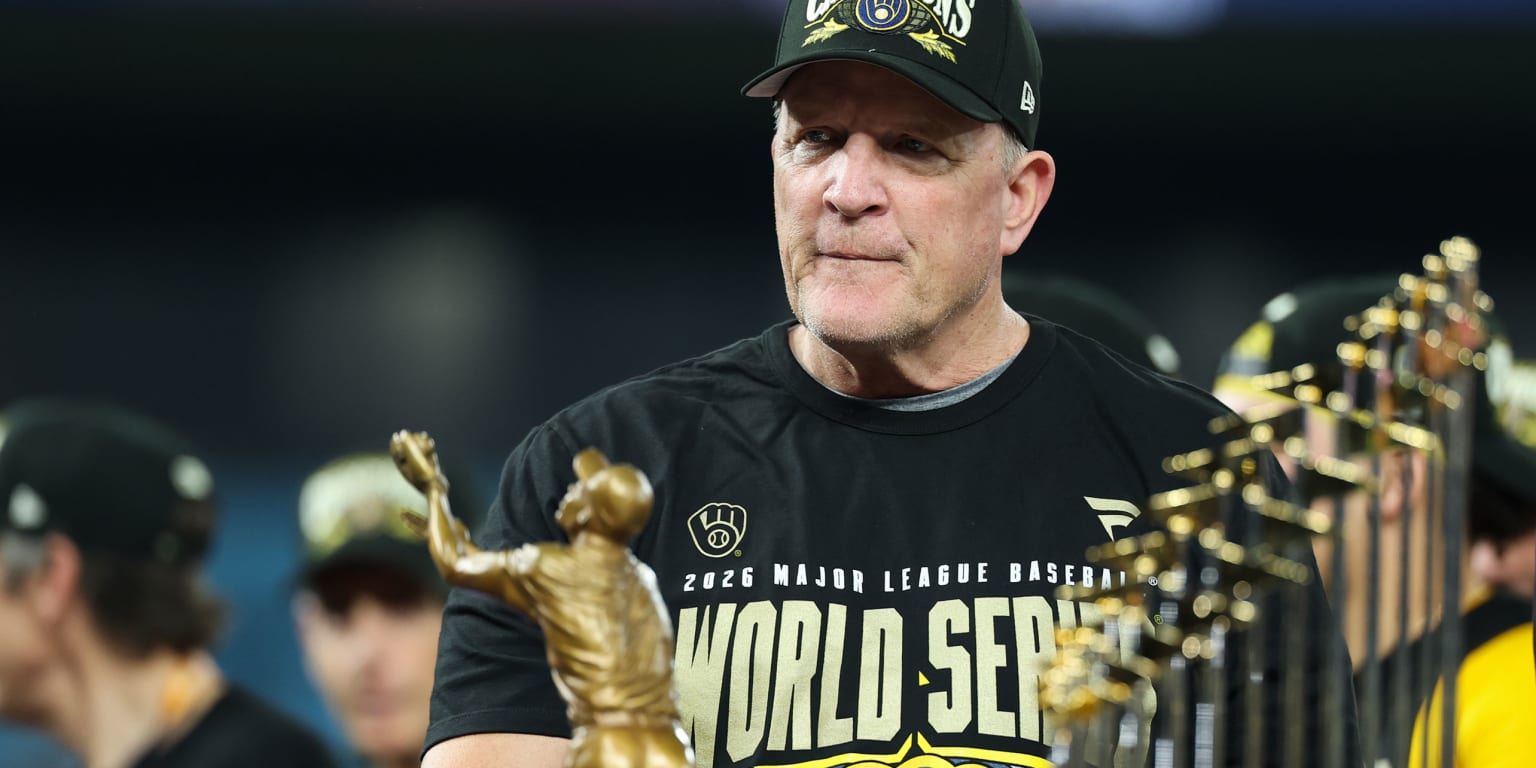
Pat Murphy, who spent all those years coaching college baseball, nearly three decades of college ball until he got his first coaching job in the big leagues, has made it to the front of the line at the age of 67. Murphy didn’t get his first coaching job in the big leagues until 2015 with the Padres, when he was about the same age as Torre was when he did win his first World Series with the Yankees. Now Murph’s great Irish mug is as much the face of what his Brewers just did as any of his players.
Of course, it’s all about the way the Brewers play the game, and the way they were made for the moment, after being the best team in baseball all season long. But there is no better headliner than the manager, whose road to Game 5 in St. Petersburg the other night began in 1982 at Maryville (Tenn.) College, where he wasn’t just the baseball coach but an assistant in football, too.
He finally ended up at Notre Dame, then Arizona State after that. He sat next to Craig Counsell in the dugout in Milwaukee, and when Counsell left to manage the Cubs, the job belonged to Murph. So it was right before his 65th birthday that he officially became a manager in the big leagues. In so many ways, though, he has never stopped being a college coach.
Here is what Sal Frelick, one of Murph’s World Series stars, said about his manager before the Series against the Rays even began, singing the praises of what he called Murph Ball:
“As soon as [Murphy] took over, he was running it like a college team. From the first year, he was building a way of baseball that he believed in.”
And here is something Murphy said back in 1992, when he was in the middle of his run at Notre Dame:
“I’m not a good coach, but I’m working hard to be a good coach. ... We’ve accomplished some things. I haven’t accomplished that much since I’ve been here, but the players have accomplished a whole lot.”
Those words are as much a way to understand who he is and the culture he has developed with the Brewers as anything else. Maybe he thought Notre Dame would be the best job he ever had in baseball. But then he stayed longer in Tempe, Ariz., with ASU than he had in South Bend. Now, a little more than a decade after he got his foot in the door in the big leagues, here he is. We know all about all the star turns we just saw -- one after another -- from the Brewers: Jake Bauers and William Contreras and Cooper Pratt and Frelick and all the others who got big hits and made big plays in the field. Then there was Jacob Misiorowski, Aaron Ashby and the other pitchers who took their turns.
But in the end, a baseball lifer like Murph was as much the star of the whole thing as any of them. Frelick talked about the “Average Joes” on the Brewers, including himself in there, coming together to do something great. It couldn’t possibly have happened without the manager, who doesn’t look as if he should just be drinking all the beers that make Milwaukee famous, but as if he would be right at home standing behind a bar and pouring it.
Once the great Joe Torre was as much the face of the championship Yankees as any of his star players. Now it’s the same way with his Brewers. It took him a long time and a long and wonderful baseball life to make it to the front of the line. Finally made it. It’s like a song title from his guy, Bruce Springsteen: Long walk home for Murph.