
On Sunday, Eagles coach Nick Sirianni willingly took blame for the decision to put the kickoff in play with eight seconds left and a one-point lead over Jacksonville. He’s not willing to take blame for managing the prior scoring drive in a way that would have left the Jaguars with even less time.
A 17-yard completion from quarterback Jalen Hurts to tight end Dallas Goedert had given the Eagles a first down at the Jacksonville 34. After the play, the Jaguars took their second timeout. Twenty-five seconds remained.
From there, here’s what happened. First, Hurts threw an incomplete pass. Twenty-one seconds remained. Then, Hurts threw to receiver Makai Lemon, who failed to go down in bounds and was pushed out of bounds after a seven-yard gain. Seventeen seconds remained. Next, a run on third down resulted in a three-yard loss. The Jaguars called their final timeout. Twelve seconds were on the clock.
After the field goal, eight seconds remained. And then it all fell apart for Philly.
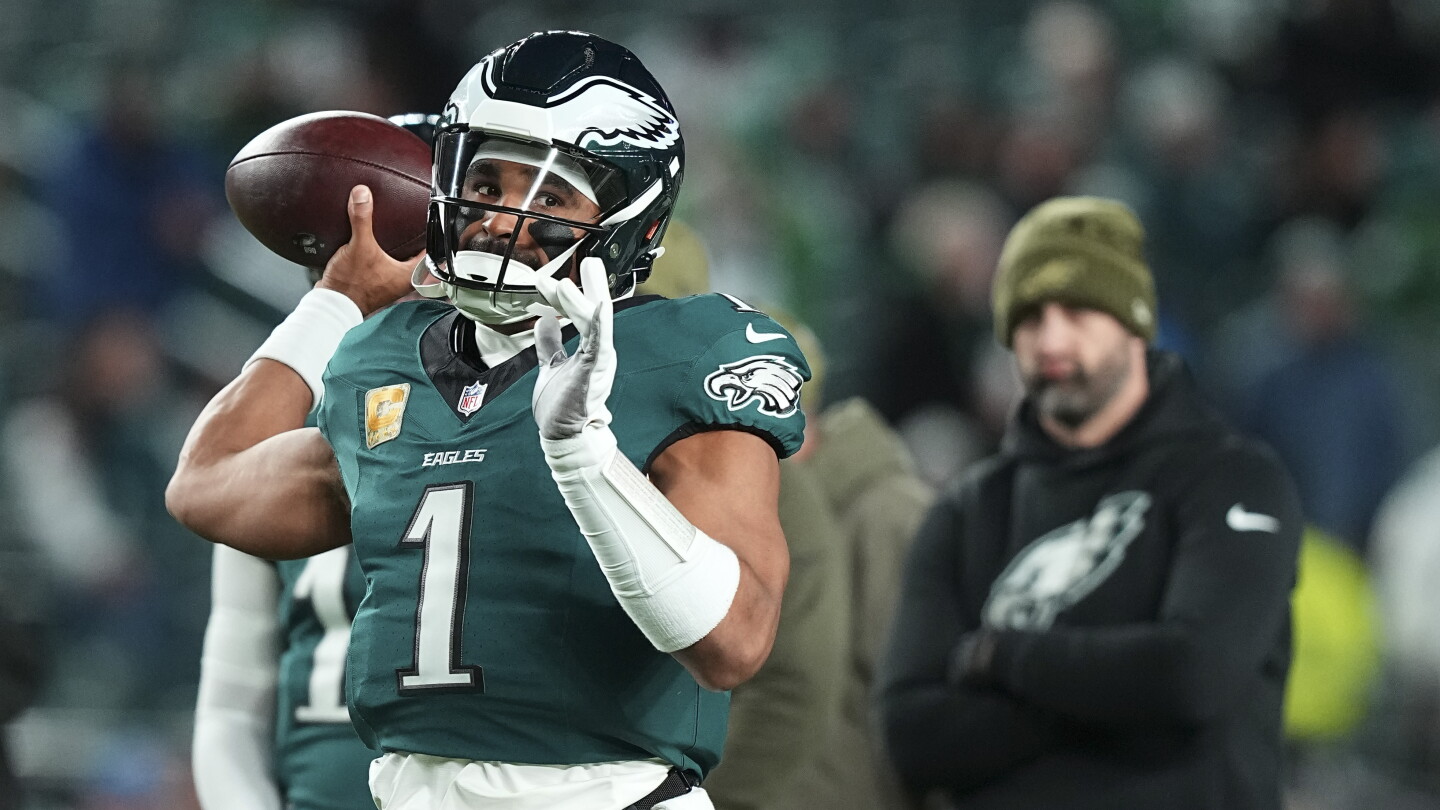
During his postgame press conference, Eagles quarterback Jalen Hurts seemed to express disagreement with the management of the clock on Philly’s final drive from the moment they earned a first down at the 34 with 25 seconds left.
“It’s not my place, and we’re prepared — I’m prepared as a quarterback to not worry about those things,” Hurts told reporters. “So I’m honoring a play call, honoring the things that are coming in the game. When I’m up at night, yeah, I think about, ‘Man, should I have said something, or should I have took a step back and said, “Wait”?’ But ultimately, there’s a commitment to that and going out there and executing. And so this was one where it did not work in our favor.”
On Monday, coach Nick Sirianni seemed to express disagreement with Hurts’s belief that he shoul have expressed disagreement while it was happening.
“Jalen’s playing,” Sirianni told reporters. “We’re coaching and calling the plays, and Jalen’s got to go execute what we call in that moment, 100 percent. We’re not asking him to make play calls in that scenario. He’s already got enough to worry about to go out and execute. That’s where we were there in that situation.”
Sirianni then elaborated on why the Eagles did what they did on their final drive.
“Leading up to Jake [Elliott’s] kick, we practice that situation every Wednesday,” Sirianni said. “Every single Wednesday, we practice what we call two-minute to four-minute. It’s a little more complicated than I think people understand. My opinion is that people stop trying — you get to around the 35, you’re in range, and people stop trying to advance the ball forward. When you advance the ball forward, you make the kicker’s job easier. We are all trying to do our part to help each other be at their best. You guys can look up the percentages when the ball gets in certain spots on the field league-wide.
“Because if you don’t make the kick, nothing else really matters. So, in that situation, you’re trying to move the ball forward. Running it is an option, obviously, but with what Jacksonville was doing in that particular case, it wasn’t going to be an option. You saw what happened when we ran it on the third down. I never think that it’s something that you can say, ‘OK, I’m going to wait ‘til third down to pass the ball.’ You have no idea how many times it’s going to take you to advance the ball a little bit more forward.
“We didn’t get any yards and got an incomplete pass on the first play. We gained yards on the second play, and then on the third play, we ran it and lost yards there against a full-out pressure. You have to gauge what the defense is doing -- I end up watching those situations each week and any two-minute to four-minute from a -- not only do we practice it, I’ll study those situations throughout the week, whatever I deem kind of came up that way in pro football. In my opinion, I think you see a lot of times teams take their foot off the gas there. Now, you’d love for the last play of the game to be your kick, but you’d also say, ‘Hey, if I can get that clock under 20 seconds, you’re accomplishing that as well.’ Leading into that last play, I said what I said yesterday. I stand by that. I did not make the decision that I wanted to make there in that particular case, and it cost us. There’s nothing else to be said about that.
“But leading up to Jake’s kick, to answer your question, that’s my thought process there, to bring you inside that a little bit without giving too much information. That’s my thought process in that situation. I stand by what I did in that situation, had eight seconds left to go in the game once we gave the ball back to them, and that’s where my decision is that I regret what I did then after that. But to give them back the ball with eight seconds left, I think we did what we needed to do as an offense, and you obviously saw the success of Jake’s kick in that particular case.”
If Lemon had simply fallen down in bounds, it wouldn’t have been an issue. The Jaguars would have used their final timeout, and the Eagles could have run the ball, called a timeout with three or four seconds left, and kicked a walk-off field goal.
Is that on Lemon? Is it on the coaching staff for calling a play that put the ball so close to the sideline? Is it on Hurts for throwing to a player who was near the sideline, when he had a man wide open on the thirty-two at the left hash?
Regardless, Sirianni has no regrets as to how things played out before the final kickoff. Hurts apparently does. It’ll be interesting to monitor that dynamic if other questions regarding game management, play-calling, etc. emerge as the year moves forward.