
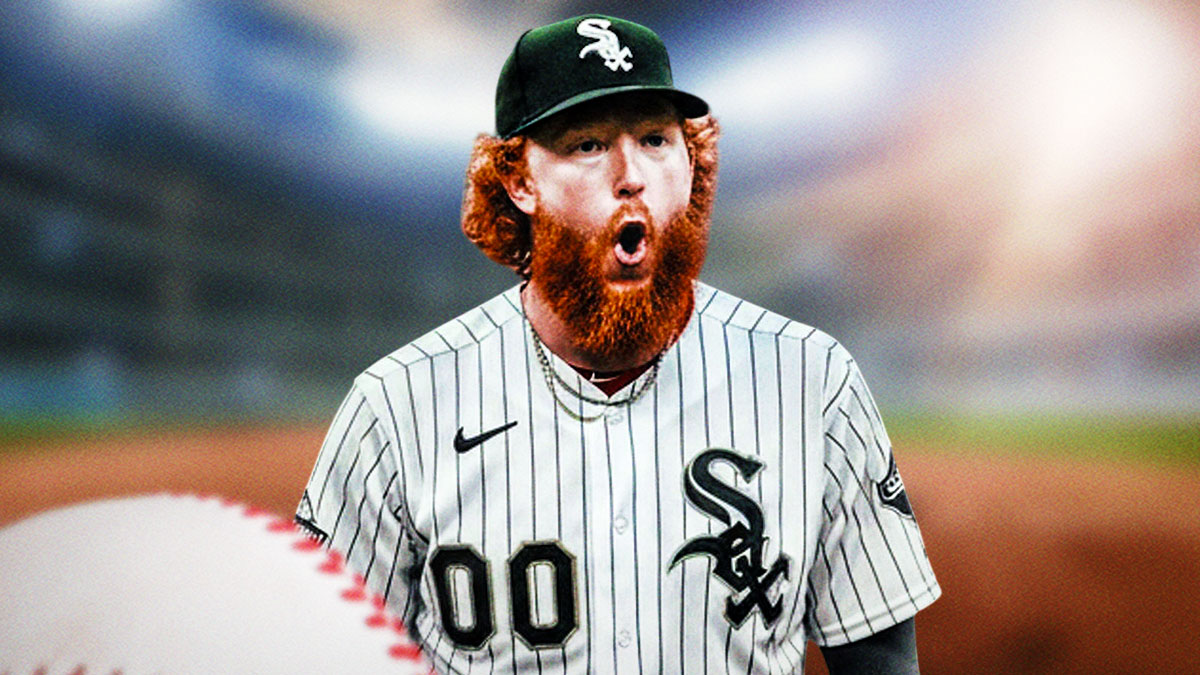
The Chicago White Sox have made their first significant rotation investment, reaching a reported three-year, $52.5 million agreement with Dustin May that the club has not yet confirmed. Their next move should be another starting pitcher, specifically, an aggressive pursuit of Michael King.
That might sound excessive immediately after committing substantial money to May. But Chicago’s surprising playoff appearance should change how the front office evaluates its needs. The White Sox finished 84-78 in 2026 and reached October after three consecutive 100-loss seasons. Protecting that progress requires more than adding one intriguing arm and hoping the remaining questions resolve themselves.
May should be part of the solution, not the entire pitching plan.
May improves depth, not certainty
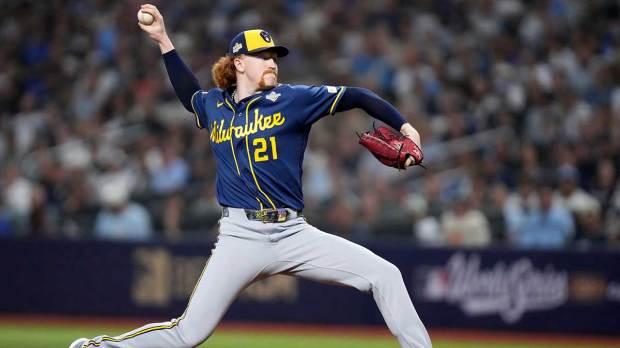
There are legitimate reasons to like Chicago’s investment. May made a career-high 31 starts and threw 145 2/3 innings in 2026, finishing with 144 strikeouts and a 4.70 ERA between St. Louis and Milwaukee. His 96.9 mph average fastball velocity and 3.63 FIP offer reasons to believe his results can improve.
Still, the White Sox are purchasing potential alongside risk. May posted a 5.65 ERA across 10 regular-season starts after joining the Brewers, then recorded a 5.73 ERA during their championship postseason. Those numbers do not erase his upside, but they make it difficult to view him as the unquestioned answer for a pivotal October start.
Chicago’s broader rotation picture reinforces that concern. Its starters ranked last in baseball with 674 2/3 innings, 28th with 621 strikeouts and 26th with a 4.60 ERA in 2026. The frequent use of openers helps explain the workload total, but not the need for improvement.
Grant Taylor’s move into the rotation adds considerable promise after a season featuring a 2.25 ERA and 106 strikeouts. However, he threw only 84 regular-season innings and has limited experience working deep into games. Expecting him to immediately carry a full starter’s workload would place unnecessary pressure on both Taylor and the bullpen.
Make Michael King the priority
King offers the combination Chicago should prioritize: recent production, a substantial workload and experience handling important postseason assignments. He finished 2026 with a 3.21 ERA, 159 strikeouts and a career-high 185 innings across 32 starts for San Diego.
His October work strengthened that case. King allowed one run over 12 innings in two postseason starts before adding two scoreless relief innings and a save against Milwaukee. For a White Sox team that leaned heavily on unconventional pitching arrangements during its playoff run, that versatility would be particularly valuable.
Article Continues BelowKing became a free agent after declining his player option. Chicago would have to compete for him rather than assume its newfound momentum guarantees a signing.
There are also reasons for financial discipline. King enters his age-32 season, and his 4.13 FIP and 21% strikeout rate in 2026 were less impressive than his ERA. The White Sox should price in possible regression rather than pay as though another low-3.00 ERA is assured.
One advantage is that King cannot receive another qualifying offer after getting one last offseason, meaning signing him would not require draft-pick compensation. That makes him especially appealing for a club trying to strengthen its major league roster without sacrificing its developmental pipeline.
Chicago also needs a right-handed outfielder, a priority general manager Chris Getz has identified. But that search should not end the rotation pursuit. Pairing King with Sean Burke, May and Taylor would give the White Sox a stronger foundation while allowing their younger pitchers to earn opportunities instead of being counted on to rescue the staff.