

Every year, the NBA All-Star Game features the best basketball players in the world squaring off in the ultimate superstar showdown. The game itself is polarizing, as a lack of defense and effort leads to a boring product in the minds of some, but many fans enjoy high-scoring affairs in which players are attempting crazy dunks and making shots from well beyond the 3-point arc.
Being an All-Star is about much more than just the game itself, though. The accolade of All-Star is even more important, as it diagnosis who the best players are in a particular season. Everyone knows that there are All-Star snubs on a nearly yearly basis, and it is also common knowledge that some underserving players have made the All-Star Game before.
Being an All-Star starter is even more important, as those players are supposed to truly be the best of the best. Again, voters haven't always gotten it right. It is bizarre when you see a player who starts the All-Star Game who clearly doesn't deserve to be there. So, who are the most unlikely All-Star starters in NBA history?
Andrew Wiggins: 2022
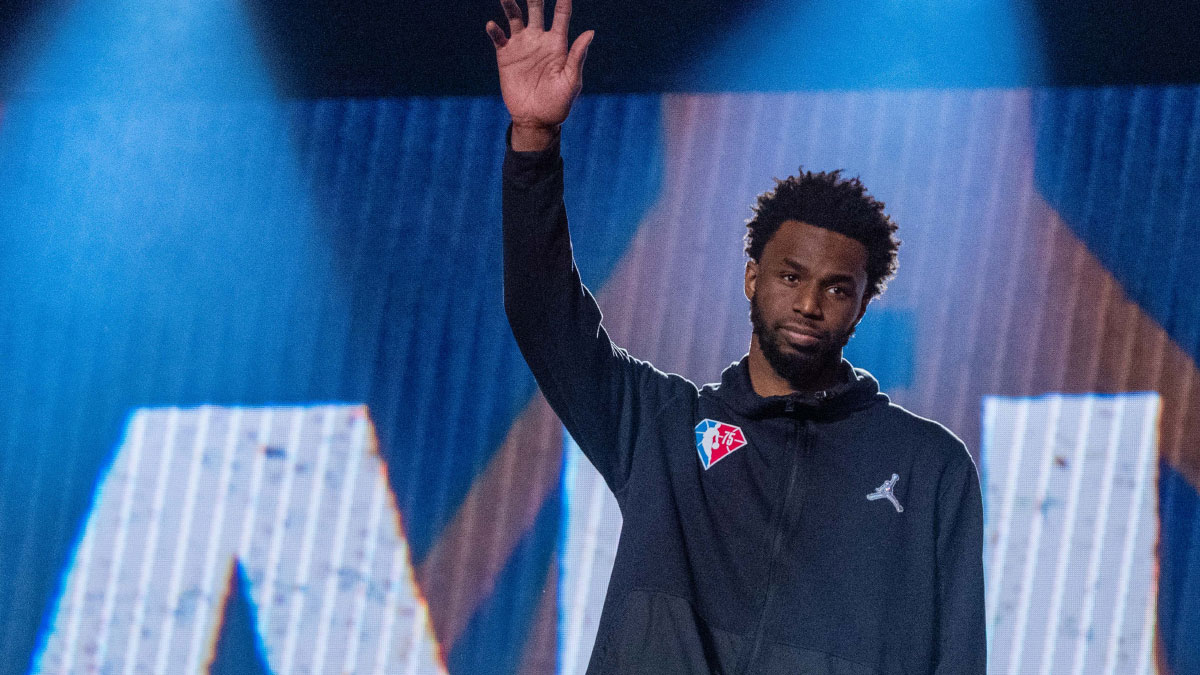
Stats: 17.2 points, 4.5 rebounds, 2.2 assists per game
Andrew Wiggins played fourth fiddle to Stephen Curry, Klay Thompson, and Draymond Green during the end of the Golden State Warriors dynasty. Gone was Kevin Durant and the days of guaranteed championships, but Wiggins, a former number one overall pick, had started to come into his own in Golden State.
Wiggins put up decent scoring numbers with the Minnesota Timberwolves, but his inefficient ways led to some handing him the bust label. The former first overall selection proved he could adapt his game and contribute to winning once he was traded to the Warriors. Even so, while his lone All-Star nod was deserved in 2022, fans were shocked to see Andrew Wiggins’ name in the Western Conference’s starting lineup. While his numbers were decent, there were just other players who deserved that spot.
For Wiggins, an endorsement from BamBam, a star K-Pop performer, played a huge part in securing him the votes to be an NBA All-Star in the first place. Wiggins was a favorite of the global superstar with a huge following, so he received the votes to be named a starter. Add in the injuries to stars such as Kawhi Leonard, Paul George, and Anthony Davis, and the stars aligned for Wiggins to secure the starting spot.
Dick McGuire: 1956
Stats: 6.9 points, 3.5 rebounds, 5.8 assists per game
The NBA was in a much different place in the '50s. Only eight teams were in the league, so it was much easier to become an All-Star. Still, if you score less than double figures per game, you probably don't deserve to get into an All-Star Game, let alone start in one. Nevertheless, Dick McGuire was able to do so in 1956, despite that season being arguably the worst season of his career.
McGuire averaged just 6.9 points per game. Now, he was a single-digits scorer during all seven of his All-Star seasons and each of his 11 seasons overall, but 6.9 points are bench player numbers, not All-Star starter numbers. McGuire was a great playmaker for his era, but that simply didn't make up for the lack of scoring. Playing in Madison Square Garden likely boosted his popularity. Being a New York Knick at that time did have some perks.
A.C. Green: 1990
Stats: 12.9 points, 8.7 rebounds, 1.1 assists per game
A.C. Green was one of the key pieces that contributed to three NBA championships for the Los Angeles Lakers. Green was the NBA's Iron Man, having played in 1,192 consecutive games. He was incredibly consistent and reliable, but also played hard-nosed defense. Although this role was instrumental, it didn’t merit an NBA All-Star Game starting nod. Green just didn't have the offensive prowess to justify that when he scored 12.9 points per game in 1989-90.
However, it does help your popularity to play alongside the likes of Vlade Divac, Magic Johnson, and James Worthy. It was obvious that Hall of Famers Chris Mullin or David Robinson deserved that starting spot over Green. The proof was in the pudding come the All-Star Game itself, as Green went scoreless despite getting the starting nod.
B.J. Armstrong: 1994
Stats: 14.8 points, 2.1 rebounds, 3.9 assists per game
Everyone was cheering for the Chicago Bulls in the '90s. The team had two separate three-peats, and they became must-watch TV after the first. However, what do fans do when you can’t vote for Michael Jordan? You vote in the next best guard on the Bulls squad, which turned out to be B.J. Armstrong. Jordan retired after winning his first three championships to pursue baseball. In his stead as an All-Star starter, Armstrong took his place.
In fairness, in 1994, Armstrong was in the midst of the best scoring season of his career. Furthermore, prior to that season, he also led the league in 3-point percentage with a scorching-hot 45.3 percent clip. Still, Armstrong was a reserve for the vast majority of his career, and even when he stepped his game up in the mid-'90s, he'd only become a 14.8-point-per-game scorer. The Bulls were still popular without Jordan, and Armstrong reaped the rewards.
Anthony Mason: 2001
Stats: 16.1 points, 9.6 rebounds, 3.1 assists per game
Anthony Mason was one of the best scrappers in the league during his time. Although he was a solid player, the lone time he was selected as an All-Star starter was a head-scratcher. During the game that he was elected to after averaging 16.1 points per game, Mason started over future Hall of Famer Dikembe Mutombo, who was averaging a solid double-double and 2.7 blocks per game. Mason would go on to finish the game scoreless with four rebounds. On the other hand, Mutombo dominated the game with six points and 22 rebounds.
The enforcer role has been lost to the test of time, and Mason was one of the best ever. His lone All-Star appearance was also is second-best scoring season ever. It can be argued that Mason deserved to be an All-Star, but All-Star starter might have been pushing it.
Steve Francis: 2004
Stats: 16.6 points, 5.5 rebounds, 6.2 assists per game
While playing for the Houston Rockets, Steve Francis was a consistent scoring threat until the 2003-04 season. In his fifth season, his scoring output crashed from above 20 points per game to just 16.6. Despite putting up his lowest scoring season for the Rockets, he did enough to get an NBA All-Star starting selection.
Despite his mediocre output, Francis was chosen to start over Ray Allen and Sam Cassell, who were averaging 23 points and 19.8 points, respectively. Francis' prime was electric, but short, and All-Star voters should have diagnosed that his time at the top was over when they gave him his third and final All-Star nod.
Allen Iverson: 2010
Stats: 13.8 points, 2.8 rebounds, and 4.0 assists per game
Although Allen Iverson pieced together a legendary career, his final season in the NBA wasn’t impressive at all. Earlier in his career, Iverson led the league in scoring four times. He was a giant slayer who showed no fear on the basketball court, and his classic step-over play is one of the most iconic in NBA history. Even after leaving the Philadelphia 76ers, he was still a potent scorer with the Denver Nuggets.
Come his time with the Detroit Pistons, Memphis Grizzlies, and a retirement tour with the 76ers, Iverson was a shell of his former self. He only appeared in 28 games overall in 2009-10 and wasn’t happy with his role with the Grizzlies. Only three of those games came in Memphis. However, contemplating retirement surely triggered fans to vote him in as an All-Star starter. Fans simply wanted to get a last look at The Answer before he left the league after the season. Iverson averaged just 13.8 points per game during his final season, which undeservedly coincided with an All-Star start.
Yao Ming: 2011
Stats: 10.2 points, 5.4 rebounds, 0.8 assists
Yao Ming is arguably the best basketball player to come out of Asia. He was an All-Star for every season he played in the NBA and was eventually inducted into the Basketball Hall of Fame. Paul Arizin, Bob Pettit, Jerry West, and Julius Erving are the only other players who can say they were never not an All-Star.
However, Ming getting the starting spot at the 2011 All-Star Game certainly raised eyebrows. Yao had only played five games during the regular season due to injuries. Furthermore, his numbers certainly didn’t have any All-Star pop. His 10.2 points per game were basically half of what fans were accustomed to. However, if you’re a proud product of (at the time) the most populated basketball-crazed nation like China, getting the votes proved to be a piece of cake.
There is no doubting that Ming revolutionized the game. The 7-foot-6 center helped expand the game to a global level, and his frame certainly made him a site to behold. Considering Ming played fewer games in 2010-11 than days in a week, he certainly shouldn't have gotten such a prestigious accolade to end his career.
Julius Erving: 1987
Stats: 16.8 points, 4.4 rebounds, 3.2 assists
As mentioned above, Julius Erving is one of five players ever who made the All-Star game every season of their NBA careers. This is partially because Doctor J entered the league as a bona fide professional star. While many great players have to prove themselves as rookies before they are given an All-Star vote, Erving already proved himself as the best player in the ABA. His aerial expertise was the stuff of legend well before he was an NBAer.
Erving kept his All-Star streak alive during his final season in 1987, despite no longer being the player he once was. Erving's dunking wasn't as explosive as it once was, and he averaged just 16.8 points per game with Charles Barkley operating as the Philadelphia 76ers' best player. Being handed one final All-Star start meant that Erving was an All-Star in all five of his ABA seasons and all 11 of his NBA years.
Article Continues BelowKevin Garnett: 2013
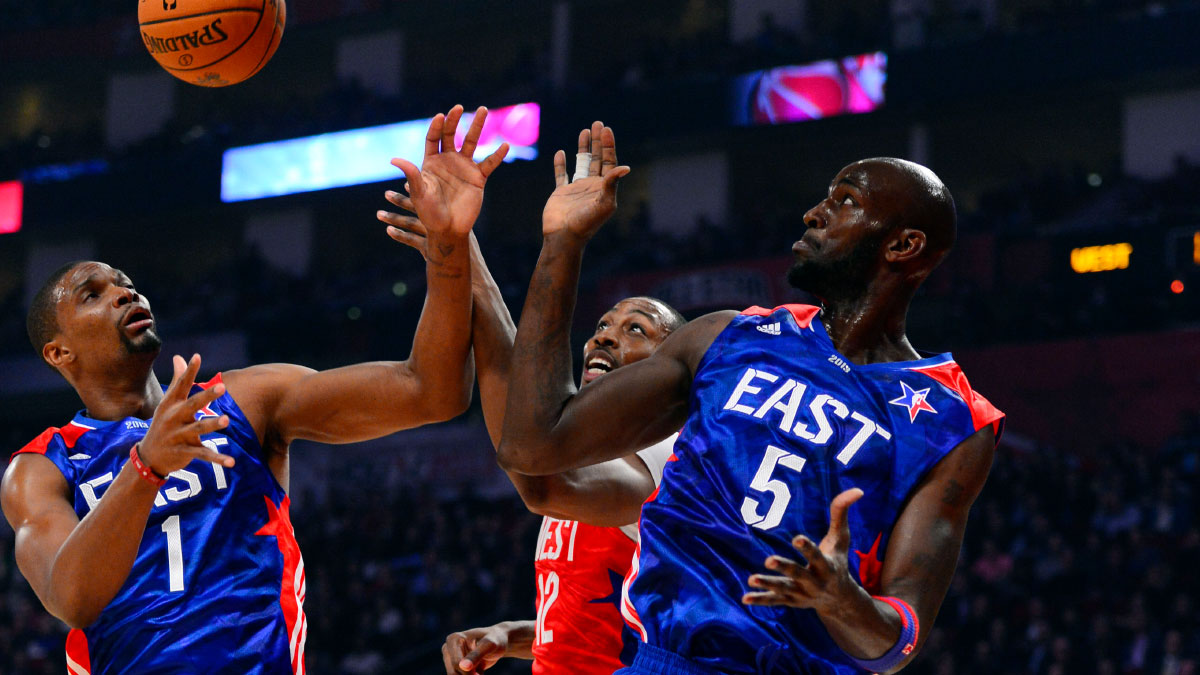
Stats: 14.8 points, 7.8 rebounds, 2.3 assists per game
When it came to being the heart and soul of the team, Kevin Garnett was at the center of it during his run with the Boston Celtics. He played an instrumental role in Boston’s championship in 2008. The all-time great power forward played with intensity and had a lethal mid-range jumper to boot.
Thus, he cemented a decorated legacy in the league. However, one can argue that he didn’t deserve the starting spot in the 2013 All-Star Game. KG started over the likes of Joakim Noah, Brook Lopez, and Tyson Chandler despite his so-so numbers. One could also argue that All-Star snubs Al Horford and Al Jefferson would have also made a good case for starting.
Garnett and his 14.8 points per game were still good in 2012-13, but no longer great. This is illustrated by the fact that he was traded to the Brooklyn Nets just one year later in a deal that many consider to be the worst trade in NBA history.
Kobe Bryant: 2014
Stats: 13.8 points, 4.3 rebounds, 6.3 assists per game
There is no question that Kobe Bryant is one of the best scorers ever. Equipped with the Mamba Mentality, the late Bryant was nearly impossible to guard, as he could score from all three levels and simply had a willpower that was unmatched. However, Bryant certainly didn’t deserve the All-Star starting position in 2014 with is play on the court.
Bryant only played in six games and tallied his second-worst scoring output of his career, the lowest since his rookie season. Although he didn’t play that game due to injury, fans clearly had immense respect for Bryant. He had more votes than even the likes of Stephen Curry.
Magic Johnson: 1992
Stats: 0 points, 0 rebounds, 0 assists
The honor for being far and away the worst All-Star belongs to Magic Johnson in 1992. That's right, Johnson is not just the most unlikely All-Star starter ever, but the worst All-Star in history overall. Now, Johnson is arguably the best point guard of all time. He was the pioneer of the Showtime Lakers teams that won five championships, and his flashy passing trumps arguably any other player in league history.
However, his 12th All-Star nod was not like his first 11. Johnson didn't play a single minute during the 1991-92 season, as he was retired because of his HIV diagnosis. Johnson was voted an All-Star starter regardless, and he proved he still had plenty left in the tank when he decided to play in the game. The three-time MVP had 25 points and nine assists en route to winning All-Star MVP honors. His last-minute 3-pointer was the highlight of the performance.
It was a feel-good moment for NBA fans who grew to idolize Johnson. However, it is pretty disrespectful to other players that he received a spot that wasn't earned in the slightest.