
Kenneth Walker III's Kansas City Chiefs debut was lit. He announced himself as the new major weapon of an offense that suddenly looks far more dangerous than it did a year ago. After torching the Denver Broncos for 173 rushing yards and two touchdowns, Walker now gets a matchup that could be even more favorable. The Indianapolis Colts just watched Derrick Henry bulldoze their defense for 144 yards and three touchdowns. Henry's performance was about power and punishment. Walker brings that same physicality with another dimension: lateral explosiveness. If Indianapolis has not fixed what went wrong in Week 1, Kansas City could be ready to make those problems look even worse.
Kansas City's new identity
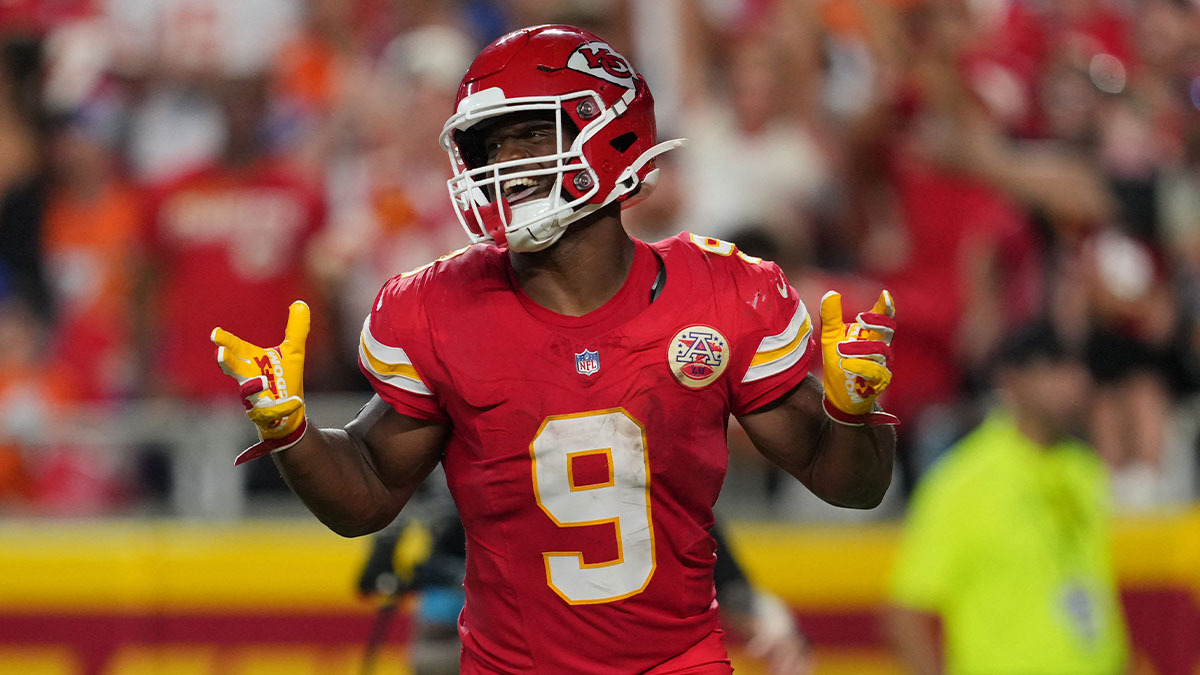
Facing a vaunted Denver defense, the Chiefs completely rewrote their offensive identity around Walker's electric running ability. They had a disciplined offensive line featuring Kahlil Benson stepping up at left tackle. As such, Walker dismantled Denver's defensive front with patient vision and explosive acceleration. He carried the ball 23 times for 173 yards. That was highlighted by a spectacular 60-yard touchdown on fourth-and-one. It showcased precisely what makes him so dangerous. Walker pressed the interior, recognized Denver crashing inside, bounced outside, and outran the secondary. He added 18 receiving yards and a two-yard touchdown catch. He tallied a total of 191 scrimmage yards and two scores.
More importantly, the performance changed the geometry of Kansas City's offense. Patrick Mahomes did not need to manufacture every explosive play through the passing game. Walker's presence forced Denver to respect the run. The Chiefs repeatedly leaned into that advantage. Kansas City finished with 392 total yards while Denver managed only 176. Walker's 173 rushing yards alone nearly matched the Broncos' entire offensive production.
Dismantling Indianapolis
Sure, the Chiefs were celebrating their opening statement. Indianapolis, for their part, spent Week 1 getting thoroughly overwhelmed by Baltimore's bruising ground attack. Henry ran for 144 yards and three touchdowns on 24 carries. He repeatedly found room behind Baltimore's blocking schemes and punished Indianapolis when it failed to close running lanes.
The problem was how consistently Baltimore created opportunities for Henruy. Indianapolis struggled to contain a rushing attack that combined physical blocking with misdirection. That allowed Henry to reach the second level before defenders could establish leverage. A 32-yard Henry touchdown run in the second half showed what happens when the Colts lose their fits and pursuit angles.
Kansas City's coaching staff undoubtedly noticed. Andy Reid does not need to copy Baltimore's offense play for play. He simply needs to recognize that Indianapolis can be stressed on the ground. Walker then offers a different way to exploit the same vulnerability.
Matchup nightmare
If the Colts struggled to contain Henry's linear, north-south momentum, trying to contain Walker's running style presents a different kind of nightmare. Henry overwhelms defenders with size, power, and sustained acceleration. Walker can punish the same defensive mistake before defenders even have time to react.
His Week 1 performance demonstrated that perfectly. Walker forced missed tackles and repeatedly turned ordinary runs into chunk gains. NFL tracking data credited him with 14 forced missed tackles and 101 rushing yards over expected. That proved just how much production he created beyond what his blocking alone provided.
That becomes especially important against Indianapolis. The Colts cannot simply crash their defensive front toward Walker. Kansas City has enough speed and creativity to punish overcommitment. Walker can press a designated gap, or wait for the defensive line to declare its intentions. He can then make a decisive cut. If the interior opens, he has the burst to attack it. If defenders collapse inside, he has the lateral quickness to bounce outside. And once Walker reaches the second level, the equation becomes even more dangerous.
An even bigger problem
The Colts also have to account for the quarterback standing behind Walker. Mahomes' return from his knee injury produced 184 passing yards, two touchdown passes, and a rushing touchdown. However, his most important contribution may have been what his presence did to Denver's defensive priorities.
Defenses cannot sell out against Walker when Mahomes can punish them with play-action. They cannot consistently stack the box without leaving Rashee Rice, Travis Kelce, and Kansas City's other weapons isolated. That gives Reid the flexibility to make Walker the offensive engine without making the Chiefs predictable.
Pick your poison
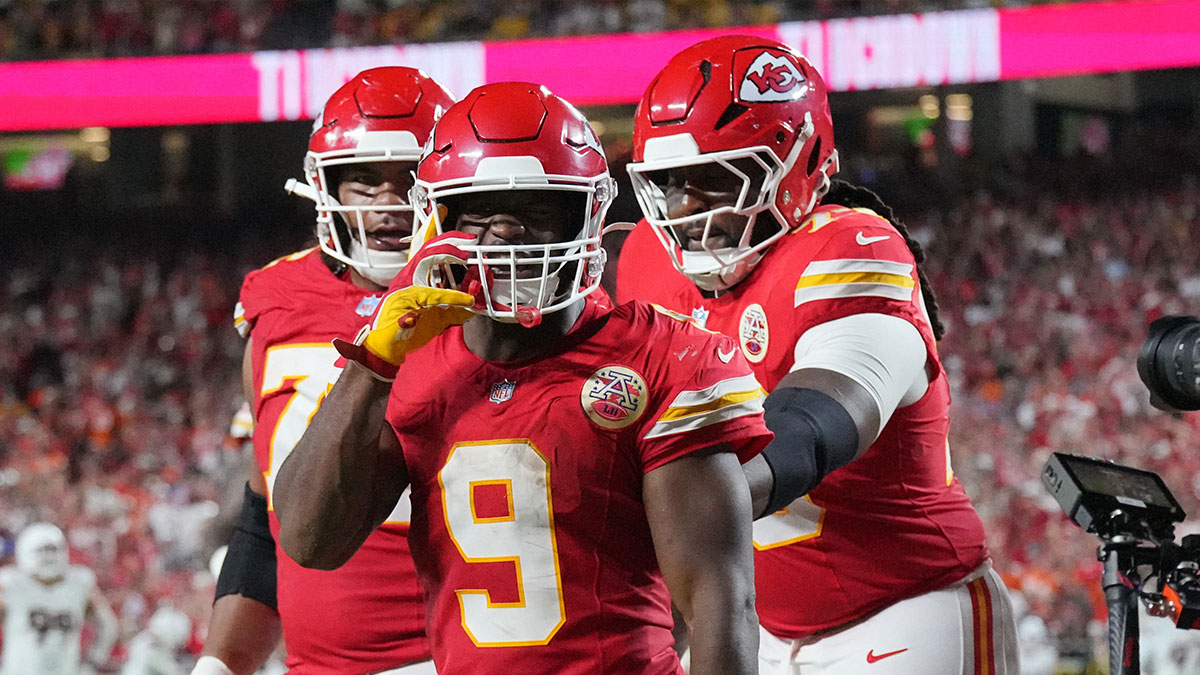
The Colts have already shown that a physical, explosive running back can cause serious problems for their defense. Walker is not Henry, of course. Kansas City does not need him to be. They do not need him to replicate Henry's exact stat line to win. That said, the structural matchup is difficult to ignore.
Walker just proved he can carry a massive workload, create explosive runs, and contribute as a receiver. Now he faces a defense that surrendered 144 rushing yards and three touchdowns to Henry one week earlier. For Walker and the Chiefs, it is not a matchup but really an invitation.