
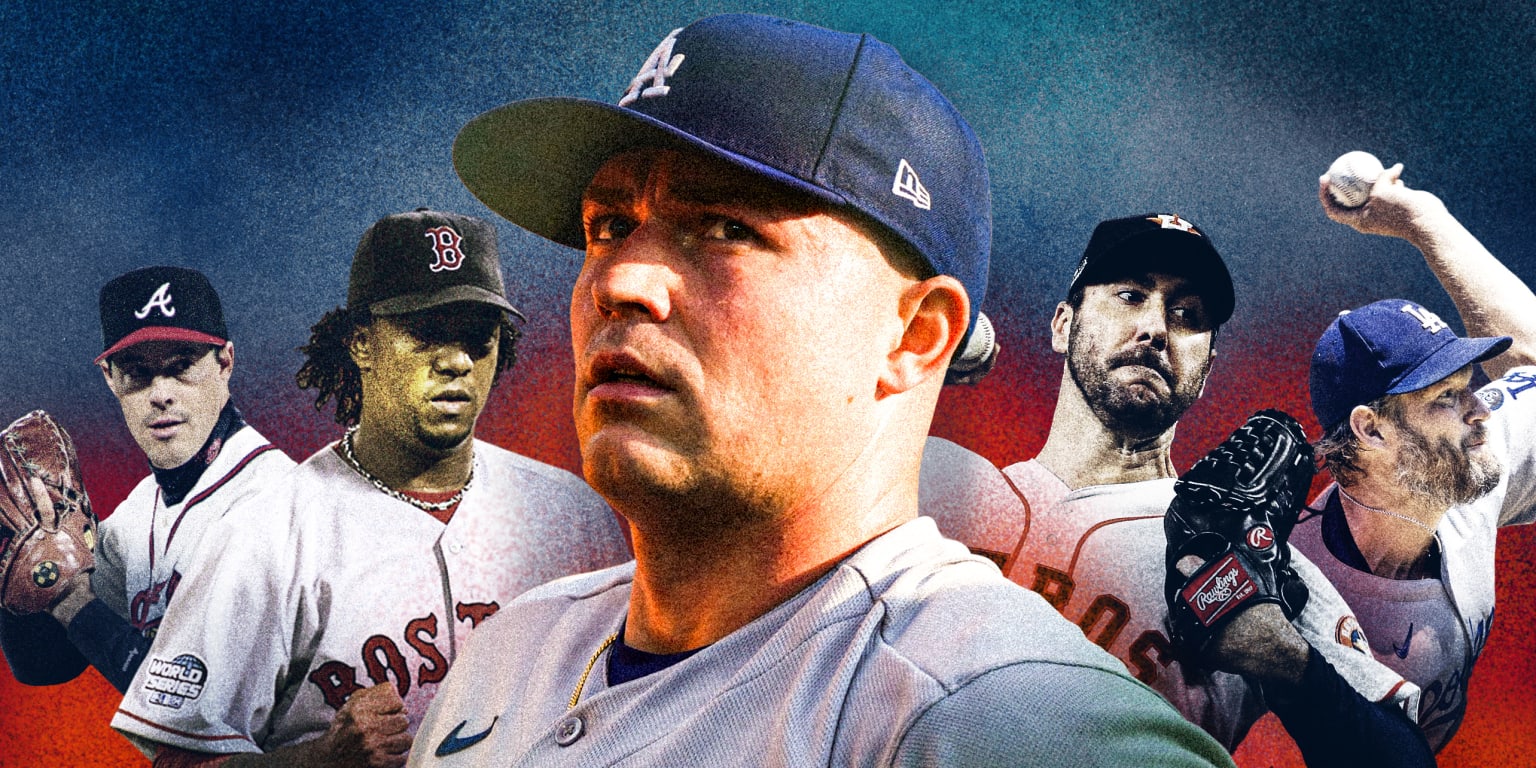
It’s not every year that a pitcher of Tarik Skubal’s caliber hits the open market. Heck, there haven’t been many pitchers, period, who’ve had a three-year run as dominant as Skubal’s 2024-26.
Among pitchers who debuted after integration in 1947, only eight have produced a three-year stretch at any point in their careers in which they threw at least 500 innings with an ERA+ of 170 or better.
Skubal is one of them. The other seven? Pedro Martinez, Randy Johnson, Greg Maddux, Roger Clemens, Sandy Koufax and Clayton Kershaw -- a group that has combined for 25 Cy Young Awards -- plus six-time All-Star Kevin Brown.
Skubal fits right in with that crowd. The left-hander has two Cy Young Awards of his own, and he has posted a 2.42 ERA with a 171 ERA+ and 655 strikeouts over 546 innings since the beginning of 2024.
Of course, what potential suitors really want to know is whether Skubal’s future performance will justify the kind of contract he’s expected to command in free agency.
While there's no way of knowing for sure, we can look to baseball's rich history for some potential clues as to what Skubal might do next.
THE PLAYER POOL
To find out how Skubal might age, we wanted to compare him to pitchers who were similarly dominant at the same point in their careers -- ages 27 to 29.
But as we’ve noted, few pitchers have ever had an extended stretch this impressive. Accounting for age makes the list shorter still. So we loosened the criteria to get a usable sample size, turning to Baseball-Reference’s Stathead for a list of pitchers who threw at least 450 innings with an ERA+ of 150 or better during their age 27-29 seasons. We also limited it to pitchers who debuted during the Divisional Era (since 1969), when the mound was lowered and the game started to more closely resemble the one we watch now.
Those parameters gave us 13 pitchers, including Skubal and Cristopher Sánchez. We removed Sánchez because, like Skubal, he has yet to pitch beyond age 29, leaving us with 11 comps. (Gerrit Cole and Chris Sale are still active, too, but they’ve done enough in their 30s to be included.)
We put those 11 pitchers into five groups based on their performance in their 30s, giving more weight to a pitcher's performance during the first half of that decade, since that's the period a team signing Skubal is likely to care about most.
The dream cases: Greg Maddux, Roger Clemens, Justin Verlander
All three of these aces continued to perform at a high level well into their 30s and pitched into their 40s.
While Maddux won all four of his Cy Youngs before turning 30, he logged four more top five Cy Young finishes with a combined 158 ERA+ from 30-36. His effectiveness tailed off after that, but he remained remarkably durable, making at least 33 starts in every season from age 37-42.
Any look at Clemens has to reckon with the PED allegations that have clouded his legacy. But for the purposes of this exercise, there’s no arguing with the results: Clemens’ post-20s résumé includes four Cy Young Awards and a 137 ERA+ in 436 games (435 starts).
Verlander, who retired at the end of the 2026 campaign, also won multiple Cy Young Awards in his 30s -- at 36 and 39. The right-hander’s final three years were subpar (88 ERA+), but he had a 135 ERA+ from his age-30 campaign through age 40.
If Skubal follows this path, even a record-breaking contract could end up looking like a steal.
The (mostly) good cases: Clayton Kershaw, Pedro Martinez
Neither Kershaw nor Martinez sustained his incredible peak throughout his 30s, but both had their moments of excellence during the decade.
Kershaw didn’t provide a ton of volume after turning 30, but he continued to perform like a frontline starter on a per-inning basis, recording a 143 ERA+ across his age 30-37 seasons before retiring.
Martinez's decline was more pronounced. He underwent shoulder surgery in 2006 and made only 57 starts with a 94 ERA+ after his 34th birthday. On the bright side, he put up a 160 ERA+ in 123 starts from 30-33, winning a pair of ERA titles.
Even without the longevity of Maddux, Clemens or Verlander, these outcomes would give a team signing Skubal plenty to feel good about.
The complicated cases: Chris Sale, Gerrit Cole
Sale has re-emerged as one of baseball’s best pitchers over the past three years, posting a 178 ERA+ in 77 games (76 starts) in that span and winning NL Cy Young honors in 2024. But he lost a big chunk of his 30s due to injury, making just 56 starts from 30-34.
While Sale’s resurgence is impressive, a team signing Skubal would surely prefer not to wait so long to see a return on its investment.
Cole’s 30s have been the opposite of Sale’s: strong early, injury issues later. The right-hander recorded a 135 ERA+ over 96 starts from 30-32, capping that stretch with an AL Cy Young Award. However, he missed time with elbow troubles in 2024 (17 starts), sat out all of ’25 following Tommy John surgery and made 22 starts in his ’26 return.
Cole’s stuff looked impressive enough post-surgery to suggest he still has some productive days ahead, but until we see it, it’s tough to say Cole’s 30s are an overwhelmingly positive blueprint for Skubal.
The disappointing cases: Adam Wainwright, Jake Arrieta
Wainwright’s career took some wild swings after Tommy John surgery wiped out his age-29 season in 2011. The righty recaptured his peak form for a brief time in 2013-14 (138 ERA+ in 468 2/3 IP), but he tore his left Achilles in ’15 and was mostly a below-average pitcher thereafter, albeit with a modest resurgence from 2020-22 (118 ERA+ in 463 2/3 IP).
Arrieta, meanwhile, never came close to matching his epic 2015 Cy Young campaign (215 ERA+) in any other season during his 12-year career. He did have some solid years before and after the honor, but he posted an 85 ERA+ from age 32-35 before hanging up the cleats.
The worst cases: Brandon Webb, Johan Santana
Injuries ruined potential Hall of Fame careers for both Webb and Santana.
Webb entered his age-30 season with a lifetime 143 ERA+ and was coming off three straight top two finishes in the NL Cy Young voting, including a win in 2006. But he exited his Opening Day start in 2009 with a right shoulder injury and never threw another MLB pitch.
Santana was the consensus best pitcher in baseball from 2004-10, recording a 151 ERA+ and winning two Cy Young Awards. But he missed all of 2011 while recovering from left shoulder surgery. Santana returned to throw the first no-hitter in Mets history in 2012 (his age-33 season), but he made just 21 starts that year with a 79 ERA+. Another shoulder injury followed in 2013, and Santana never pitched in the Majors again.
Overall: These comparisons illustrate the risks of committing a massive contract to a starting pitcher entering his 30s, even one coming off an extraordinary run such as Skubal's.
Injuries are the biggest concern -- seven of the 11 pitchers in our comparison group lost significant time to injuries during the first half of their 30s, which is especially noteworthy given Skubal's own health history. He underwent Tommy John surgery in college, had flexor tendon surgery in 2022 and underwent a procedure to remove loose bodies from his left elbow in 2026.
At the same time, Kershaw and Martinez had long stretches of brilliance in their 30s. Sale and Cole have also demonstrated their ability to pitch effectively in their 30s, despite injuries interrupting their careers. And while Wainwright's last truly exceptional season came at 32 years old, his overall output from 30-40 -- which included seven 30-start seasons, a combined 3.59 ERA and a 109 ERA+ -- is nothing to sneeze at.
The best-case scenarios, meanwhile, are awfully enticing: Maddux and Verlander were both elite into their late 30s, and Clemens even had a few stellar seasons in his 40s.
Whether Skubal's next contract looks like a success will depend on his ability to stay on the mound. But chances are he still has at least a few Cy Young-caliber seasons ahead.