
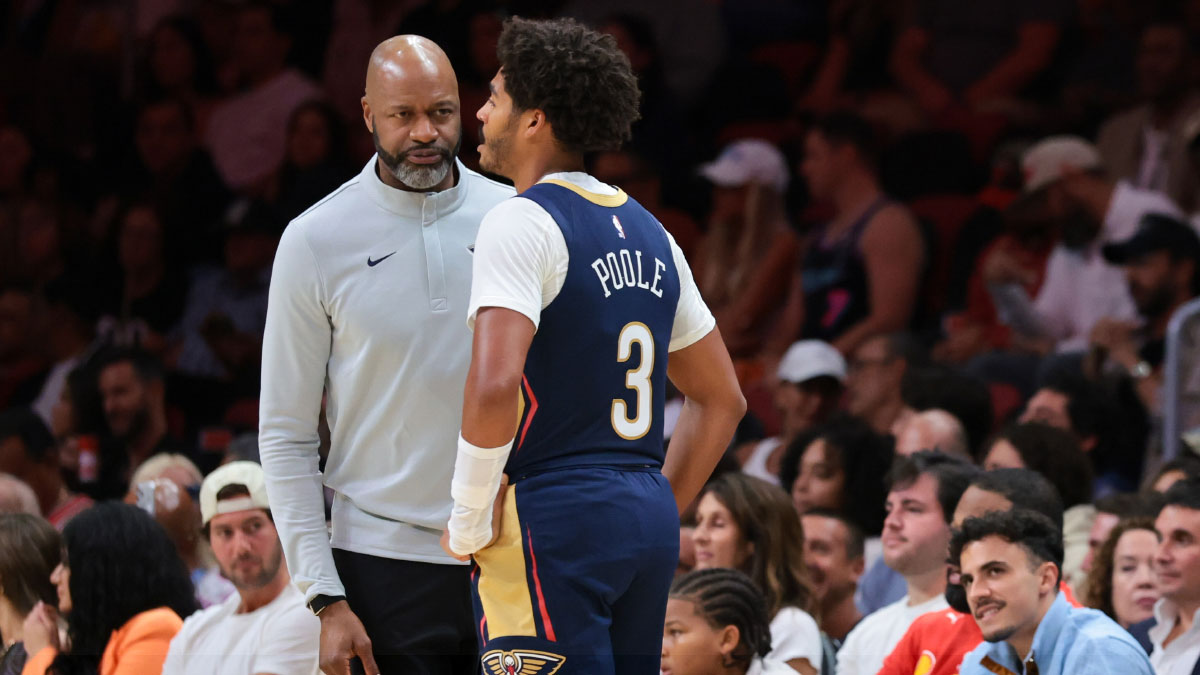
The New Orleans Pelicans spent years talking about accountability, attention to detail, and establishing winning habits under Willie Green. Those messages rarely translated into sustained success, leaving a talented roster trapped in a familiar cycle of defensive breakdowns, inconsistent effort, and frustrating losses. New head coach Jamahl Mosley has no intention of repeating that process, and the approach to fixing the franchise's failures starts with changing how the locker room is evaluated throughout the season.
Mosley is replacing Green's familiar 10-game evaluation windows with shorter, playoff-style assessments designed to identify problems before they become entrenched habits. Essentially, the philosophy is to not wait three weeks to address an issue that might cost the team a win tomorrow.
“I'm not doing 10-game sample sizes. I won't do that,” Mosley told ClutchPoints. “We will break it down more into five-game segments, treating it like a series.”
That might sound like a minor administrative adjustment, but it represents a significant philosophical departure from the previous regime. Mosley wants players thinking about adjustments, accountability, and results with the urgency normally reserved for the postseason.
Pelicans have urgency
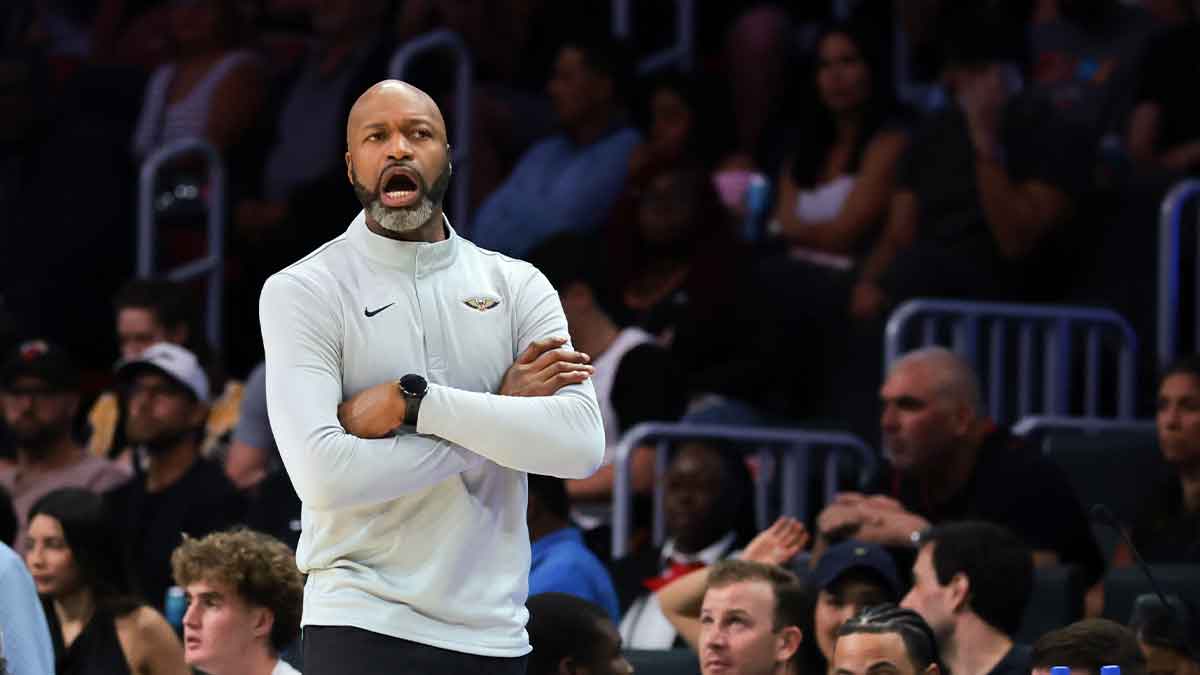
Derik Queen shared at Media Day how Mosley wanted the team dreaming about the rotations; Saddiq Bey said the new staff's ways were reminders of the Villanova days, and those ‘cats won championships. Urgency is an asset in the Big Easy now. Every five-game stretch becomes another opportunity to evaluate what works, expose what doesn't, and determine whether the Pelicans are actually making progress.
“You can understand what you did well within that series. Analysing our offense, analysing our defense, the different lineups,” Mosley said. “I think that will be something to look at for our guys to see what we are doing well and what we can improve on.”
There is also a difference between holding players accountable after a disappointing stretch and establishing expectations before mistakes become acceptable. Mosley appears determined to make the latter a defining characteristic of his program.
“I think it's good accountability,” Bryce McGowens told ClutchPoints. “From top to bottom, it's huge for our group. We are thankful for being pushed and getting after it, so we're going to continue to do that.”
Accountability is easy to celebrate in October. Maintaining it when playing time, individual statistics, and losing streaks create friction is a far more difficult challenge. That's why Mosley appreciates the three-game road trip over 10 days to start the preseason.
“I always think it's great to get on the road during the preseason. To be able to come together, spend time together with the hotel, bus ride over, all those little things. And it's also me and our coaching staff with a new group and us learning each other. How we conduct shootarounds and all those things are important for us to go through so everybody gets a feel for what it's going to be like during the year.”
The emphasis on shared experiences reflects another significant change in how the Pelicans are conducting business. Mosley is trying to establish common expectations before the regular season provides opportunities for confusion, frustration or finger-pointing. That includes refusing to assume veteran players understand every defensive assignment or offensive principle simply because they have spent years in the NBA.
Article Continues Below“I mean, there has been a ton (of questions from players), so it's hard to pinpoint one. Sometimes as coaches we assume guys know because some have been in the league, been with different coaches, but we try to teach everything as if they don't know,” Mosley admitted. “We want to give them everything that they can handle in any given moment because the game is always changing. So there hasn't been one specific question that set the tone.”
It is an approach built around eliminating excuses before they become convenient explanations. Young players are expected to ask questions. Veterans are expected to embrace instruction. Coaches are responsible for communicating clearly enough that nobody can reasonably claim ignorance when assignments are missed.
There is also a more demanding side to Mosley's philosophy. After a session with too many turnovers, the group paid the price together.
“Well, maybe. We did a running drill today because of the turnovers in practice. (DeAndre Jordan) was adamant that the yellow team only turned the ball over twice. But it was seven turnovers total as a group, and we win and lose as a group. So we are going to do all seven runs.”
Where the previous regime’s longer review cycles risked letting problems compound, Mosley’s five-game series model, combined with constant teaching and group accountability, signals a sharper, more demanding way of operating. The early returns from players suggest the message is landing. Every possession, every practice, and every short stretch of games now carries postseason weight for a franchise trying to finally figure things out with Zion Williamson and Trey Murphy III.