
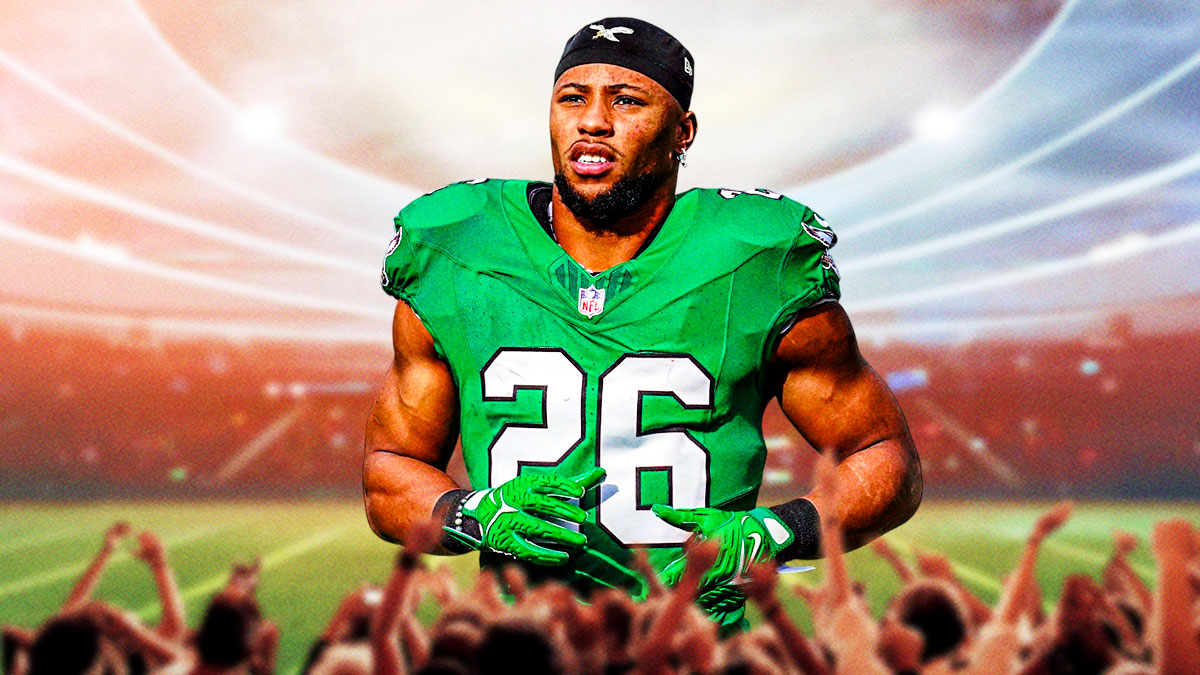
The Philadelphia Eagles have apparently decided Saquon Barkley is too important to trade. Their handling of his injuries should reflect that same level of importance.
Instead, Philadelphia keeps sending a compromised running back onto the field for limited work while its season slips further away. Sunday’s 27–10 loss to Washington dropped the Eagles to 2–6, extending their losing streak to six games. Barkley played just 22 of 68 offensive snaps while managing hamstring and back injuries.
That is the contradiction. If Barkley belongs to Philadelphia’s future, why keep squeezing diminished production out of him during a collapsing present?
Saquon Barkley’s limited workload exposes Philadelphia’s flawed approach
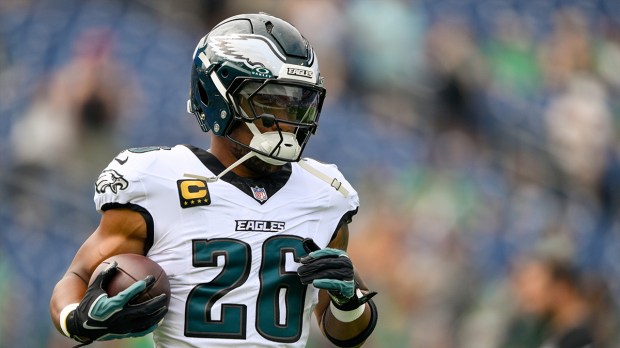
Barkley finished against Washington with 13 carries for 30 yards and a touchdown, plus one reception for 24 yards. He was on a pitch count and repeatedly stretched on the sideline while trying to stay loose.
Those numbers describe participation, not the game-changing influence Philadelphia needs from its star.
“My mind is there, but with the hammy and all that stuff, my body’s not really where I need [it] to be right now,” he said after the game.
That admission should drive the conversation.
The concern is not simply that Barkley looks less explosive. His back issue reportedly developed while he was compensating for the hamstring injury, and his previous appearance against Dallas was cut short. He then missed Wednesday’s and Thursday’s practices before returning for limited work Friday.
Nobody outside the organization can determine his medical clearance. But clearance and sound roster management are separate questions.
A reduced snap count can be sensible. Continuing the same arrangement while the player acknowledges physical limitations deserves more scrutiny, especially when the team keeps losing.
Refusing to trade Barkley makes protecting him more important
Barkley said the Eagles assured him he would remain in Philadelphia beyond the November 10 trade deadline. He also made clear that he wants to stay and help repair the situation.
His loyalty is admirable. It does not eliminate the front office’s responsibility to make dispassionate decisions.
Keeping Barkley is defensible. He is under contract through 2028, and Philadelphia reportedly believes it can contend again in 2027. A disappointing season does not automatically require selling every valuable veteran.
But that reasoning demands consistency.
If the Eagles view Barkley as a centerpiece of their next competitive team, preserving his effectiveness should matter more than extracting another handful of touches from him now.
Philadelphia cannot convincingly sell patience with the roster while displaying impatience with an injured player’s recovery. Those priorities pull in opposite directions.
Article Continues BelowNor should refusing a trade become an excuse to avoid evaluating the alternatives. Listening to offers would establish his market without obligating Philadelphia to accept an inadequate return.
The Eagles need a plan beyond asking Barkley to battle through
The sensible response is not necessarily trading Barkley. It is aligning his usage with the reason for keeping him.
If Philadelphia believes his future value outweighs any deadline return, it should be willing to sacrifice short-term availability when necessary. That could mean sitting him until his condition supports a meaningful workload, guided by the medical staff rather than the standings or his determination.
If the Eagles instead believe an immediate turnaround justifies playing him, they need a stronger argument than competitive pride. Six consecutive defeats and another restricted appearance hardly demonstrate that the current arrangement is working.
Barkley’s willingness to fight through discomfort is not the problem. The organization’s apparent dependence on that willingness is.
Keeping him for tomorrow while repeatedly asking a diminished version of him to rescue today is not a coherent strategy. It is an uncomfortable middle ground that serves neither objective particularly well.