

The Miami Dolphins entered the 2026 NFL trade deadline with little hope of saving their season. On Sunday, they suffered a 19-9 loss to the Detroit Lions, dropping their record to 1-7. The situation worsened when quarterback Malik Willis was placed on injured reserve on Tuesday. According to NFL insider Tom Pelissero, Willis' ongoing groin issue developed into a core muscle injury, forcing him to miss at least four games. After signing a three-year contract worth $67.5 million in the offseason, Willis struggled to find his rhythm, throwing for 1,396 yards, with six touchdowns and six interceptions. Kyle McCord will now take over as the Dolphins' starting quarterback.
Dolphins should have traded Austin Jackson before the NFL deadline

Miami's inactivity has been surprising, especially considering how aggressively the organization reshaped its roster during the offseason. Several established veterans left as General Manager Chris Grier began constructing a younger team alongside head coach Jeff Hafley. This strategy suggests that the Dolphins were willing to accept short-term struggles in exchange for greater flexibility and additional opportunities to develop future contributors. Their disappointing record has reinforced the need for this approach.
Through eight games, Miami has scored only 13 offensive touchdowns while allowing 24 sacks. The offense has struggled with protection, turnovers, and inconsistent execution, leaving the organization with several difficult decisions regarding its personnel. One of the most intriguing players in this situation is Austin Jackson. The former first-round pick has spent his entire professional career with Miami, having been selected 18th overall in 2020. Although injuries have interrupted his development, he has accumulated significant starting experience and remains capable of contributing at right tackle.
This inconsistency makes his future difficult to predict, especially since his contract expires after the current campaign. Jackson agreed to a revised one-year deal worth approximately $7 million during the offseason. This agreement includes substantial bonus accounting, which will continue to affect Miami’s salary cap even after his playing contract ends.
As a result, the Dolphins may face the potential of allowing an experienced offensive tackle to reach free agency without receiving any compensation in return. This situation would be understandable if Jackson were seen as central to their long-term plans.
Miami already has young offensive linemen worth developing
One reason why Jackson's continued presence on the team deserves scrutiny is the significant investment Miami has already made in its offensive line. The Dolphins selected Kadyn Proctor with the 12th overall pick in the 2026 NFL Draft, adding a physically imposing prospect who has extensive experience playing left tackle at Alabama. Although Proctor started his professional career at guard, the organization recognizes his versatility and ability to contribute at multiple positions. This flexibility allows Miami to experiment with different combinations as the coaching staff evaluates its long-term offensive strategy.
Patrick Paul has established himself as the left tackle, while Jonah Savaiinaea has taken on responsibilities on the right side of the interior line. Center Aaron Brewer adds another layer of experience, giving Miami a solid foundation that includes several players who could remain key to the team beyond the current season.
Moving Jackson would require adjustments, especially since Proctor has shown promising potential at guard and might benefit from staying in that position. However, the Dolphins have little to gain from keeping an established lineup simply for the sake of continuity during a season that has already fallen short of expectations.
The trade would have carried legitimate risks
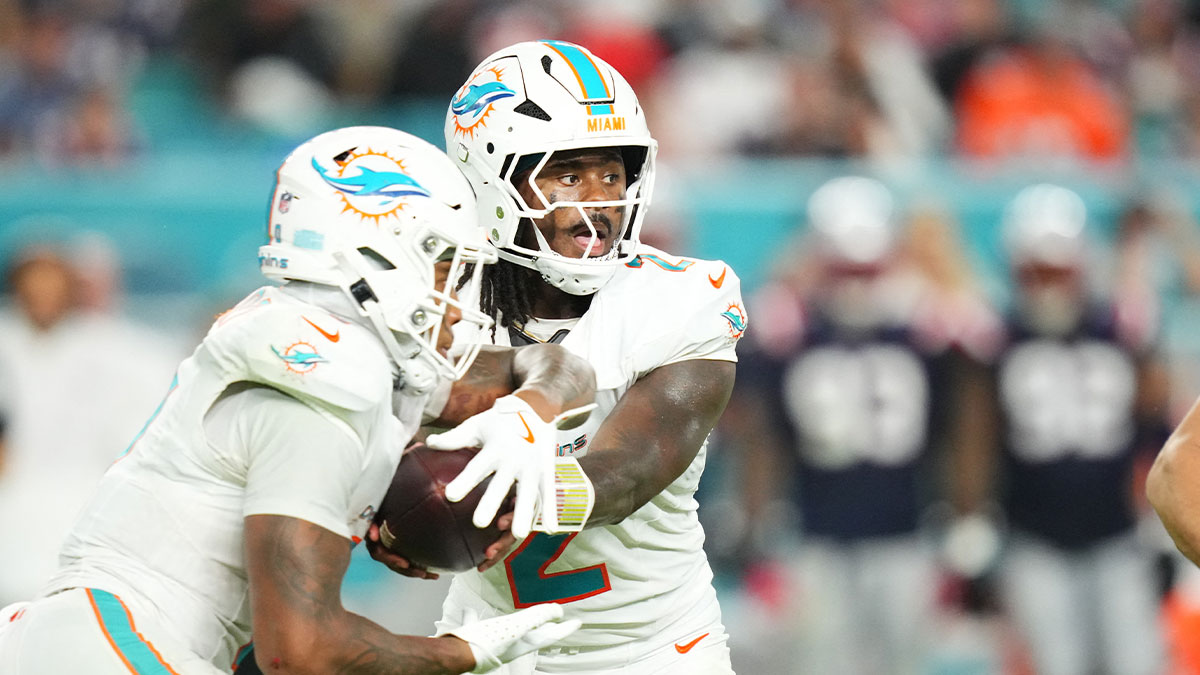
There are valid reasons supporting Miami's decision to retain Jackson, particularly regarding the quarterback position. McCord is preparing for his first NFL regular-season appearance after joining from Green Bay during the offseason. The former Syracuse standout has yet to prove how effectively he can perform against established professional defenses. Removing an experienced offensive tackle just before his first start could complicate an already challenging transition. Miami's offensive line has struggled to protect Willis, and adding another inexperienced player would likely not improve those issues.
The financial implications should also be considered. Jackson's revised contract includes significant amounts for previously paid bonuses and void years, meaning that trading him would not eliminate all salary-cap responsibilities associated with his deal. Such a transaction could lead to accelerated accounting charges while providing only limited immediate financial relief, making the idea of moving him solely to create cap space less attractive.
The primary benefit of trading Jackson would be acquiring draft compensation instead of generating immediate savings. Sullivan would need to carefully evaluate the market and determine if another team would be willing to offer a meaningful pick for Jackson's remaining contractual control. However, there is no confirmed evidence that Miami rejected a specific offer that met such criteria.
Miami missed a chance to maximize its rebuilding assets
Jackson was not the only veteran discussed in trade speculation. Linebacker Jordyn Brooks drew attention as a potential addition for contenders seeking defensive reinforcements, while edge rusher Josh Uche emerged as another possible source of draft compensation. Uche has recorded three sacks this season, including one against Detroit, and remains under a one-year contract. His recent performances could have attracted interest from teams looking for additional pass-rushing depth, but there is also a reasonable argument for retaining him. At 28, Uche could still contribute to Coach Hafley’s defensive plans beyond this season if both parties agree to a new contract. His improving production gives Miami a reason to consider keeping him.
Zach Sieler presented a more complicated situation. The veteran defensive lineman suffered a ruptured biceps against Detroit and was placed on injured reserve Tuesday, effectively removing him from any realistic trade discussions. This meant that Miami had fewer tradable veterans than its disappointing record might suggest.
Despite this, Jackson remained an obvious candidate for a trade due to his contract situation and the organization's investments along the offensive line. The Dolphins have already accepted that 2026 will be a developmental season, and Willis' injury has added more uncertainty to their offensive future. This reality should encourage Sullivan to maximize opportunities to acquire assets for 2027 and beyond.
While keeping an experienced tackle might help McCord navigate his first NFL starts, Miami also needs to consider how these decisions will influence the next iteration of its roster. Jackson could still earn another contract with the Dolphins, and retaining him might ultimately prove worthwhile if he provides stability during the quarterback transition.