
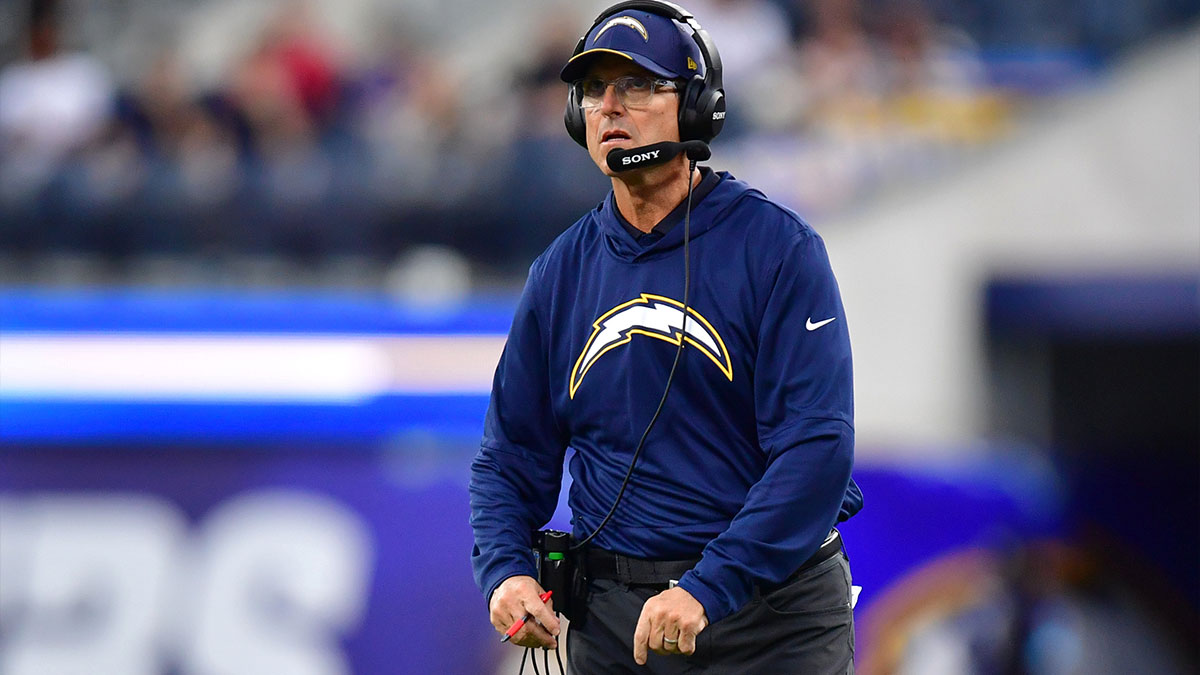
The Los Angeles Chargers had every reason to be one of the busiest sellers ahead of the NFL trade deadline. Instead, general manager Joe Hortiz made just one deal, sending linebacker Daiyan Henley to the Denver Broncos for a 2027 fourth-round pick and a 2028 fifth-round selection.
For an 0-8 team that desperately needs to figure out its future, that feels like an underwhelming return on an opportunity to make meaningful changes.
Hortiz probably knew he needed to do something to avoid even more backlash from Chargers fans. The team is the NFL's only winless franchise, and there were several players who could have been moved to help accumulate draft capital. Yet Henley was the only notable player traded before the deadline.
Grade: C-
A C- grade is actually merciful. Here is why Joe Hortiz avoided a D+ or worse.
Clearly, the biggest disappointment is that Khalil Mack is still in Los Angeles. Hortiz would have received a much better grade if the Chargers had found a way to move the veteran pass rusher. Mack deserves an opportunity to compete for a championship during the final years of his career, especially with the Chargers nowhere near contention. Unless there was a major reason a deal could not get done, it's difficult to understand why the team didn't seriously pursue that possibility.
Perhaps Mack did not want to leave, or the Chargers simply didn't receive an offer they liked. Either way, Los Angeles missed an opportunity to potentially get something in return for a player who may not be part of next year's roster. If Mack eventually leaves in free agency, the Chargers will end up with nothing for him.
The Henley trade is a different story. Getting a fourth- and fifth-round pick for a pending free agent is a reasonable return, particularly with Henley in the final year of his rookie contract. However, trading a talented 26-year-old linebacker to a division rival is a risky decision. The Broncos are currently one of the AFC's top teams, and Henley could become an important piece of their defense.
Denver may have offered the best compensation, but that doesn't make watching a talented former Chargers player potentially thrive in the AFC West any easier. If Henley develops into a star for the Broncos, this deal could become an even bigger headache for Los Angeles.
There is also an uncomfortable question surrounding Hortiz's approach to the deadline. Could his own job security have influenced the lack of activity? General managers who are potentially on the hot seat don't always want to leave a roster in a position where their successor can immediately benefit from the decisions they made. That doesn't mean it's what happened here, but it's fair to wonder whether Hortiz was thinking about his own future as much as the Chargers' long-term outlook.
Ultimately, the Chargers added some useful draft capital, but they didn't do nearly enough for a team sitting at 0-8. Henley was a valuable asset, and the return was reasonable, but the failure to move Mack stands out.
Hortiz had a chance to start building toward a better future. Instead, the Chargers made one move and left plenty of questions unanswered. A C- feels generous, but I can't get myself to give him a D-grade when he did what many expected him not to do and traded away a pending free agent.