

Coming into the season as a couple of potential playoff teams, the Tampa Bay Buccaneers and Los Angeles Chargers have looked anything but. Both teams are a combined 1-11 record, with the Buccaneers' Week 5 win over the Dallas Cowboys the lone positive result between the pair. If either roster doesn't undergo at least some sort of change, both Tampa Bay and Los Angeles will likely miss out on the postseason this fall.
Each team is dealing with quarterback woes. Before injuring his thumb in the Buccaneers' Week 3 loss to the Minnesota Vikings, Baker Mayfield struggled in his first season under a new contract extension. While many thought hiring offensive coordinator Zac Robinson would solve Tampa Bay's offensive woes, the Bucs have looked mostly inept throughout the unit. With Mayfield out, rookie backup Jalon Daniels has gone through his ups and downs.
Meanwhile, Chargers starting signal caller Justin Herbert has had quite a few struggles as well. Before the season, many believed hiring new offensive coordinator Mike McDaniel would take Herbert to the next level. Quite a few analysts and fans expected the best season of Herbert's career. Instead, this fall has been anything but that. Herbert's poor play has been a major reason why Los Angeles is now 0-6.
With Mayfield and Herbert both struggling, and signed to big money, long-term deals, an answer to both teams' quarterback issues could be solved with one fell swoop. Would Buccaneers GM Jason Licht and his counterpart, the Chargers' Joe Hortiz, strike a deal in which the teams swap signal callers? It would be a potentially massive trade that would rock the league. How would such a deal even work? Let's break it down.
Swapping QBs could boost Buccaneers, Chargers' fortunes
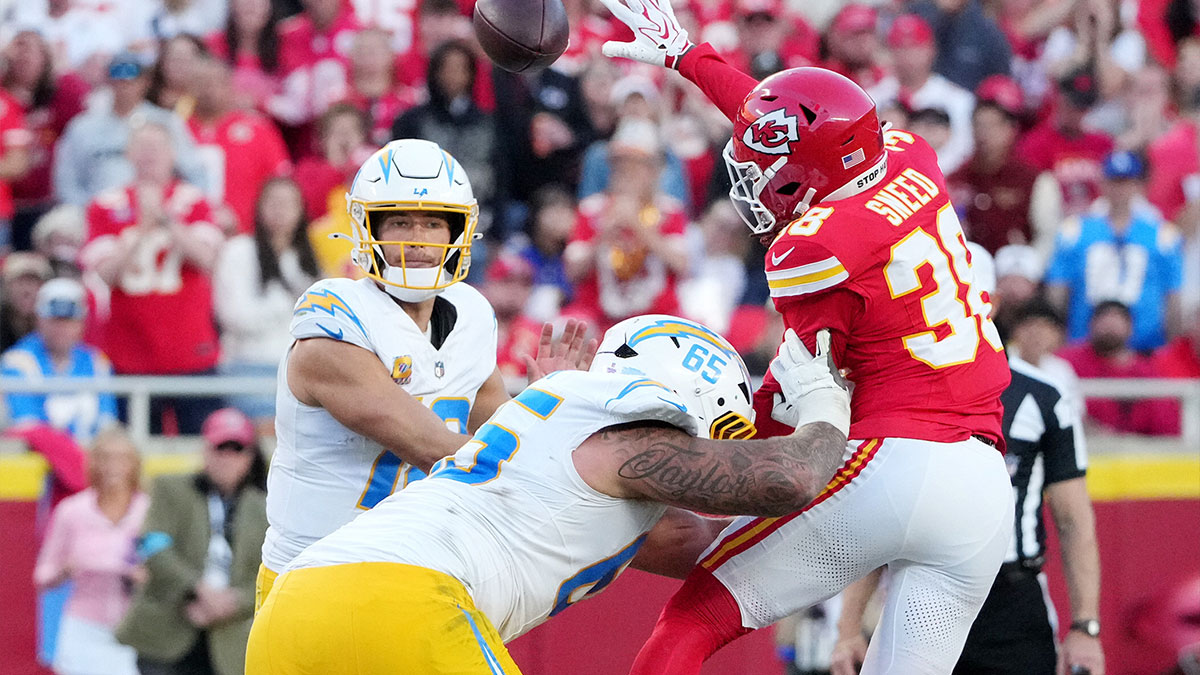
First, let's breakdown the contracts. Mayfield signed a three-year, $165 million extension with the Buccaneers a couple months ago. His first four years with the Bucs have been strong, as he's led them to three NFC South division titles and the accompanying playoff berths. Although Tampa Bay hasn't been deep in the postseason under Mayfield, that isn't all on the signal caller.
Article Continues BelowMeanwhile, Herbert's current deal with the Chargers is an extension of his initial rookie deal. The former top-10 pick is under contract for the next four campaigns, with a potential out after 2029. So, in essence, it's really another three years with an option for a fourth. His cap hit is less than Mayfield's at a little over $46 million, but it will balloon to over $58 million next fall, followed by another raise to over $71 million in 2028, his age-30 campaign.
So, the contracts could be worked out. The question is, would the Buccaneers value Herbert at a high enough rate to take a gamble on his rising deal? Furthermore, how much would Licht have to pay to bring Herbert across the country? The veteran GM highly values his draft picks, especially if they are higher selections. In this hypothetical deal, Licht would likely have to send at least two first round picks to likely make this work.
Let's say Licht offers Mayfield, plus the Bucs' 2028 and 2029 first rounders, plus their second rounders next spring and in 2028, for Herbert and a 2027 second or third rounder. Would that be enough to seal the deal? Possibly, depending on a few factors. If Hortiz determines the Chargers are further away from contention with Herbert than without him, it wouldn't be surprising to see the ex-Oregon standout get dealt. The question is, would it happen in the next few weeks? Or will Los Angeles elect to not pull the trigger? In a world where Herbert could very well have a new home by season's end, Tampa Bay could be the ideal fit for a win-win scenario.