
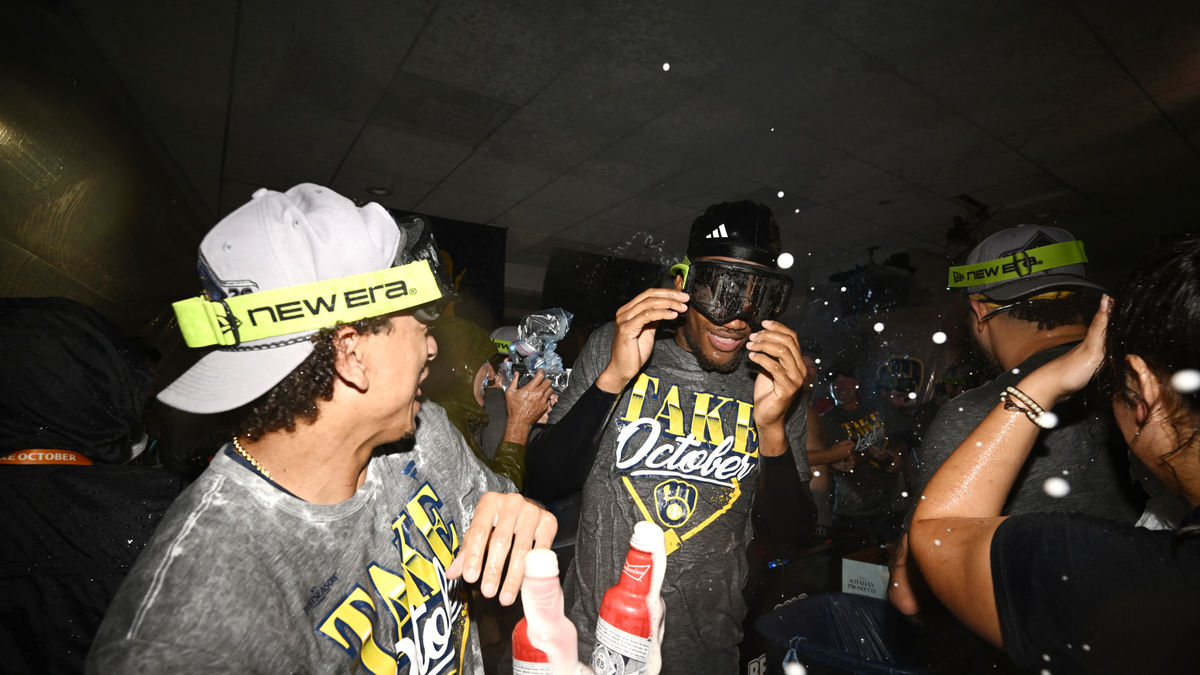
When considering the owners' lockout due to begin Dec. 2, it seems almost too easy to wish for a World Series matchup between the Milwaukee Brewers and Tampa Bay Rays.
Because you know some Major League Baseball owners are made uncomfortable by the awkward possibility.
"Oh, so you ogres demand a salary cap in the next Collective Bargaining Agreement because of the so-called 'competitive balance' problem MLB has? The little guy can't compete. Seems more like a revenue-sharing problem, but OK!"
Few major league teams present themselves as starkly being "small market" like the Brewers and Rays. While not 100% true and somewhat misleading in a few ways -- even taking MLB owners at their collective word -- the display is authentic enough.
The Brewers come from the 38th-largest TV market in the league. They also finished 11th in attendance. Both of those stats are misleading. The figures aren't in for this season, but similar data points added up to 24th in revenue in 2025. Assuming the data from Forbes is right -- and who knows? -- let's just take it as gospel.
The Rays, people don't ever seem to realize, don't play in a small market. Tampa-St. Pete ranks 12th in TV. But we all know about the Rays home ballpark woes since they incorporated in the 1990s. They ranked 28th in revenue in 2025 according to the Forbes data. Fine, we believe you.
In that sense, the Cleveland Guardians somehow sneaking into the World Series and facing the Brewers would be downright embarrassing. First of all, won't somebody think of the TV ratings? Further, the Guards don't draw all that much revenue, despite their success over the past decade and, generally, since the early days of Progressive Field and Albert Belle-Kenny Lofton-Jim Thome. No matter anymore that Jose Ramirez alone is worth the price of any ticket, Cleveland ranks right behind Milwaukee in revenue.
The Chicago White Sox certainly don't have a recent history of acting like a big-market club, but they do make and spend money like little guys. Tanking for three straight 100-loss seasons has a way of doing that.
And yet here the White Sox are, along with other Little Sisters, alarmingly close to eating at the Big Boys Table with the Los Angeles Dodgers. With the New York Yankees apparently incapable of fielding a winning team for the postseason anymore, the Dodgers do fine standing alone as Everything Wrong with the Economics of Baseball.
And they do have some unfair-looking advantages, not only due to natural market size but other legal procedures that paved the way for some sweetheart revenue deals.
But, again, these advantages seem like details that could be ironed out among all of the owners themselves. If they really wanted to do it. And maybe some do. Some probably do, and that’s what fans wanting a limited lockout must hope for. It's just preferable for ownership to first try and take it out of the players side. Tradition and all.
Even if the Dodgers beat the Brewers again in the NLCS, the other "little" teams getting this far already made their point. MLB's competitive balance problems, whatever they really are and however deep they really run, don't have anything to do with a salary cap.
It's just that a Rays-Brewers World Series makes the point a little too on the nose.









- College Football Week 6 Bets: Three Picks for Saturday’s Biggest Games
- UFC Fight Night Underdog Pick: Why Kai Kamaka III Is Worth a Bet
- WNBA Playoff Picks: Best Bets for Liberty-Dream and Aces-Valkyries
- Friday College Football Best Bets: Iowa-Washington and BYU-Iowa State
- UFC Vegas 122 Betting Splits: Where the Sharp Money Is Landing This Weekend
- Guardians vs. White Sox Game 4 Bet Picks, Prop Bets
- Buccaneers vs. Cowboys Odds, Prediction and Best Bet for TNF