
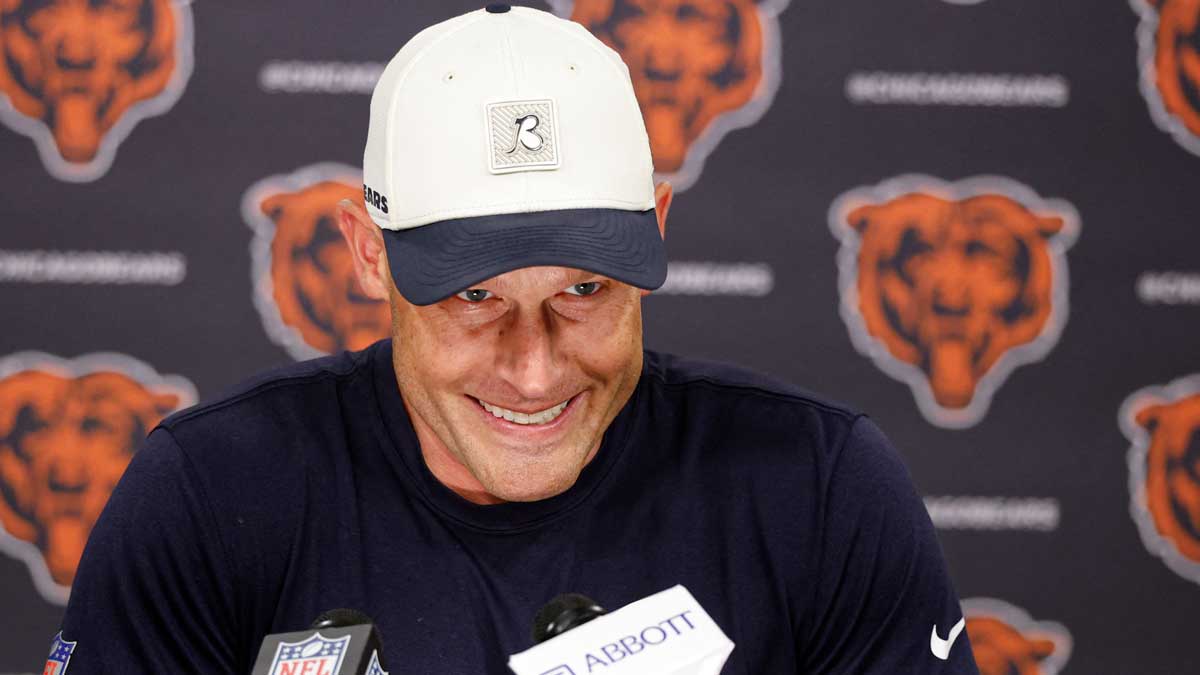
Head coach Ben Johnson has established a strong case for Coach of the Year by leading the team to consecutive victories without Caleb Williams. He first turned to veteran Case Keenum, who delivered a dominant performance in a Monday night win against Philadelphia, and then shifted to Tyson Bagent, who guided the team to a controlled 23-12 victory over the Jets. The Chicago Bears currently hold a 3-1 record, with their offense leading the NFL by averaging 429 yards per game and boasting the league's best rushing attack at 196.3 yards per game, and Johnson has successfully adjusted to two different backup quarterbacks while maintaining the team's identity.
Now, the team faces a greater challenge, as Bagent will start again on Sunday at Lambeau Field against the Packers, with Williams still sidelined due to a hamstring injury sustained against Minnesota. Green Bay has historically dominated this rivalry at home, winning 15 of the last 18 meetings at Lambeau, and its defense is poised to make it difficult for an inexperienced quarterback.
While this history is significant, it highlights how critical Johnson's influence will be in this game, perhaps more so than what Bagent can achieve on his own. Chicago has managed its quarterback injuries by minimizing the demands placed on the passer while still exerting pressure on opposing defenses.
Keenum threw for 247 yards and three touchdowns against Philadelphia, and Bagent followed up by completing 25 of 34 passes for 268 yards against New York. Both quarterbacks thrived within an offensive scheme that rarely forced them into challenging passing situations. Johnson has effectively leveraged his roster's strengths, allowing the running game to set the tempo while utilizing play-action, motion, and manageable throws to prevent defenses from overwhelming the backup quarterback.
Ben Johnson's run game gives Tyson Bagent a real chance at Lambeau
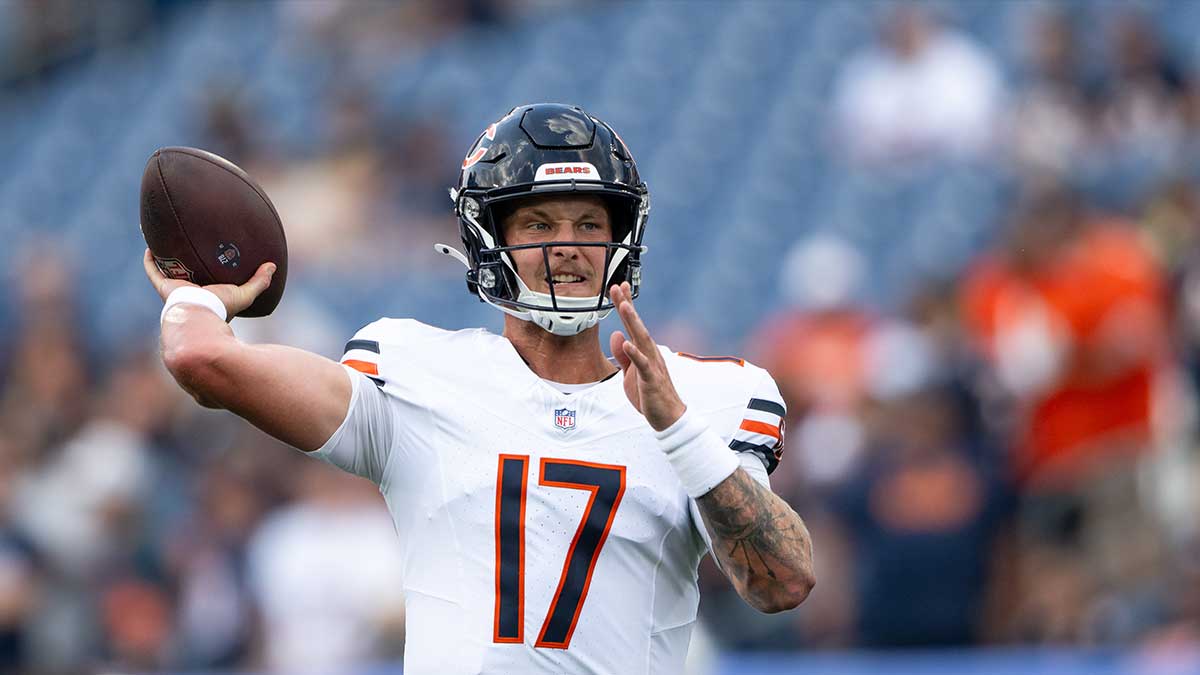
This approach should work particularly well in Green Bay, as the Bears' most effective offensive strategy doesn't depend on who is under center, as Chicago has committed to running the football with D'Andre Swift and Kyle Monangai. Monangai's impressive 146-yard, two-touchdown performance against the Jets demonstrated what happens when Offensive Coordinator Luke Getsy realizes an opponent is starting to wear down and chooses not to abandon that advantage.
Monangai explained that the offense has become challenging for opponents to prepare for because they know the run is coming, yet Chicago continues to execute it. Getsy maintains this strategy because the offensive line and running backs consistently generate enough movement to stay ahead of the chains.
Green Bay poses a more formidable challenge than New York, especially since the Packers have defended the run effectively at times this season and have the talent up front to prevent the Bears from relying solely on the same plays throughout the game, but the matchup changed when linebacker Edgerrin Cooper suffered a season-ending Achilles injury, taking away one of Green Bay's fastest second-level defenders right before facing the league's most productive rushing offense at Lambeau Field. Getsy can force Green Bay’s remaining linebackers to make decisions on every snap through motion, split-back formations, and play-action based on the same powerful rushing concepts that have enabled Chicago to control possession. This strategy should minimize situations that could expose backup quarterback Tyson Bagent.
This shift has been significant since Justin Fields went down. Rather than simplifying the playbook to the point where the offense becomes predictable, Getsy has adjusted the system's complexity. This gives the quarterback clearer reads while compelling the defense to decipher formations, movement, and run-pass conflicts before the snap. Bagent can work quickly, take the available completions, and use his mobility if protection breaks down, while the structure of the offense prevents Green Bay from treating every passing down as an opportunity to attack.
In Week 4, Bagent's performance was far from flawless; he threw an interception and did not have a passing touchdown, but Chicago didn't rely on him to be the focal point of the game. Completing nearly 74% of his passes was sufficient because the offense remained on track, the running game was effective, and the defense kept New York from forcing the Bears into a pass-heavy comeback situation.
The Packers will likely try to change this by crowding the box and forcing Bagent to succeed through the air. This is where the use of players like Cole Kmet, Colston Loveland, Rome Odunze, and Luther Burden III becomes crucial. Chicago doesn’t need 350 passing yards to counter this strategy; a handful of efficient throws behind aggressive linebackers or into space created by motion can be enough to deter Green Bay from fully committing to stopping the run.
Article Continues BelowChicago also enters this matchup playing complementary football at just the right moment, as the defense has allowed only 19 total points over the last two games. This performance gives Getsy the freedom to remain patient instead of feeling pressured to chase points through risky throws. Sustained possessions benefit both sides of the ball, allowing the offense to rely on its physical identity while preventing the defense from spending too much time on the field.
This strategy becomes even more critical at Lambeau, where crowd noise and the pressure of rivalry can turn an early mistake into a chaotic afternoon if an offense starts to chase the game. Getsy has little reason to allow that to happen after two weeks demonstrating that Chicago can control the tempo even without its starting quarterback.
Green Bay has enough talent to make things more challenging than either of the previous two opponents did, and Bagent will likely face periods where the protection breaks down, or the Packers force him into tough third downs. However, the case for another successful performance by Getsy is not that Chicago will dominate from the beginning. Instead, it’s that the Bears now have an offensive structure that can handle these challenges without abandoning what has worked.
If Chicago runs effectively, controls possession, and keeps its backup quarterback in favorable situations, Getsy could achieve his most impressive coaching performance to date. Winning at Lambeau without Fields would transform an already commendable two-game adjustment into a significant achievement that is hard to dismiss as merely a temporary streak.