
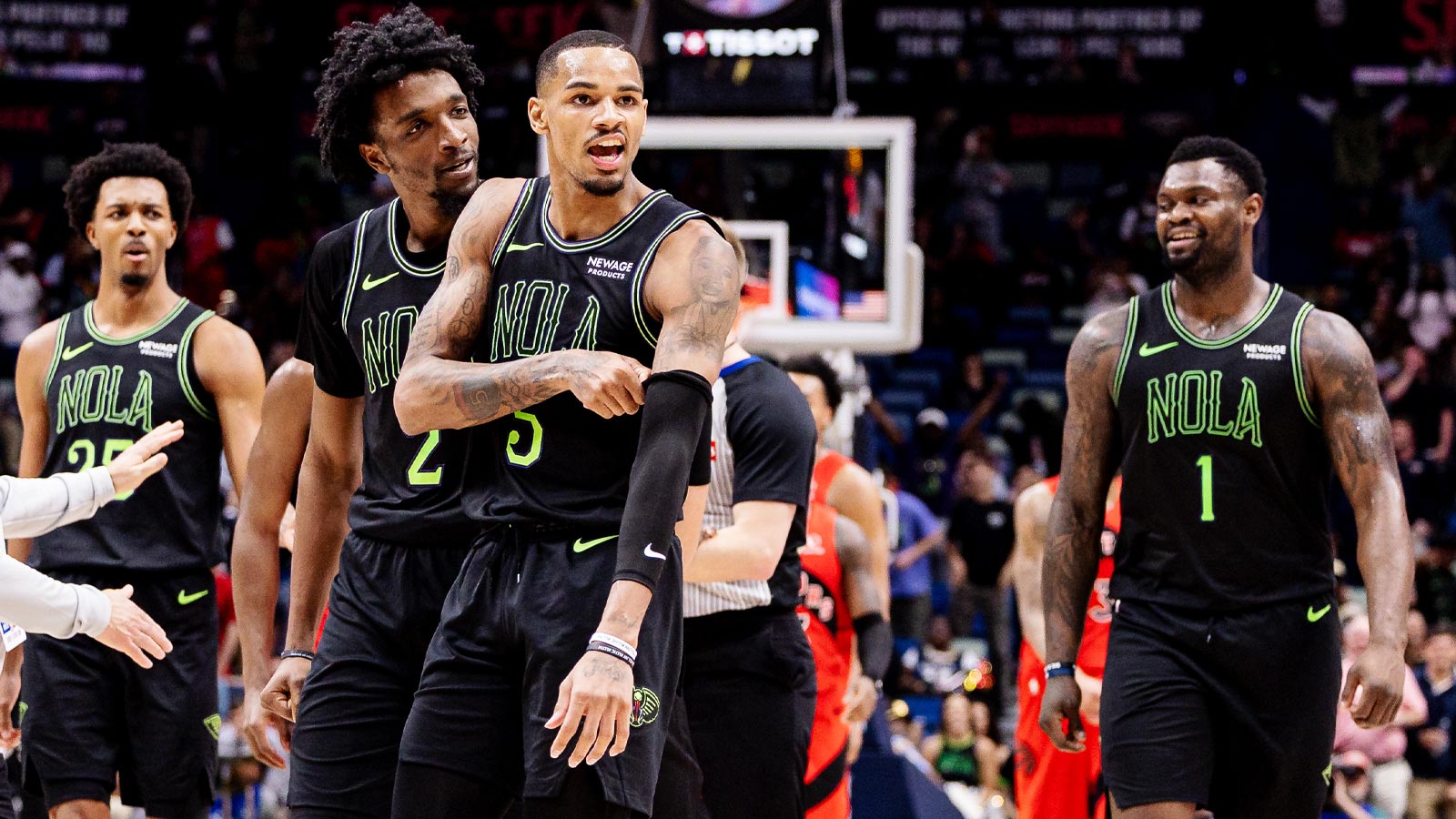
The New Orleans Pelicans have a problem that extends beyond missed shots, blown defensive assignments, and embarrassing losses. Frustration is spilling into public view, exposing cracks in a locker room still searching for an identity under Jamahl Mosley. Dejounte Murray's now-deleted social media accusations of ‘sabotage' have only intensified questions about the team's chemistry, accountability, and leadership.
Perhaps most concerning is that Mosley warned about the dangers of negative body language after the first four-game losing streak of the season, and even had a prescription for curing those ills.
“One is not to overreact. And when I talk about body language, you know, nobody's going to be happy to be (losing). I don't want nobody sitting around whistling and singing happy songs,” Mosley admitted to ClutchPoints. “So, there's a mood that you can have with not getting the result that you want in those moments.”
“There's also a way that you bounce out of it,” Mosley added. “Then that becomes the encouragement to your teammate when they check in the game, when they check out the game. You now have to fill somebody else up with the encouragement when they step into the game, and that's how that energy can transfer over.”
Unfortunately, the Pelicans have been put on blast for some lackadaisical, uninspired play. This squad just ran through perhaps the worst three-game stretch in franchise history, per point differential. There was no energy in the Smoothie King Center as the Brooklyn Nets wrapped up a 145-111 win because the fans had left before the fourth quarter started.
Then Murray went on to Twitter to argue about film study and play design.
Dejounte Murray does Pelicans no favors
Social media was pure electricity as the skeptics ran through the film study. An account highlighted the team's 1-8 record with Murray in the lineup this season compared with 3-0 without him. Murray responded by writing that the post sounded like someone from inside the organization had prompted it and declaring, “THE SABOTAGE IS REAL!”
It was quite the 180 from training camp for the 30-year-old.
— Dodson (@DoingItDodson) November 12, 2026
“I never live my life worrying about what somebody that’s not in these rooms is saying,” Murray told ClutchPoints at Media Day. “And then again, if that’s your job, that’s your job.”
Article Continues Below“I’m somebody who understands that all you guys have a job in this room. You know what I’m saying? So if Dejounte was turning the ball over, that’s your job to be like, man, you got to take care of the damn ball,” he added. “You know, if Dejounte had a great game, I feel like it’s your job to (report that as well)…I think it should be more about criticizing how we play than who we are as a person. I respect you guys job. I just think when it gets personal, that’s where the problems come from. But criticize me. Good, bad, it doesn’t matter when it comes to the game of basketball.”
The eye in the sky and ball don't lie, and deleted tweets won't kill the soap opera conversations. The very public frustration has coincided with rumors of friction between Murray and Mosley, whom the Pelicans hired in the offseason after his five-year tenure with the Orlando Magic. Murray is averaging 13.4 points, 4.6 rebounds and 4.4 assists in nine games, well below his All-Star form, and has ceded touches to second-year guard Jeremiah Fears.
Mosley's comments preceded Murray's now-deleted posts. They must be addressed, though. The accusation, whether intended seriously or as an emotional response to criticism, immediately created a controversy larger than the team's win/loss record or his declining stats.
A missed assignment does not excuse the next missed assignment. Getting pulled from a game does not eliminate the responsibility to support the player checking in. Frustration is understandable. Allowing it to undermine teammates is another matter entirely. By most accounts, Murray's social media account specifically, this situation is teetering on toxic.
Mosley, to his credit, has consistently framed body language as a teachable moment rather than a symptom of fracture. His public stance suggests a coach attempting to thread a needle of validating the frustration of losing while demanding that players convert that emotion into energy for one another rather than allowing it to curdle into something more corrosive. Whether that message lands in a locker room now confronting a very public airing of internal suspicion is anyone's guess.