

The Golden State Valkyries had an opportunity to secure their first WNBA championship Thursday afternoon. Instead, a disastrous first quarter put them in a hole they could never quite climb out of.
Golden State fell 80-69 to the Atlanta Dream in Game 6 of the WNBA Finals, setting up a winner-take-all Game 7 on Saturday in San Francisco. Despite a late comeback attempt, the Valkyries could not overcome a 20-point halftime deficit as Atlanta forced the series back to Golden State.
The Valkyries entered Thursday's matchup having won two consecutive games, but looked nothing like the team that had taken control of the series. Atlanta's offense came alive early, while Golden State struggled to generate much of anything on the other end.
So who deserves the most blame for the Valkyries' missed opportunity to close out the WNBA Finals?
Lack of urgency set the tone early
Golden State's biggest problem Thursday was apparent almost immediately. The Valkyries simply did not look prepared to match the intensity of an Atlanta team fighting to keep its championship hopes alive.
The Dream shot 11-of-15 from the field and 6-of-8 from beyond the arc in the opening quarter, building a commanding 32-15 advantage. Atlanta had already matched its entire first-half scoring output from Game 5 just six and a half minutes into Thursday's contest.
Some of that can be attributed to the Dream making difficult shots, but Golden State's defense also failed to establish the physicality that had been so important throughout its postseason run.
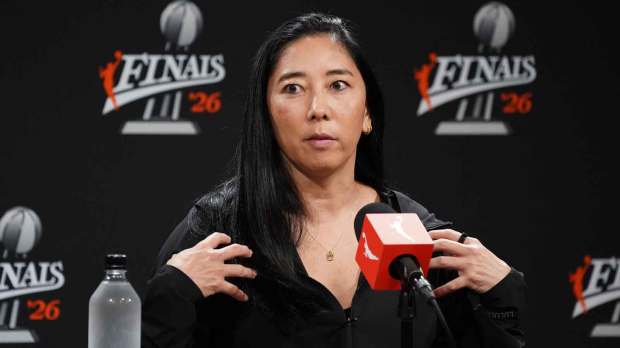
Valkyries head coach Natalie Nakase deserves some criticism for her team's slow start. Golden State was one win away from a championship, yet looked overwhelmed by Atlanta's aggressiveness on both ends of the floor.
The unusual 12:30 p.m. Thursday tipoff could have disrupted the teams' normal routines, but that is hardly an excuse. Both teams were dealing with the same circumstances, and Atlanta had no trouble finding its rhythm.
Golden State eventually made adjustments, particularly with its defensive pressure in the second half. But those changes came far too late.
Nakase has guided the Valkyries to within one win of a championship. Still, her team's inability to come out prepared for arguably its biggest game of the season deserves scrutiny.
Valkyries' defense had no answer for Atlanta's early shooting
Golden State's defense has been one of the biggest reasons for its success throughout the Finals. Unfortunately, that defensive identity was almost nonexistent during Thursday's opening quarter.
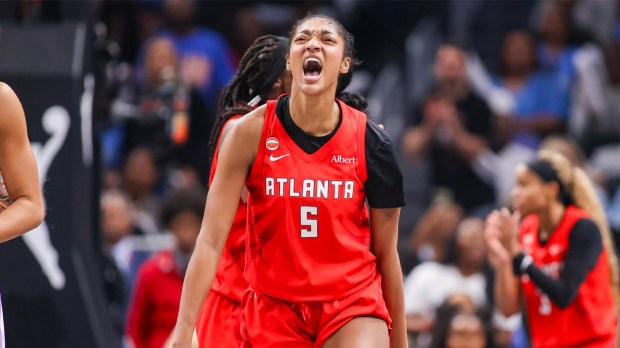
Allisha Gray finished with 23 points, while Rhyne Howard added 21 as Atlanta repeatedly capitalized on Golden State's defensive breakdowns. Angel Reese also added 15 points and 13 rebounds, giving the Dream another productive offensive option.
The Valkyries allowed Atlanta to score 46 points in the first half, a particularly disappointing showing considering the Dream had managed just 55 points in their Game 5 loss.
Veronica Burton acknowledged Golden State's defensive shortcomings following the game.
“They scored 32 points in the first quarter. That's unacceptable on our end,” Burton said, as reported by Kenzo Fukuda of ClutchPoints. “Got to play better defense. Obviously, they're hitting good shots and getting good looks. I think we were sped up a little bit, but we cleaned it up in the other quarters defensively.”
Golden State deserves credit for eventually tightening things up. The Dream scored just 34 points across the final three quarters, and the Valkyries managed to make the game somewhat competitive down the stretch.
But championship-caliber defense cannot disappear for an entire quarter, especially against an opponent facing elimination.
Gabby Williams pointed to ball pressure and physicality as areas Golden State must improve heading into Game 7.
“You set the tone with the physicality,” Williams said. “I think when you punch first, when you are aggressive at the beginning and you try to be later, well, that's when fouls start getting called.”
The Valkyries ultimately allowed Atlanta to dictate the pace early, and that proved costly.
Offensive struggles
While Golden State's defense deserves plenty of blame, its offense did little to help matters.
Article Continues BelowThe Valkyries managed just 26 points in the first half, shooting a dismal 9-of-34 from the field. Atlanta's defensive pressure disrupted Golden State's offensive sets, forcing difficult attempts and preventing the Valkyries from establishing any consistent rhythm.
Williams finished with a game-high 26 points, but needed 22 field-goal attempts to get there, making just eight. Tiffany Hayes added 15 points, though Golden State struggled to find enough offensive production elsewhere to keep pace with Atlanta.
The Valkyries were particularly ineffective at attacking the basket early, allowing the Dream to control the game while Golden State settled into an inefficient offensive performance.
That changed somewhat in the second half, when Golden State became more aggressive getting to the rim and drawing fouls.
The Valkyries eventually cut Atlanta's lead to eight points late in the fourth quarter, an impressive turnaround considering they had trailed by as many as 25.
However, missed opportunities around the basket and the enormous early deficit left little room for error.
There is something to be said for Golden State's refusal to quit. The Valkyries could have folded after falling behind by 20 at halftime, but instead fought their way back into the contest.
Still, the late rally should not overshadow how poorly they executed offensively for much of the afternoon.
Golden State now has one final opportunity to secure its first WNBA championship Saturday.
Reporting by Charles Odum of The Associated Press was used in preparing this piece.