
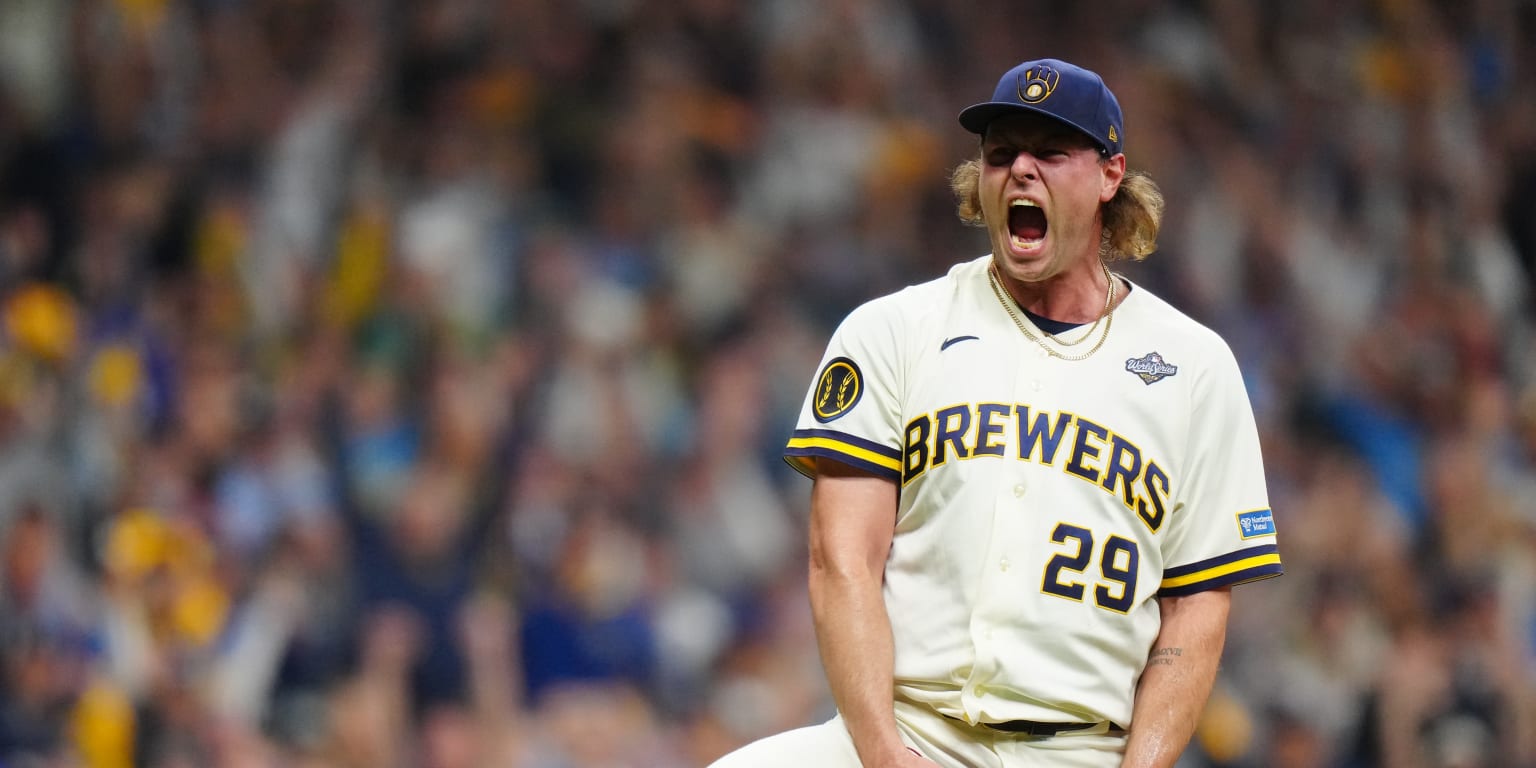
Trevor Megill is entering his walk year, and for a player on the Brewers, that typically begets trade speculation. Sure enough, according to a recent report from The Athletic (subscription required), clubs are calling the defending champions about their closer.
It is not a surprise that teams covet Megill -- just as it is not a surprise that the Brewers value him so highly. Last season, the 6-foot-8 right-hander secured 30 saves while pitching to a 2.63 ERA and a 1.85 FIP that ranked third best among all pitchers to throw at least 60 innings.
There's another nugget we can point to that shows just how good Megill is.
Statcast uses a stat called “run value” to measure a pitcher’s impact on run prevention, assigning a value to the result of each individual pitch -- ball, strike, single, home run, and so on. A positive run value means that the pitcher has prevented runs; a negative run value, by contrast, means the pitcher has cost runs for his team.
A pitcher’s job is to suppress runs. Megill does this as well as any relief pitcher in baseball.
Highest pitching run value, RP, 2026
1) Trevor Megill (MIL): +21
2-T) Josh Hader (HOU): +20
2-T) Jhoan Duran (PHI): +20
2-T) Mason Miller (SD): +20
2-T) Louis Varland (TOR): +20
This is also a story of how Megill got here. A true two-pitch closer, he was one of just three relief pitchers to have two different pitches accrue at least +8 runs prevented last season.
RP with +8 run value on two different pitches, 2026
- Trevor Megill (MIL): +12 on four-seam fastballs, +9 on knuckle curveballs
- Mason Miller (SD): +12 on sliders, +11 on four-seam fastballs
- Jacob Latz (TEX): +11 on four-seam fastballs, +8 on changeups
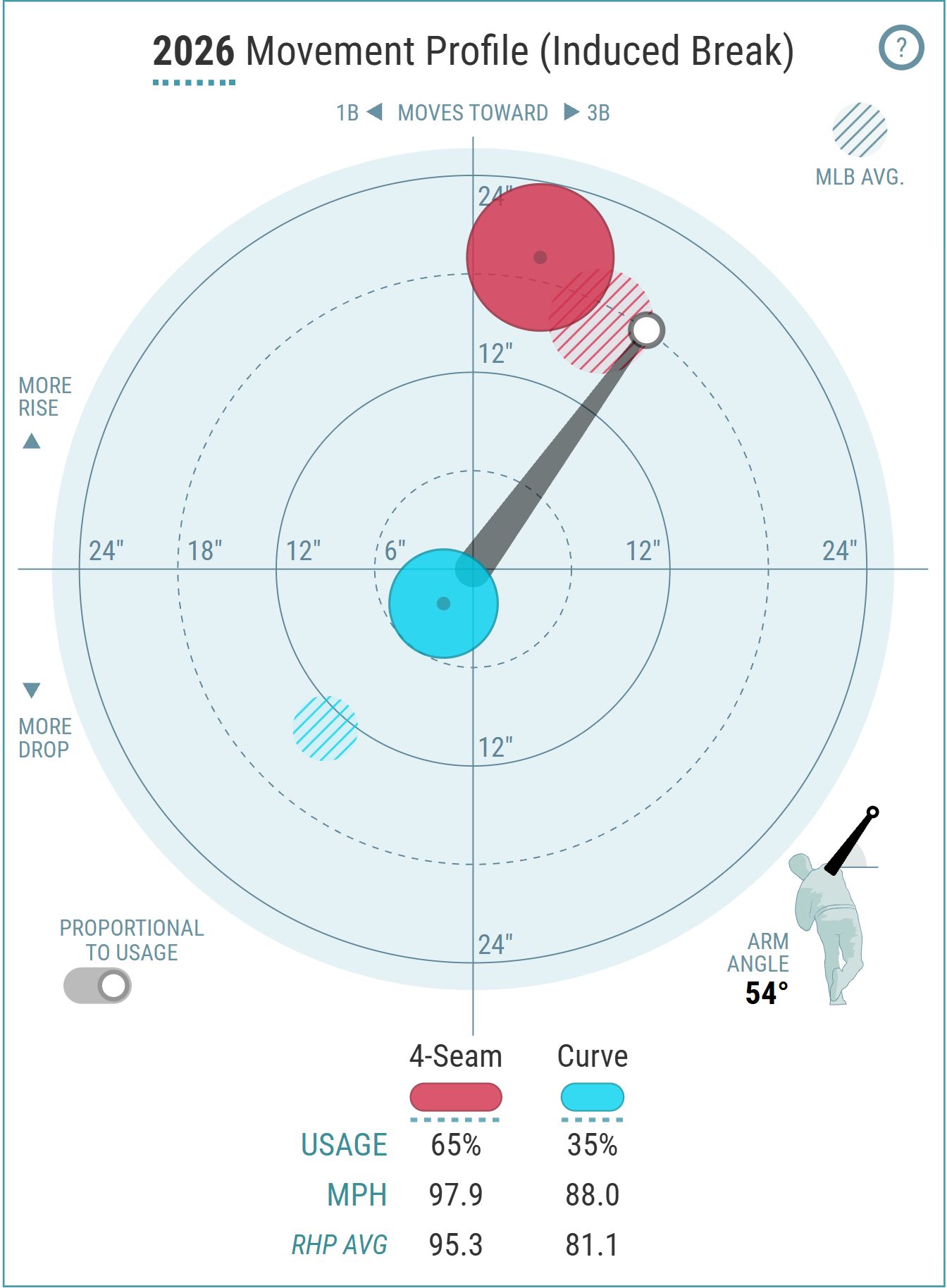
Megill wields a true carry four-seamer typical of someone who throws at such an extreme over-the-top arm slot. Last season, his fastball averaged 19.1 inches of Induced Vertical Break, or “rise,” a top-20 mark among qualified four-seamers.
Then there is the curveball, a pitch that he has modified since joining the Brewers organization in 2023. It is short -- only two qualified curveballs have less vertical drop -- and fast, with an average velo of 88.0 mph. That is harder than all but two qualified curveballs and a full seven ticks faster than the average curveball thrown by a right-handed pitcher (81.1 mph).
Most importantly, these two pitches are designed to work in concert with one another. That is what makes Megill so difficult to hit.
There are a few factors at play here.
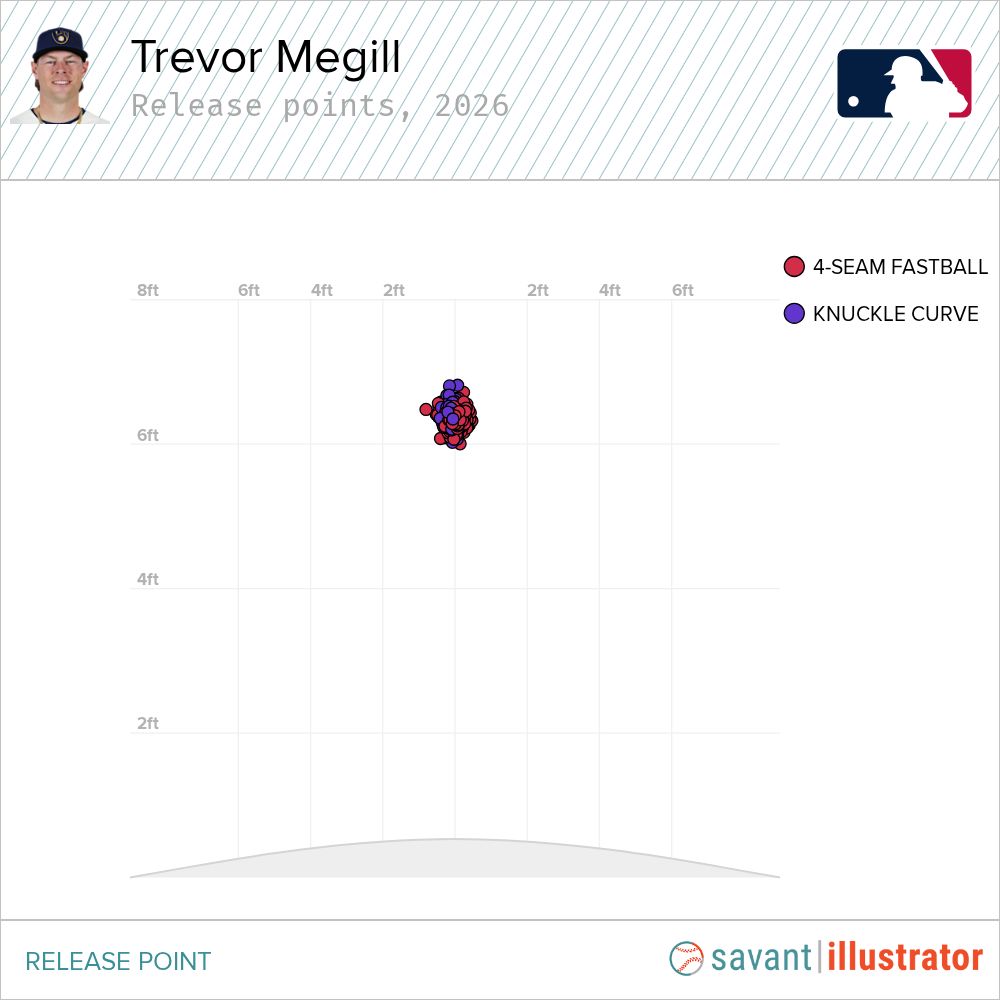
Let’s start with Megill’s release point, which makes it incredibly difficult for a hitter to pick up on what pitch is coming. He throws his fastball and his curveball out of the exact same arm slot. That’s visualized below, where you see very little distinction between the release point of these two pitches.
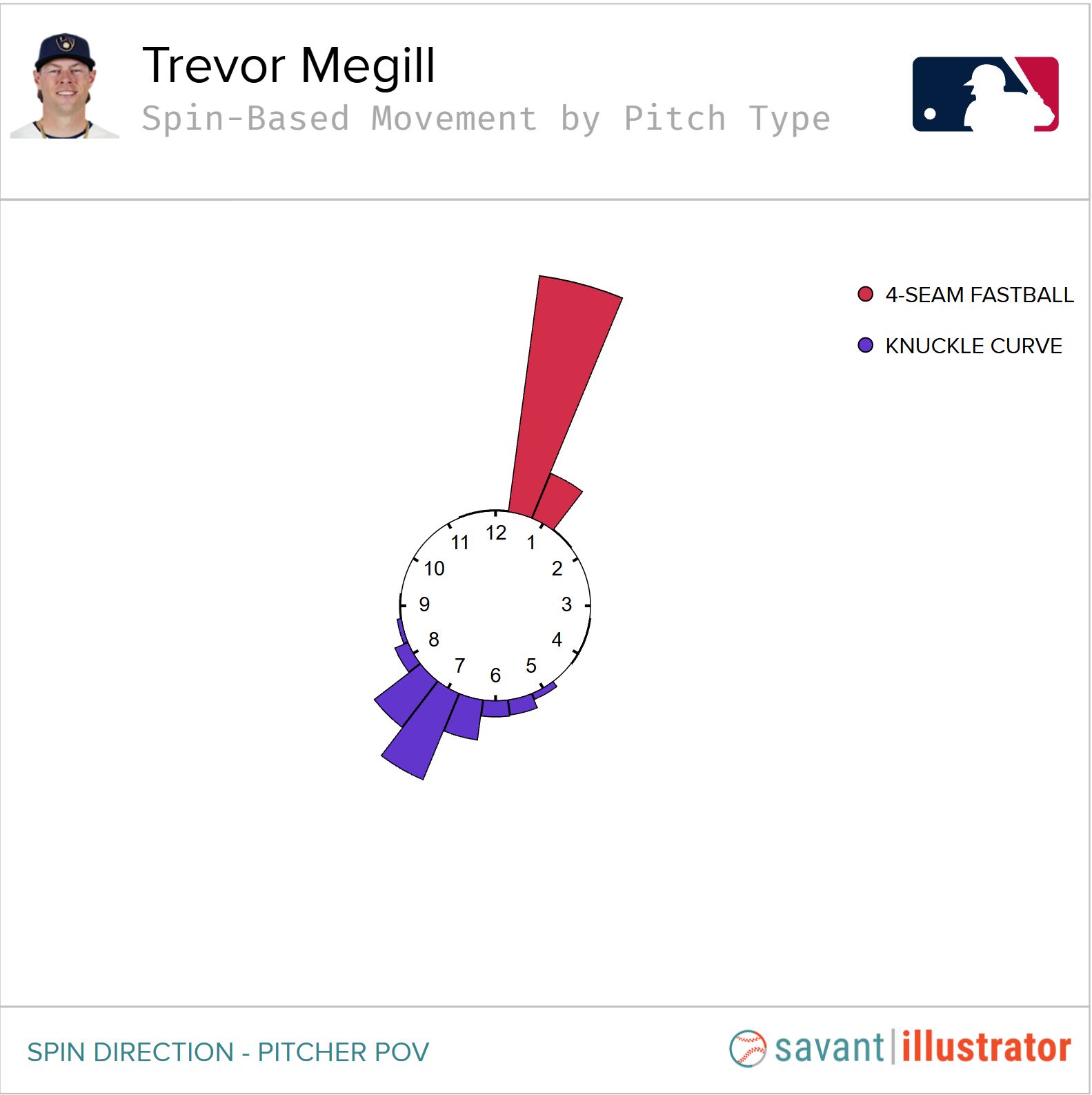
There’s another layer to this, and it has to do with the way Megill spins the baseball. If you picture the face of a clock, Megill’s four-seamer spins in the 12:30 direction, with a whole lot of backspin. His curveball spins in the 7:00 direction, tumbling down on the opposite side of the clock.
The fastball (12:30) and curveball (7:00) are not perfect mirror images of each other, because they are not 6:00 -- or 180 degrees -- apart. But they are very, very close to it. They are on the same axis, just spinning in different directions, which makes it difficult for a hitter to discern what pitch is coming based on spin alone.
That leaves a hitter with few options to tell what pitch is coming before they have to make a swing decision. The spin is deceptive. So is the release point. And the velocity is not a great option, either, because of how hard Megill’s breaker is.
It all winds up looking like this:
The interplay between these two pitches doesn’t explain everything, but it does help illustrate what makes Megill’s two individual pitches so valuable. (For reference, below, RV/100 simply stands for run value per 100 pitches)
- Fastball: 2.2 RV/100 (T-3rd best among 204 qualified fastballs)
- Curveball: 3.0 RV/100 (3rd best among 165 curveballs, min. 100 thrown)
There's also this: Megill’s two individual offerings have never been better at preventing runs than they were last season. Take a look at the value of his fastball and curveball in each of his two prior seasons as a stalwart in Milwaukee’s bullpen.
Megill in 2025:
- Fastball: +1 run value and 0.3 RV/100
- Curveball: +7 run value and 2.2 RV/100
Megill in 2024:
- Fastball: +9 run value and 1.9 RV/100
- Curveball: +2 run value and 1.2 RV/100
Megill is a pure two-pitch pitcher. That’s increasingly rare these days: Even high-leverage arms find themselves tinkering with another offering in an era of optimization and broad pitch arsenals. But Megill can succeed with two pitches because of the dynamic between them.
It even affords him some wiggle room. His four-seamer, for example, lost a full tick of velo from 2025 to 2026, dropping from 99.2 mph to 97.9 mph. But the pitch held the opposition to a .200 batting average and a .281 slugging percentage, and both figures were stingier than they were in ‘25. That’s partially because hitters have to respect the curveball, and they can’t tell which is which out of his hand.
Meanwhile, the curveball tends to induce some pretty ugly swings. As a pitcher, you want to get flawed swings, or swings that are not on time, lined up or centered (as determined by Statcast's new miss distance metrics). Megill’s curveball produced the second-highest rate of flawed swings (24%) of any qualified curveball last season. That’s in part due to the fact that they have to gear up for the heater, and they do not know what is coming, so they are not at all ready to hit the curveball.
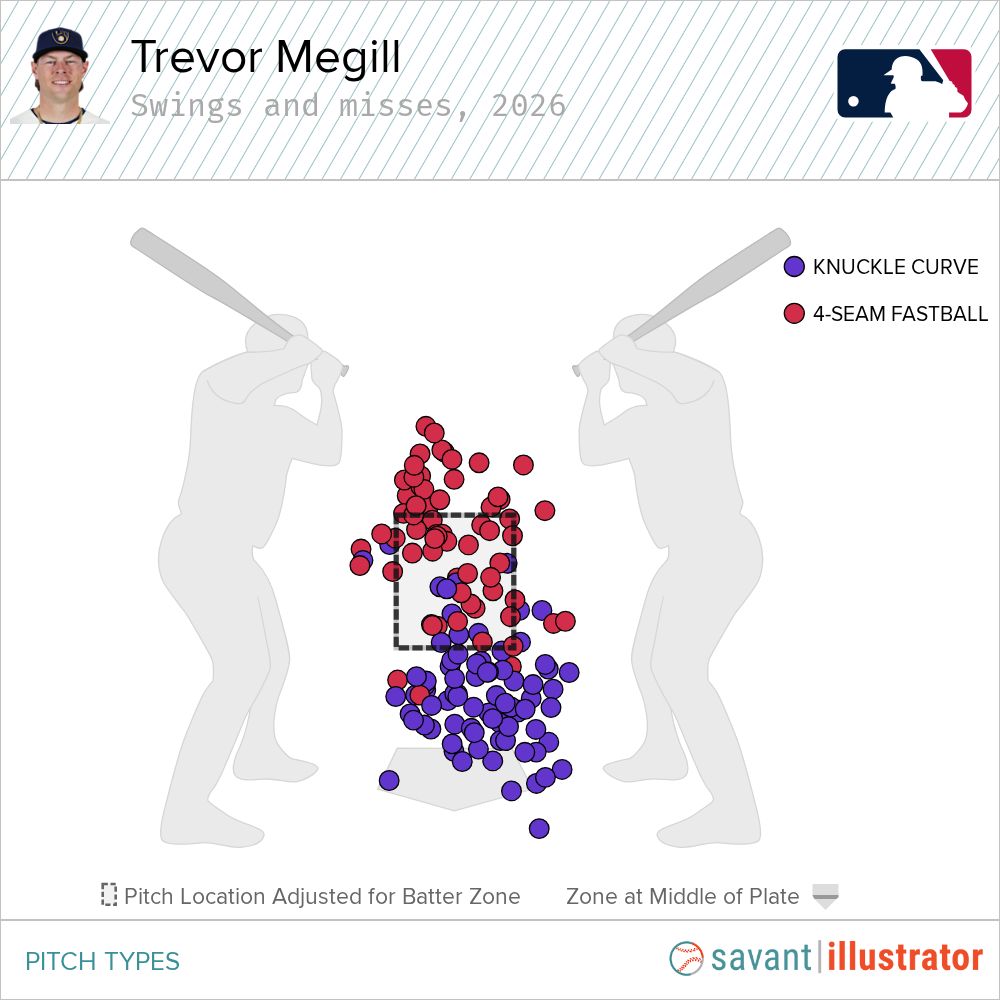
The relationship between his two pitches makes Megill an elite two-pitch closer.