
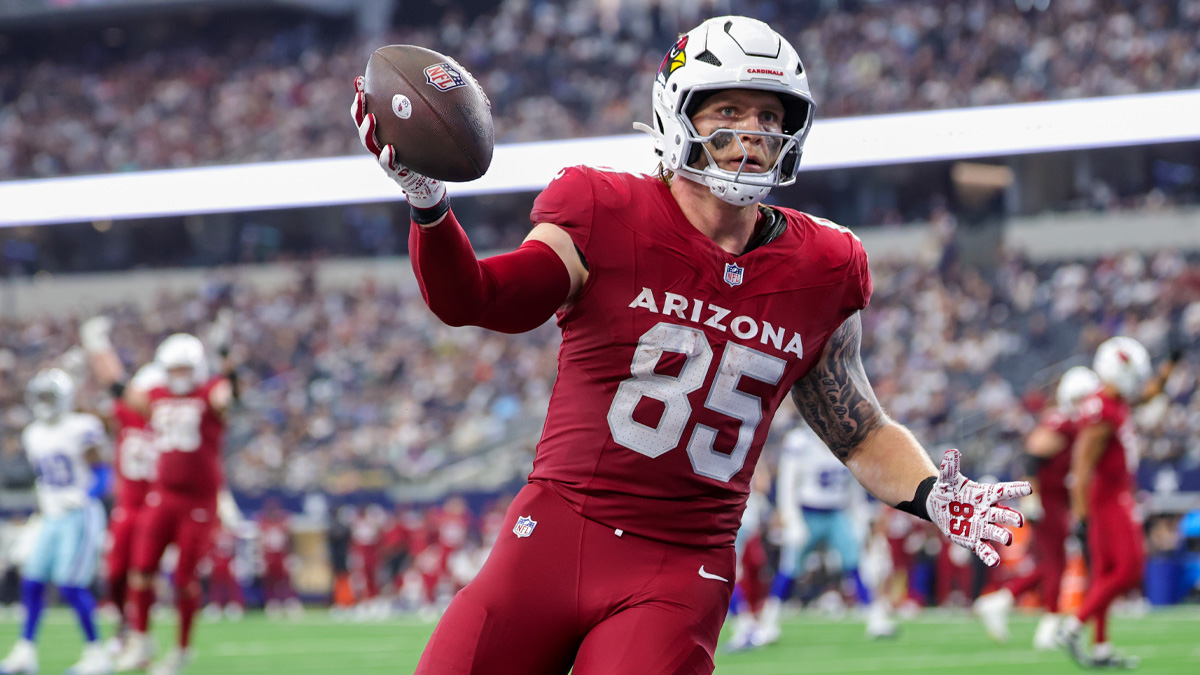
The Arizona Cardinals can justify selling at the trade deadline. They cannot justify confusing a roster reset with removing the player who should anchor their next competitive team.
Trading Trey McBride would cross that line.
The Cardinals have already rejected an inquiry from the Denver Broncos, reportedly making clear they have “zero intention” of moving their star tight end. That is the correct position, and general manager Monti Ossenfort must maintain it through Tuesday’s deadline.
Arizona’s struggles might invite aggressive offers, but McBride is not a veteran whose usefulness expires before the franchise can recover. He is a 26-year-old offensive centerpiece under contract through 2029. Moving him would create another major problem rather than solve the existing ones.
Trey McBride is the foundation, not expendable inventory
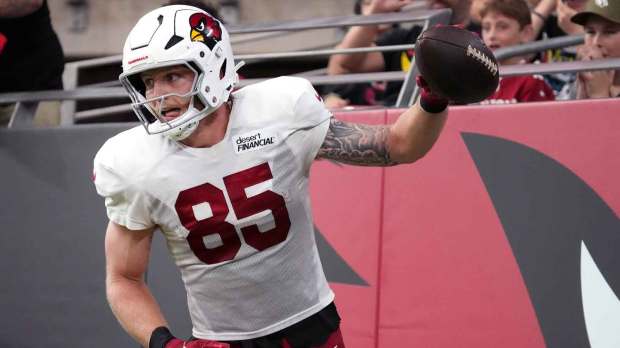
McBride’s production separates him from the typical deadline trade candidate. He finished 2025 with 126 receptions, 1,239 receiving yards and 11 touchdowns, setting the NFL single-season record for catches by a tight end and earning first-team All-Pro recognition.
He has remained productive despite Arizona’s instability this season. Through nine games, McBride has 73 catches for 598 yards and five touchdowns. Even during Sunday’s 17-3 loss at Seattle, he caught seven of eight targets for 54 yards.
Those numbers do not mean the offense is functioning properly. They mean Arizona already possesses one dependable component while searching for answers elsewhere.
The mistake would be treating that reliability as merely an opportunity to collect draft picks. Draft capital matters because it helps teams find difference-makers. McBride already qualifies as one.
His presence gives the Cardinals an established receiving option around whom they can construct their next offensive plan. Removing him would force the organization to spend additional resources replacing production it already controls.
Arizona’s quarterback transition makes keeping him essential
The Cardinals have already changed their offensive personnel significantly, trading Marvin Harrison Jr. and Jacoby Brissett before turning to Gardner Minshew at quarterback.
That makes McBride more important, not less.
Any quarterback evaluation requires a reasonably functional supporting cast. Strip away the most dependable target, and distinguishing quarterback limitations from surrounding dysfunction becomes harder.
McBride offers a consistent reference point. Arizona can assess how its quarterback handles timing, placement and decision-making while targeting an established receiver, rather than judging every possession through an entirely unsettled collection of pass catchers.
The same logic applies if the Cardinals eventually pursue another quarterback. A developmental passer would benefit from inheriting a proven target rather than an offense missing its clearest strength.
There is also no obvious internal replacement. Before Week 9, McBride was the only Cardinals tight end with more than 151 receiving yards this season. Trading him would therefore require more than redistributing a few targets.
Denver’s interest should reinforce Arizona’s decision
The Broncos’ inquiry is revealing. A contender identified McBride as someone who could strengthen its offense immediately, while Arizona reportedly shut down the conversation and Denver looked elsewhere.
That interest should remind Ossenfort what he has, not persuade him to surrender it.
McBride’s four-year extension, reportedly worth $76 million with $43 million guaranteed when agreed upon in April 2025, represented a substantial organizational commitment. A disappointing season does not automatically invalidate the reasoning behind that investment.
Arizona should remain willing to consider sensible trades elsewhere. Rebuilding requires difficult decisions, and refusing every offer would be misguided.
But McBride belongs on the other side of that calculation: a productive player in his prime whose contract extends beyond the immediate uncertainty. Keep him, identify the next quarterback solution and use future resources to strengthen the offense around him.