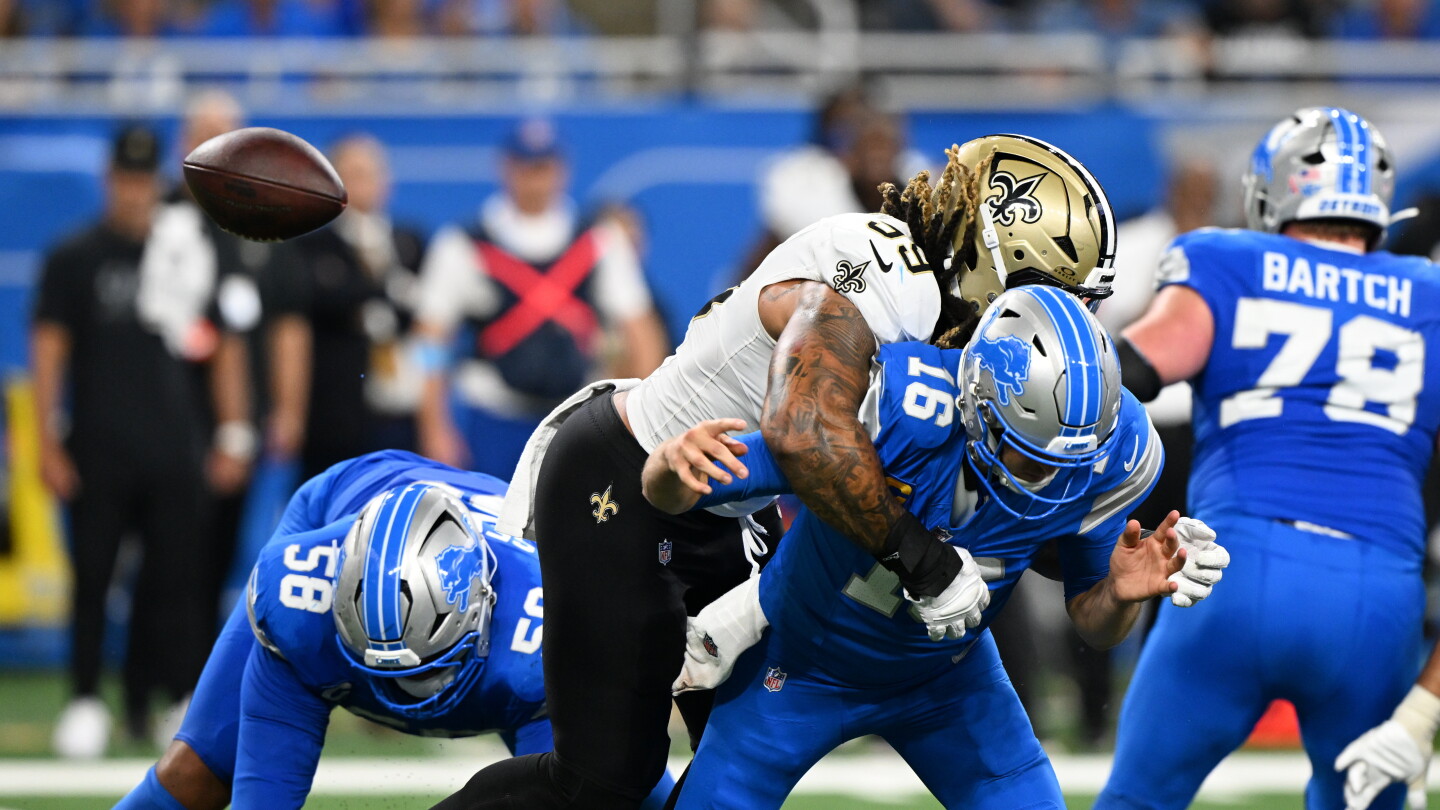
SundayâÂÂs game between the Saints and Lions included a dash of first-half controversy that kept New Orleans from scoring what would have been their first touchdown of the game.
Detroit quarterback Jared Goff dropped back to throw. Saints defensive end Chase Young hit Goff while he was winding up to throw. The pass came out backward. The Saints recovered and scored.
The ruling on the field was overturned.
After the game, which the Lions won 31-30 in overtime, NFL V.P. of instant replay Mark Butterworth addressed the decision in a pool report with Ben Raven of MLive.com.
âÂÂIf the defender contacts the passer prior to the passer starting the throwing motion, then it can be ruled as a backward pass. Because Goff already started his throwing motion and then the defender contacted him, it is therefore a forward pass.âÂÂ
Butterworth explained that the âÂÂdetermining factorâ is whether the passer begins his throwing motion before contact from the defender. âÂÂThe throwing motion starts as he begins to bring the ball up as a part of his windup and then the defenderâÂÂs contact made the pass go backwards,â Butterworth said.
ItâÂÂs confusing, because the pass went backward. And, in theory, it could lead to a nutty result. If, for example, a hit on the quarterback spins him around after he begins his throwing motion and the ball goes directly backward, itâÂÂs still a forward pass.
The rule is different from the question of whether the quarterback fumbles before his arm moves forward. In this case, the quarterbackâÂÂs arm moves forward but, because he was hit after he began the windup, the backward movement of the ball is still a forward pass.
Some have pointed to the nutty two-point play in last yearâÂÂs Rams-Seahawks game as a contradictory outcome. Seattle quarterback Sam Darnold threw the ball backward. But he wasnâÂÂt hit while throwing the ball.
If Darnold had been hit, it would have been a forward pass.
Again, thatâÂÂs the rule. It may seem strange, but itâÂÂs the rule.