
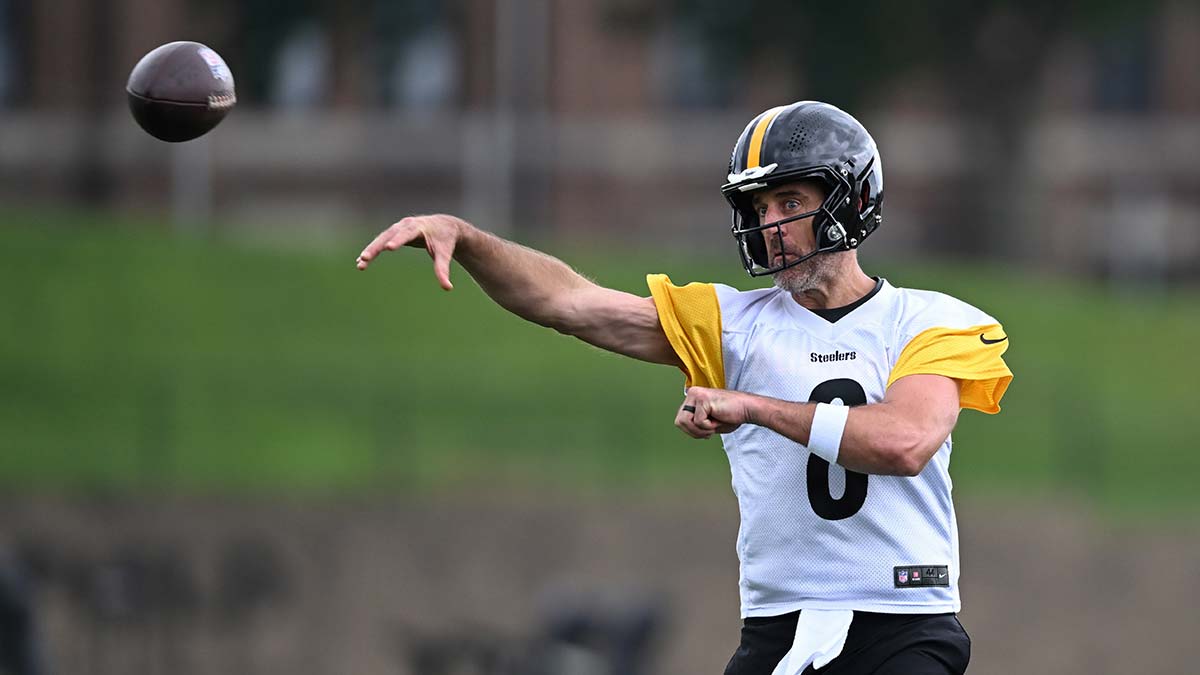
Aaron Rodgers added another milestone to his career during Pittsburgh’s 34-22 win over Indianapolis on Sunday, passing Peyton Manning for third place on the NFL’s all-time list with 580 touchdown passes, including the postseason, while his postgame appearance also included a nod to former Steelers coach Mike Tomlin through a shirt featuring the familiar “DGBTTF” reminder, short for “Don’t get beat to the flat.” Both moments reflected the length of Rodgers’ career, but the more relevant development for Pittsburgh is what the 42-year-old is doing right now, because his third consecutive three-touchdown performance helped the Steelers improve to 3-2 and strengthened the case that this offense can carry a legitimate AFC playoff team.
The opening two weeks offered plenty of reasons for skepticism, particularly after New England held Pittsburgh to three points and Rodgers managed only 187 passing yards with a turnover, yet the offense that has emerged since then looks considerably different. Pittsburgh has scored 30, 24 and 34 points over its last three games, with Rodgers throwing nine touchdowns during that stretch while repeatedly creating explosive plays without requiring the Steelers to abandon the running game or place the entire offense on his arm.
That balance matters in a crowded AFC North where Baltimore sits at 4-1 while Pittsburgh, Cleveland and Cincinnati are all 3-2, leaving very little separation after five weeks and making every improvement on offense particularly valuable.
Aaron Rodgers is giving Pittsburgh more than competent quarterback play

The most encouraging part of Rodgers’ recent surge is that Pittsburgh is no longer surviving around its quarterback, because the offense has begun winning through him while still giving him enough support to avoid becoming predictable.
Against Indianapolis, Rodgers completed 22 of 31 passes for 235 yards, three touchdowns and no interceptions, opening the afternoon with 11 consecutive completions before finishing with a 125.1 passer rating. He was sacked only once after Cleveland brought him down five times the previous week, and the difference in protection allowed him to remain comfortable in the pocket, work through his progressions, and punish Indianapolis whenever its coverage created an opening.
The numbers across the last three games show why Pittsburgh should be encouraged even though the overall season statistics remain modest. Rodgers has thrown for 826 yards and nine touchdowns since the Week 2 loss to New England, producing three scoring passes against Cincinnati, Cleveland and Indianapolis while pushing the ball downfield much more effectively than he did during the first two weeks.
His Cleveland performance included two interceptions and five sacks, so the Steelers have already seen what happens when protection breaks down, but even that 27-24 loss included 299 passing yards and three touchdowns, suggesting that Pittsburgh can remain dangerous offensively on an afternoon when the quarterback and offensive line are far from perfect.
Sunday showed the cleaner version of that formula, beginning with an 80-yard touchdown to Jaylen Warren on Pittsburgh’s second possession, when Rodgers absorbed a hit while releasing a short pass, and Warren turned it into the longest play of the afternoon. Pat Freiermuth later caught two touchdown passes, including the 17-yard score on third-and-6 that restored a two-possession advantage in the fourth quarter, while rookie Germie Bernard produced six catches for 80 yards in his first NFL start.
This shows that DK Metcalf did not need a huge statistical afternoon for Pittsburgh to score 34 points, while injuries had already weakened the receiving rotation. Rodgers could lean on Warren, Freiermuth and Bernard as different situations developed, and Metcalf still influenced the game by drawing the end-zone pass interference that helped set up Freiermuth’s first touchdown.
Pittsburgh suddenly has several ways to create offense rather than waiting for one player to win his matchup every possession, which makes the recent scoring increase considerably more sustainable than a three-week run built entirely around low-percentage throws or unsustainable turnover luck.
Jaylen Warren gives Rodgers the balance Pittsburgh needs
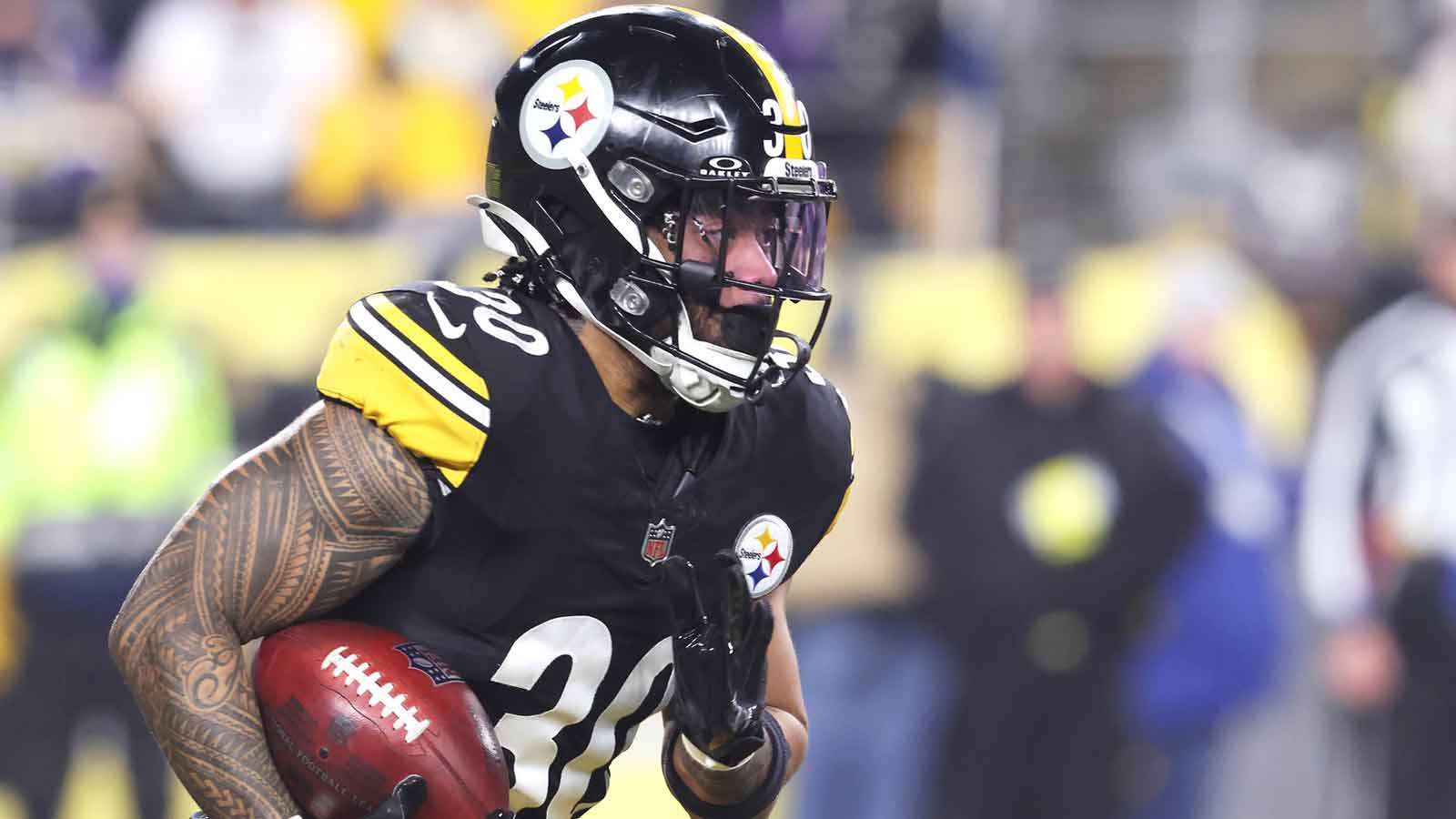
Rodgers’ resurgence becomes much more significant when paired with Warren’s development into the centerpiece of the backfield, because the Steelers can now pressure defenses horizontally, vertically and on the ground without changing personnel every time they want to alter their approach.
Article Continues BelowWarren finished Sunday with 188 yards from scrimmage, including 101 rushing yards, the 80-yard touchdown reception and a 50-yard scoring run that immediately answered an Indianapolis field goal in the third quarter. He has now surpassed 100 scrimmage yards in three consecutive games, and his ability to produce both as a runner and receiver gives Rodgers an easy answer when defenses devote additional resources to Metcalf or try to disguise pressure before the snap.
The Steelers still have areas that can hold them back, especially a third-down offense that entered Week 5 near the bottom of the league and a passing game that has already shown how quickly pressure can disrupt its rhythm, while Rodgers’ four interceptions through five games are enough to keep ball security relevant as the schedule progresses. Pittsburgh also cannot expect Warren to generate 130 yards worth of touchdowns every Sunday, so the offense will eventually need longer stretches of patient, efficient football when explosive plays are unavailable.
Sunday offered evidence that it can do that because Pittsburgh followed Warren’s opening touchdown with an 80-yard, 12-play possession that ended with Freiermuth in the end zone, then produced another composed fourth-quarter drive after Indianapolis had cut the lead to two. Rodgers found Bernard for 25 yards on third-and-2 during that possession before connecting with Freiermuth for the touchdown, giving the Steelers the kind of late-game response that playoff teams repeatedly need when opponents survive the early punches.
That is where Pittsburgh’s position in the AFC becomes interesting. Baltimore remains the early leader in the division at 4-1, but the Steelers are part of a large group of 3-2 teams fighting for both the AFC North and Wild Card positioning, which means they do not need to become one of the league’s dominant offenses to remain relevant deep into December. They need Rodgers to continue operating somewhere close to his current level, the offensive line to keep him upright more consistently than it did against Cleveland and Warren, and to maintain enough rushing efficiency that defenses cannot devote every resource to disrupting the passing game.
Those conditions are realistic after five weeks, particularly because Rodgers has already shown that Pittsburgh can recover from a poor offensive start without becoming conservative. The Steelers scored only 23 combined points in their first two games, then responded with 88 over the next three, and the quarterback at the center of that turnaround now looks far more comfortable directing an offense that is beginning to identify where its best matchups exist.
The historical milestone against Indianapolis was another reminder of where Rodgers stands among the most accomplished quarterbacks the league has seen, while the Tomlin tribute connected Sunday’s win to the previous era of Steelers football, but Pittsburgh’s playoff chances will be determined by the version of Rodgers playing under Mike McCarthy now. Three straight games with three touchdown passes have changed the outlook considerably, and with Warren providing an explosive backfield presence alongside an increasingly diverse group of receiving options, the Steelers have developed enough offensive firepower to remain directly involved in the AFC race rather than depending on their defense to drag them there.