
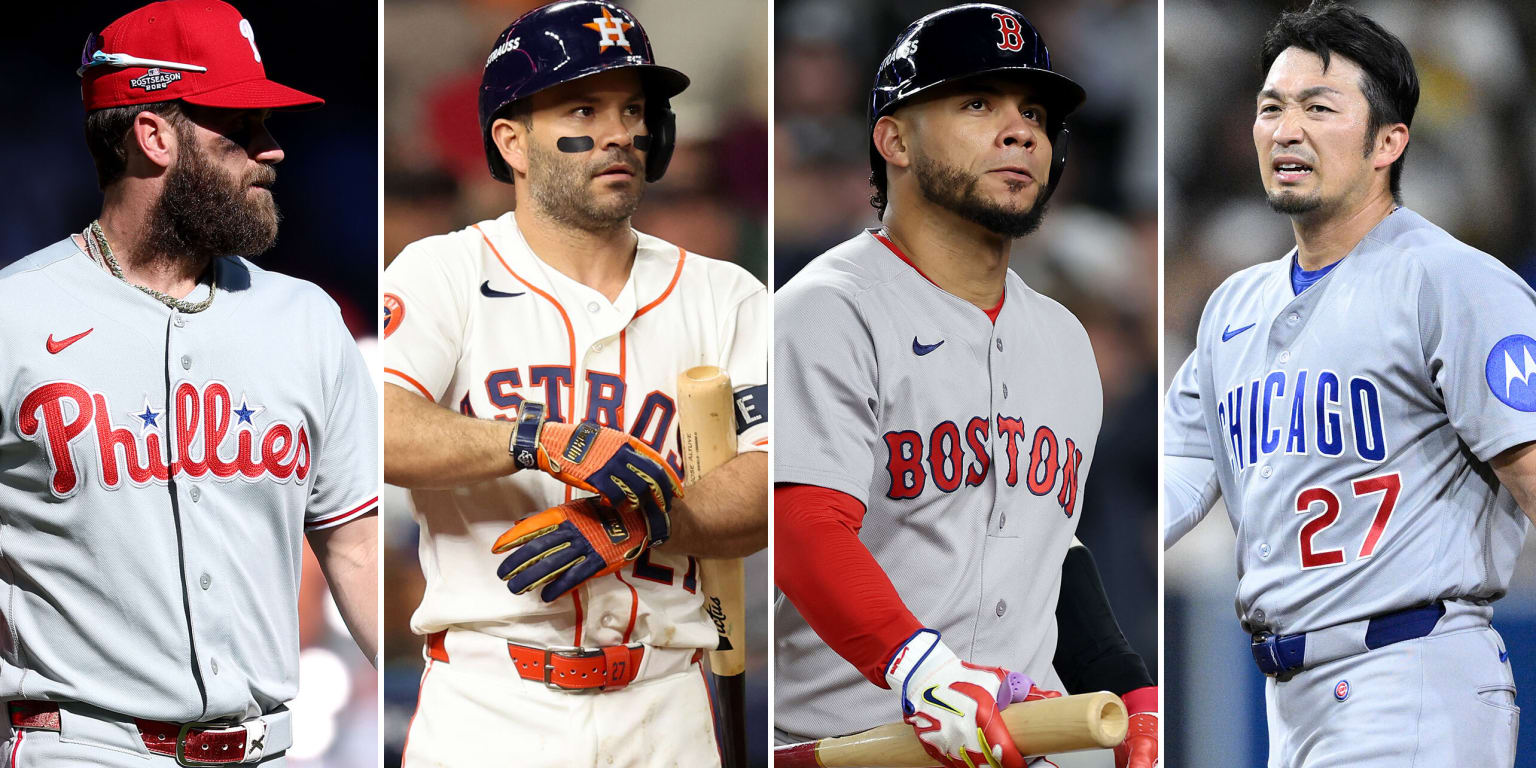
Five seasons into the best-of-three Wild Card Series format (2020 and 2022–25), the data sends a clear warning: Don’t lose Game 1!
In 24 previous WCS matchups, only three teams rallied to win the series after dropping the opener. Two occurred during the unusual fan-free 2020 playoffs, leaving last year’s Yankees comeback over the Red Sox as the sole exception under normal conditions.
Four teams tempted fate on Tuesday. Here is how their comeback odds stack up on our WCS (in this case, Worst-Case Scenario) scale from 1 (easy recovery) to 10 (ruh-roh).
1) Red Sox
Game 1 result: Boston was silenced by Cam Schlittler, held to just three hits total and blown out late in a 9-0 loss.
Why they’re in trouble: The Game 1 loss was the continuation of a late-season skid for the Red Sox. Boston’s 71 runs scored in September were 18 fewer than any other team.
This lineup was carved up by Yankees Game 2 starter Max Fried this year (.473 OPS against). And it’s banged up. Willson Contreras and Ceddanne Rafaela only recently returned from late-season injuries. Mickey Gasper is out with a right biceps issue. And Roman Anthony left Game 1 after aggravating the right hand issue that kept him out most of the season.
Why they can rally: We’re talking about the same team that was 32-46 about three months ago, so they know something about rallying. Actually, in three of the five previous postseason series between these two rivals, the Game 1 loser went on to win the series (Yankees in 2003 ALCS and 2025 WCS, Red Sox in 2004 ALCS).
More directly, it’s Sonny Gray (150 ERA+ this season) in Game 2 and Ranger Suarez (127) in the possible Game 3. There’s still reason to believe if they can get a lead, their high-leverage bullpen corps, now featuring 100% more Garrett Crochet, can nail it down.
WCS rating: 6.33, or how many innings Schlittler dominated Boston in Game 1
2) Astros
Game 1 result: Trailing 5-0 through the top of the fifth in a bullpen game for both teams, the Astros’ late rally came up short in a 6-3 loss.
Why they’re in trouble: As the first full-season postseason team without a winning record, the Astros already faced skepticism. Game 1 only amplified those concerns.
An Astros pitching staff stretched thin by the late-season race in the AL West was unable to corral the Sox. Furthermore, Chicago continued to execute a solid pitching plan against Houston centerpiece Yordan Alvarez, who is now 5-for-24 with only one extra-base hit against Sox pitching this season.
Why they can rally: While Chicago’s Game 2 starter Sean Burke was terrific this year, Houston’s Game 2 starter Hunter Brown (2.47 ERA in his last eight starts) is probably the closest thing this series has to an established ace.
And while the Astros weren’t able to get to Chicago’s top reliever, Grant Taylor, the Sox used him for 54 pitches over 2 1/3 innings, likely sidelining him for Game 2. Forcing Game 3 at Daikin Park would put heavy pressure on a young Sox squad that wobbled late in the regular season.
WCS rating: 7, or how many at-bats the Astros went without a hit with runners in scoring position in Game 1
3) Cubs
Game 1 result: The first pitch thrown by Matthew Boyd was hit 405 feet by Fernando Tatis Jr. Things really didn’t get any better from there in a 8-0 loss.
Why they’re in trouble: The Cubs lost their ability to host this series by going 11-13 in the final month, while the Padres went 18-6. Game 1 was a clear continuation of those trajectories.
Pitching is problematic for this Cubs team. Only the A’s (247) allowed more homers than the Cubs (231) this year. The long ball killed them in Game 1. And you don’t want to fall behind against a Padres team with the best bullpen of this postseason field.
Why they can rally: San Diego’s Game 2 starter Nick Pivetta, who missed much of this season with an injury, is a much more favorable matchup for the Cubs than Michael King was. Pivetta’s fly-ball tendencies and opponent barrel rates play to the strengths of a Cubs offense that led the NL in home runs (220).
If the Cubs can force a Game 3, they could see Walker Buehler, against whom they posted a .968 OPS in two games this year. The Padres’ other starting option would be Robbie Ray, who was solid in his lone start against the Cubs but has had some struggles since a midseason trade to San Diego. In other words, there could be opportunities for the Cubs’ high-octane offense to do its thing.
WCS rating: 8, or how many outs King was from no-hitting the Cubs in Game 1
4) Phillies
Game 1 result: Lost 5-3 to the Braves, blowing a 3-2 eighth-inning lead when Austin Riley hit a three-run homer off Jhoan Duran.
Why they’re in trouble: Blowing a lead after outlasting Chris Sale is a massive emotional drain for a Phillies team that came into the postseason already leaking oil.
Forced into early (seventh-inning) duty due to a thin bullpen bridge, Duran (1.82 ERA in 2026, 8 2/3 scoreless career postseason innings coming in) threw 27 pitches in the loss, leaving his Game 2 availability up in the air and deepening the Phillies’ major bullpen concerns.
Why they can rally: A suboptimal Game 1 pitching setup was the collateral damage of the Phillies’ no good, terrible, very bad final week of the season, which had forced them to use Zack Wheeler in the regular-season finale. But now they have a legit stopper on the mound in Game 2 in the form of Cristopher Sánchez, who can take pressure off the ‘pen.
The Phillies will face Tyler Mahle in Game 2 and potentially Grant Holmes in Game 3. Neither has postseason experience, and Philly’s offense showed needed signs of life against Sale.
WCS rating: 9.64, or the Phillies’ relief ERA in their last three games overall
Anthony Castrovince is a senior writer for MLB.com. Read his columns and follow him on X at @Castrovince.