
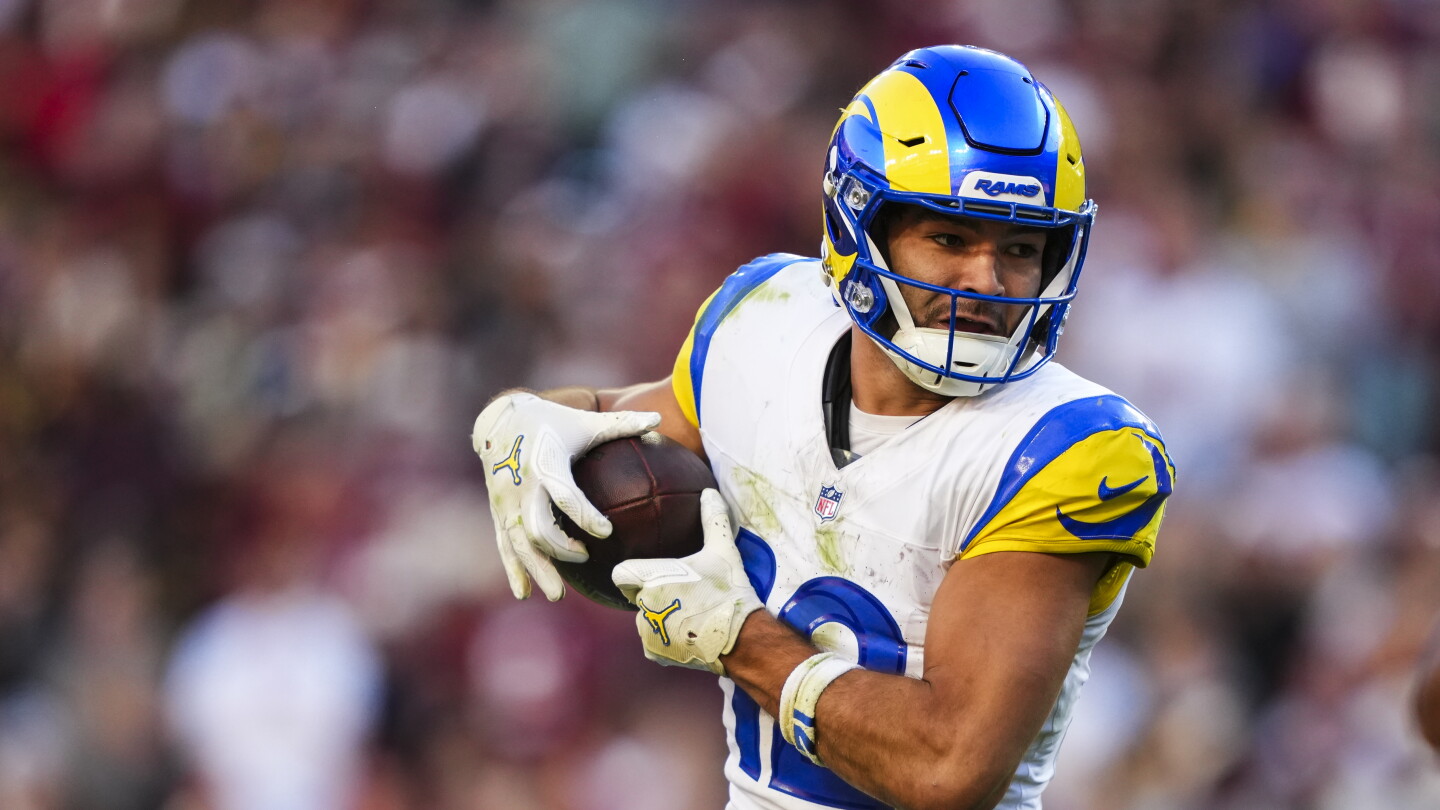
The news that Rams receiver Puka Nacua will serve a three-game suspension while on injured reserve raised plenty of eyebrows, because on the surface it seems very convenient.
It seems convenient because it is convenient. More accurately, it’s strategic.
The suspension is the result of a negotiation between the league and Nacua. In lieu of taking the process to a full-blown hearing before Judge Sue L. Robinson, whose findings of fact (e.g., “no violation was committed”) cannot be appealed by the NFL to the Commissioner, the two sides reached a compromise. They made a deal.
It happens every day in civil and criminal courts throughout the country. Controversies get resolved by negotiation. The mutual uncertainty — one side will win, one side will lose — becomes an outcome that, ideally, both sides don’t like but they’ll accept.
So the league, which may have been concerned that Nacua wouldn’t be suspended at all, agreed to a three-game suspension. Given the timing of the deal, the league necessarily agreed to let Nacua serve the suspension while otherwise unable to play.
The NFL didn’t have to do that. It could have dragged its feet. It could have rolled the dice on the decision to be made by Judge Sue L. Robinson. The league ultimately negotiated, and accepted, a situation that allows Nacua to engineer the process in a way that suspends him at a time when he otherwise wouldn’t be playing.
The league realizes that many will disagree with the outcome. That’s why the initial statement regarding the suspension was followed by an email that said this:
“A player’s injury designation does not delay discipline or prevent a suspension from being served.
“Consistent with prior cases, the suspension begins when it is imposed.
“There is precedent for players serving suspensions while on Reserve/Injured or otherwise unavailable because of injury. This is not a new rule or an exception created for Nacua.
"• Daniel Ekuale, Pittsburgh, 2025 season, was suspended five games for a violation of the performance-enhancing substances policy following a season-ending injury.
"• Sam Williams, Dallas, 2024 season, was suspended three games for violating the personal conduct policy while already out for the season.
"• Mike Woods, Cleveland, 2023, was suspended six games for violating the personal conduct policy while he was out on NFI.
"• David Parry, New Orleans, 2018, was suspended four games for violations of the personal conduct and substances of abuse policies while on injured reserve.”
Indeed, Chiefs receiver Rashee Rice had hoped to serve his Personal Conduct Policy suspension for a street-racing incident during the 2024 season, while he was on injured reserve due to a serious knee injury suffered in Week 4. (That didn’t happen, because Rice’s lawyers were unable to get the prosecutors to finalize the plea deal until after the 2024 season ended.) Similarly, kicker Justin Tucker served his full 10-game suspension in 2025 while not employed by any NFL team.
Here’s the philosophical question that the NFL could in theory revisit: Should certain suspensions only be served by a player who is healthy enough to play?
The current system allows players to navigate the process in a way that allows suspensions to be served while the player is injured. And, again, the league chose to resolve the Nacua case at a time when he was injured. The league could have insisted on a suspension that begins once he’s healthy, as part of the negotiation. Ultimately, the league exercised the discretion that is inherent to the negotiations that ended the case in a way that allowed to be suspended while injured.
The league could have refused to settle the case in a way that allowed Nacua to serve a suspension while injured. Some will say the league was doing Nacua (and, in turn, the Rams) a favor. The truth may be that the league had real concerns about losing the case before Judge Sue L. Robinson, and that taking a harder line may have resulted in no suspension at all.
Either way, the current system permits it. Moving forward, the league should consider whether — when it comes specifically to the Personal Conduct Policy — it will allow a player to serve a suspension that (while expensive as it relates to the forfeiture of pay) costs the player no playing time.