
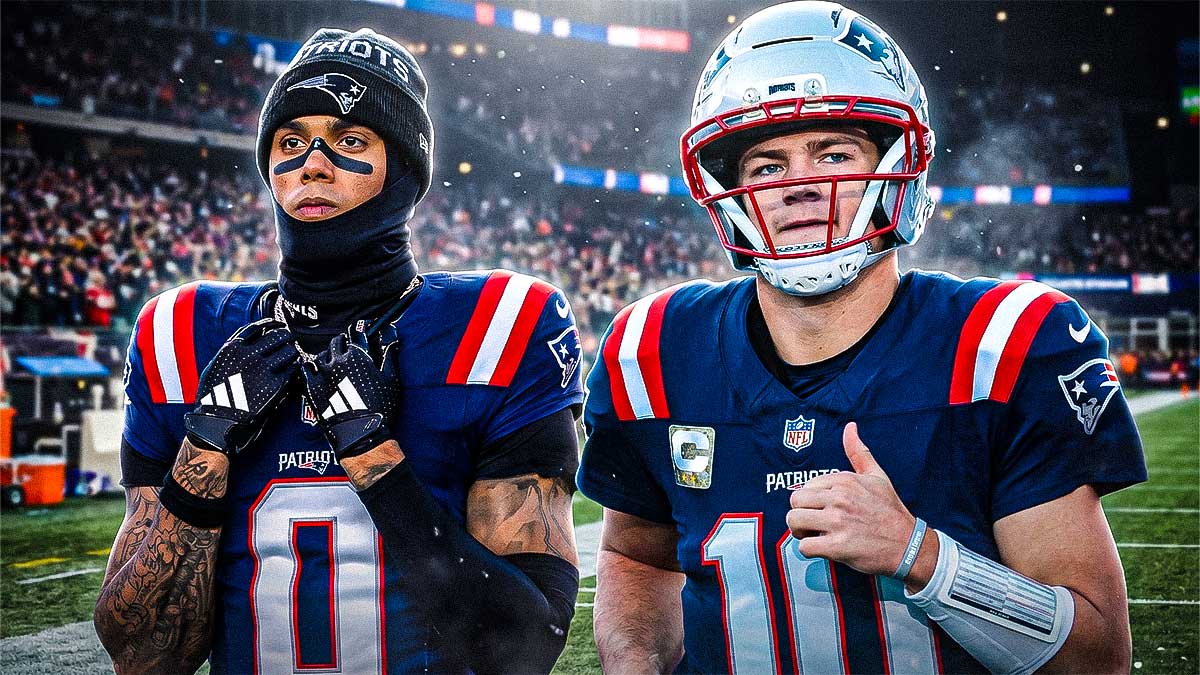
The New England Patriots needed their best players to set the standard against the Green Bay Packers. Instead, their quarterback supplied turnovers, their top cornerback surrendered chunk gains, and their defense never found a reliable answer.
Sunday’s 45-27 defeat dropped New England to 5-4 and established an unwanted record: the most points the Patriots have allowed at Gillette Stadium. Green Bay quarterback Jordan Love threw for 372 yards and three touchdowns as the visitors controlled the afternoon.
Drake Maye deserves the most individual blame, but Christian Gonzalez and Mike Vrabel’s coaching staff belong alongside him. This was an interconnected failure, not an unlucky loss disguised by a lopsided score.
Drake Maye’s interceptions put the Patriots behind
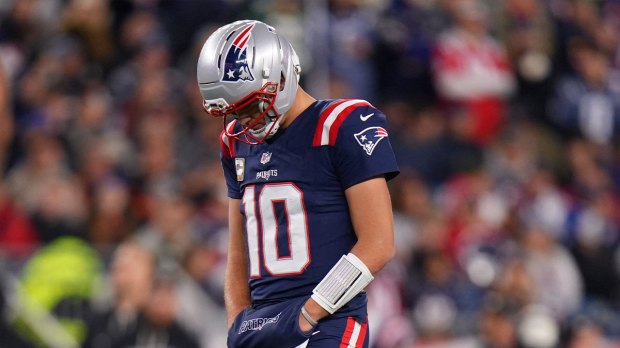
Maye’s three first-half interceptions are the clearest starting point. Against an opponent equipped to punish mistakes, New England repeatedly surrendered possessions before its offense could establish any rhythm. The Patriots finished minus-four in turnover differential, with their defense producing no takeaways to offset those giveaways.
Drake Maye with one of the WORST INTs you will ever see.
What was he thinking?!?!pic.twitter.com/mlS6lfvadL
— Dov Kleiman (@NFL_DovKleiman) November 8, 2026
That imbalance changes everything. An offense cannot consistently threaten a comeback when it keeps returning the football to a quarterback who is already dissecting its defense.
Maye entered the afternoon facing a Green Bay defense that ranked second in the league with 15 takeaways. Ball security was therefore an obvious priority, not an unexpected challenge that emerged after kickoff.
His three touchdown passes deserve acknowledgment, but they do not erase the damage. New England fell behind 17-0 and spent the remainder of the game chasing a deficit rather than establishing control.
For a quarterback carrying franchise-level expectations, the standard must extend beyond making impressive scoring throws. Maye needed to recognize when protecting a possession mattered more than forcing a play. His early mistakes gave the Packers too many opportunities to separate.
Christian Gonzalez and the secondary offered little resistance
Gonzalez’s performance was equally damaging on the other side of the ball. He allowed 187 receiving yards and a touchdown, falling well below the standard expected from New England’s premier cover corner.
The broader secondary provided little relief. Love completed six passes gaining at least 20 yards, while Christian Watson caught seven passes for a career-high 171 yards and a touchdown.
JORDAN LOVE
CHRISTIAN WATSONPACKERS ARE DOMINATING
GBvsNE on FOX/FOX One
Stream on @NFLPlus pic.twitter.com/hxEPzs2KdC— NFL (@NFL) November 8, 2026
Those numbers explain why blaming the offense alone misses the full picture. Even when the Patriots needed one defensive stand to stabilize the game, Green Bay continued generating opportunities downfield.
A defense can survive an occasional explosive completion. It cannot repeatedly allow receivers to turn ordinary possessions into immediate scoring threats.
Gonzalez was not responsible for every coverage failure, but the Patriots needed him to reduce Green Bay’s options. Instead, the Packers found production in matchups New England normally expects to win.
Mike Vrabel’s staff failed to stop the slide
Vrabel and his assistants deserve scrutiny because both defining problems were identifiable beforehand: turnovers and explosive passing plays.
New England entered Week 9 ranked 31st in turnover margin at minus-seven, then committed four more giveaways. Rhamondre Stevenson’s second-half fumble reinforced that the issue extended beyond Maye’s decision-making.
The response was just as troubling. Following that fourth turnover, Love immediately hit Watson for a 39-yard touchdown, and Green Bay’s successful two-point conversion made it 42-14.
That sequence captured the afternoon: an offensive mistake followed by a defensive breakdown, with neither unit providing support.
Maye tops the individual list, but Vrabel owns the collective standard. Better preparation, cleaner decisions and effective defensive adjustments were required. New England delivered none consistently enough to make this competitive.