
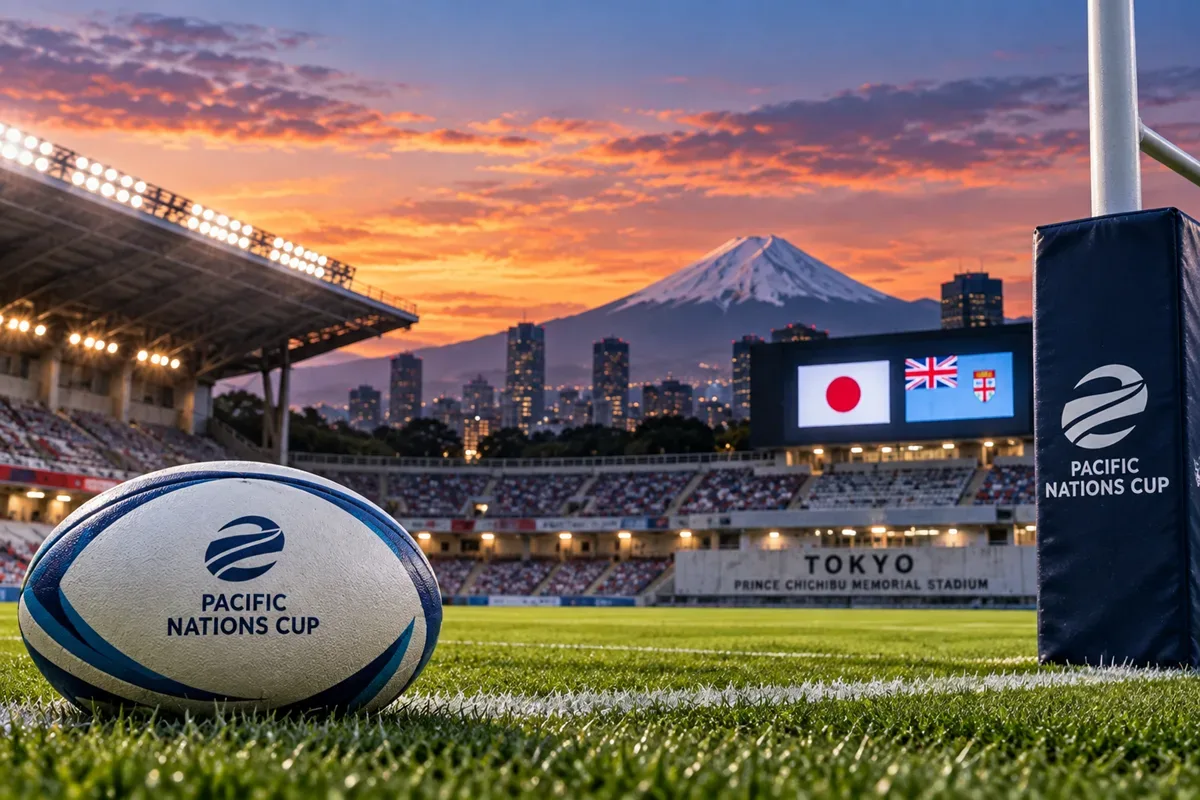
Japan and Fiji will meet in Tokyo on Saturday with the Pacific Nations Cup title at stake for the third successive year.
Hosts Japan reached the 2026 final by overwhelming the USA 63-14 in Osaka. Defending champions Fiji booked their place earlier in the day with a 45-29 victory over Canada.
The final takes place at Prince Chichibu Memorial Stadium on 19 September. Kick-off is at 19:05 local time, which is 11:05 BST in the UK.
For Fiji, victory would complete a third consecutive Pacific Nations Cup triumph and extend their record to eight titles. Japan are chasing their first crown since 2019 after losing the past two finals to the Flying Fijians.
That recent history gives Eddie Jonesâ side an obvious target. Japan have looked sharp in their two September Tests, but beating Fiji when a trophy is on the line has proved a different challenge.
Embed from Getty ImagesJapan make emphatic case in Osaka
Japan could hardly have produced a more convincing semi-final performance.
The Brave Blossoms scored nine tries against the USA and had four on the board before the opening quarter had finished. Yuya Hirose started the run in the second minute before Michael Stolberg, Dylan Riley and Mamoru Harada helped Japan establish control.
Sojiro Otsuka added JapanâÂÂs fifth try on the stroke of half-time, giving the hosts a 35-14 lead. Japan did not concede another point.
Riley added his second try after the break, while Jack Cornelsen, Esei Haangana and Sam Greene also crossed as Japan moved into another final. Harada was named player of the match.
The scoreline mattered, but the speed of JapanâÂÂs start offered the more important clue ahead of Saturday.
Jones wants his side to play at a tempo that forces opponents to make repeated defensive decisions. Against the USA, Japan created space before the visitors could settle into the match.
Fiji will present a far more difficult test.
The defending champions have the athleticism to defend across the field and the ability to turn loose possession into attacking opportunities of their own. Japan cannot expect the same amount of space if their accuracy drops.
Those contrasting strengths should shape the final.
Fiji find another route to the title match
FijiâÂÂs route through the semi-finals was less comfortable, but no less convincing in attacking terms.
Senirusi SeruvakulaâÂÂs side beat Canada 45-29 after scoring seven tries. Kitione Salawa opened the scoring, while Frank Lomani, Isaiah Armstrong-Ravula, Peni Ravai and captain Tevita Ikanivere also crossed.
Motikiai Murray then marked his Fiji debut with two second-half tries.
Canada stayed in the contest and scored four tries of their own, which gives Fiji areas to address before facing a faster Japanese attack.
Yet the Flying Fijians again showed why they have been so difficult to contain in this competition. They can hurt opponents from structured possession, but they are equally dangerous when a match becomes loose.
That balance has helped Fiji build the strongest record in Pacific Nations Cup history.
They have won seven titles: 2013, four in succession from 2015 to 2018, and the past two editions in 2024 and 2025.
World in Sport readers following the wider international game can also find more coverage through the World in Sport rugby hub.
Recent finals favour Fiji
Japan do not need reminding what happened in the previous two finals.
Fiji beat them 41-17 at Hanazono Rugby Stadium in 2024. The match was level at half-time before Fiji took control after the interval and scored four tries during a decisive 16-minute spell.
The gap narrowed substantially a year later.
Japan again reached the final in 2025, this time in Salt Lake City, and pushed Fiji much closer. The Flying Fijians eventually won 33-27 to secure their seventh Pacific Nations Cup title.
Saturday therefore gives Japan an immediate chance to change a rivalry that has recently been dominated by Fiji.
Japan have won the Pacific Nations Cup three times, in 2011, 2014 and 2019. Another title would end a seven-year wait and do so in front of a home crowd in Tokyo.
For Fiji, the objective is different. They already own the competitionâÂÂs strongest record. A third title in three seasons would reinforce their position at the top of that history.
Embed from Getty ImagesJapanâÂÂs tempo faces FijiâÂÂs counter-attacking threat
The final should provide a clear contrast in how the two teams want to create pressure.
JapanâÂÂs semi-final showed what can happen when they establish quick possession and move defenders before the defensive line is organised. Their opening burst against the USA effectively decided the contest before half-time.
Riley remains one of their most important attacking threats through midfield, while HaradaâÂÂs performance showed that Japan can also generate momentum closer to the breakdown.
Against Fiji, however, ambition has to come with control.
Loose passes, rushed kicks or isolated carriers can offer the Flying Fijians exactly the type of broken-field possession they want. Fiji have runners capable of converting a small mistake into a major territorial gain within seconds.
Japan therefore face a difficult balance. Slowing the match too much would take away one of their main strengths. Forcing the tempo without enough accuracy could play directly into FijiâÂÂs hands.
Fiji have their own concern.
Canada found ways through their defence and finished with 29 points in Osaka. Japan arrived with greater pace and produced nine tries in their semi-final, so Fiji cannot rely on their attacking quality alone.
The opening exchanges may be particularly important. Japan were 28-0 ahead during the first half against the USA, while Fiji also struck almost immediately against Canada.
Neither side will want to spend the first 20 minutes chasing the scoreboard.
A different Pacific Nations Cup in 2026
This yearâÂÂs competition has taken a shorter route to the final.
The 17th Pacific Nations Cup features only four teams: Japan, Fiji, Canada and the USA. The tournament opened directly with two semi-finals in Osaka before moving to Tokyo for finals day.
Samoa and Tonga are not involved in the 2026 edition after competing in the inaugural World Rugby Nations Cup earlier in the international calendar.
Canada and the USA will contest the third-place play-off at Prince Chichibu Memorial Stadium at 16:00 local time on Saturday. Japan and Fiji then take over the same ground at 19:05.
The changes sit within the wider reshaping of international rugby around the Nations Championship and World Rugby Nations Cup.
World in Sport has a full guide to how the Rugby Nations Championship works, while upcoming fixtures across the sport can be followed through the World in Sport sports calendar.
Both Japan and Fiji also have the 2027 Rugby World Cup in Australia on the horizon. The Pacific Nations Cup title is the immediate prize, but another knockout-style match offers useful evidence about how each side handles pressure with the World Cup little more than a year away.
Team selections still to come
The final starting XVs had not been confirmed as of 15 September.
That makes it important not to read the semi-final teams as automatic selections for Tokyo. Both coaches still have decisions to make before confirming their matchday squads.
JapanâÂÂs recent performance gives Jones plenty of reasons to retain the core of the side that beat the USA. Fiji also have selection issues to consider after Joseva Tamani withdrew from the touring squad for personal reasons, while the outcome of Isoa NasilasilaâÂÂs disciplinary case following his red card against Canada had not been announced by World Rugby as of 15 September.
The confirmed fixture information is available through the official Japan Rugby Football Union match page and World RugbyâÂÂs Pacific Nations Cup coverage.
What is already settled is the bigger picture.
Japan have another home opportunity to end FijiâÂÂs recent hold over the competition. Fiji have another chance to prove that, despite changes in personnel and the tournament format. They remain the side to beat.
Embed from Getty ImagesAfter two successive final defeats, Japan enter Saturday knowing exactly what victory would mean. Their semi-final performance showed that they have the speed and attacking confidence to challenge the champions.
Fiji arrive with something Japan do not have: recent experience of winning these finals.
The Brave Blossoms must now find out whether their strongest performance of the tournament can finally change that pattern.

World In Sport Forum
Continue the discussion
Join other fans in the World In Sport Forum and debate the biggest talking points from this article.