
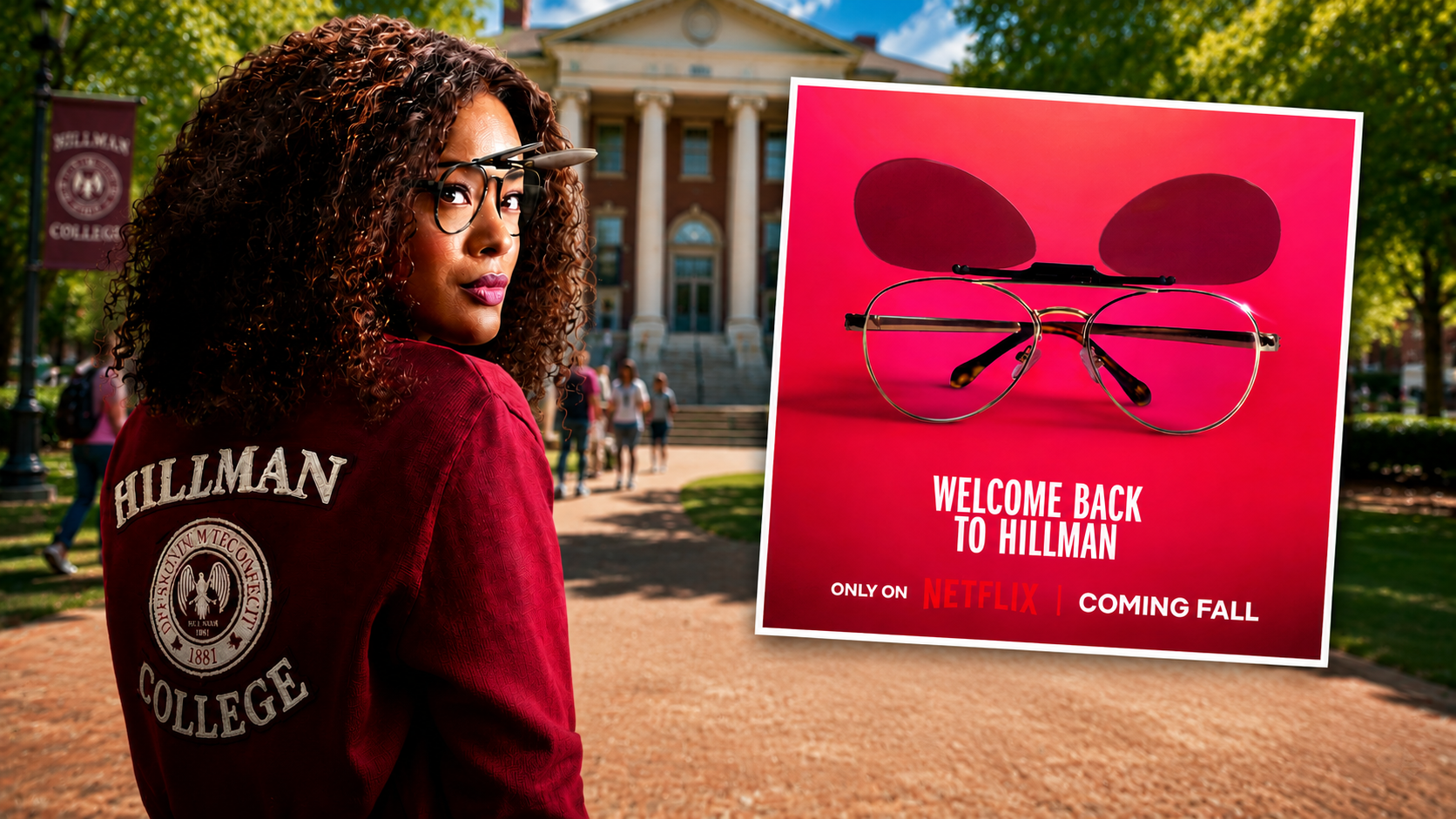
A Different World is back with a new generation of Hillman students, but the Netflix series’ connection to HBCU culture extends far beyond what viewers see on screen. Behind the scenes, the production deliberately brought the HBCU experience into the making of the show. Filmed in Atlanta, including at Morehouse College, Spelman College, and Clark Atlanta University, the series brought current HBCU students and graduates into the production in a variety of roles.
For creator and showrunner Felicia Pride and the team behind the series, that involvement was about more than creating an authentic portrayal of life at a fictional HBCU. It also created opportunities for Black students, graduates, creatives, and businesses to help bring Hillman College back to life.
The sequel to the original 1987 series debuted on Netflix on Sept. 24. It follows Deborah Wayne, played by Maleah Joi Moon, as she arrives at Hillman College, her parents' alma mater.
The new series introduces a younger generation of Hillman students while reconnecting viewers with characters from the original show. Jasmine Guy returns as Whitley, Kadeem Hardison as Dwayne, Cree Summer as Freddie Brooks, and Darryl M. Bell as Ron Johnson, among other returning cast members. According to production information released by Netflix, the series filmed for 57 days across 11 Atlanta locations and employed 290 cast and crew members, plus about 1,800 daily hires and background performers. Netflix also reported that 40 cast and crew members were HBCU graduates. Those graduates included Kennedi Reece, a Howard University alumna who plays Hillman student Hazel Henry.
HBCU students and alumni also had a significant presence among the show's background performers. Netflix reported that roughly 59% came from HBCUs and about 32% were current students. UNCF separately reported the production's extensive involvement with HBCU students and alumni, including students working as production assistants and advising the series.
That involvement began before cameras started rolling
To help the writers understand contemporary campus life, the production created an advisory council of current HBCU students. Pride told WABE that students came from multiple institutions because experiences can differ from one HBCU to another. A similar council was later established on set, giving AUC students another opportunity to contribute their perspectives during production.
Article Continues BelowThe Los Angeles Times reported that the two student councils served different functions: one advised the writers on storylines and campus issues, while another worked with the production in Atlanta. Through the A Different World HBCU Student Engagement Initiative, a program developed with Netflix, 33 students were hired as paid, non-union production assistants.
According to Netflix's account of the initiative, students shadowed professionals working in areas such as costumes, art, accounting, locations, and the writers' room, among other departments. Their work schedules were arranged with their college classes in mind. Netflix reported that the show worked with more than 275 vendors and businesses during production. The props department partnered with the Russell Innovation Center for Entrepreneurs, or RICE, to incorporate products from Black-owned businesses into the series. Pride said the effort contributed to the show's authenticity while also expanding its impact beyond what audiences see on screen.
Fashion became another avenue for that investment. Costume designer Provi Fulp, a Clark Atlanta University alumna, and her team incorporated the work of more than 15 Black designers into the season, according to Netflix. In a separate interview with the Grio, Fulp identified brands and designers, including Honor the Gift, Fe Noel, Actively Black, Dungeon Forward, and several others whose work appeared on the show.
Nearly four decades ago, the original A Different World introduced millions of viewers to a fictional HBCU and helped bring Black college culture into mainstream television. The new series is extending that legacy beyond its storylines. This time, the people helping create Hillman include students and graduates of the institutions that inspired it.
By involving HBCU students as advisers and production assistants, employing HBCU alumni, filming on Black college campuses, and working with Black creatives and businesses, the production turned its celebration of HBCU culture into something tangible.