
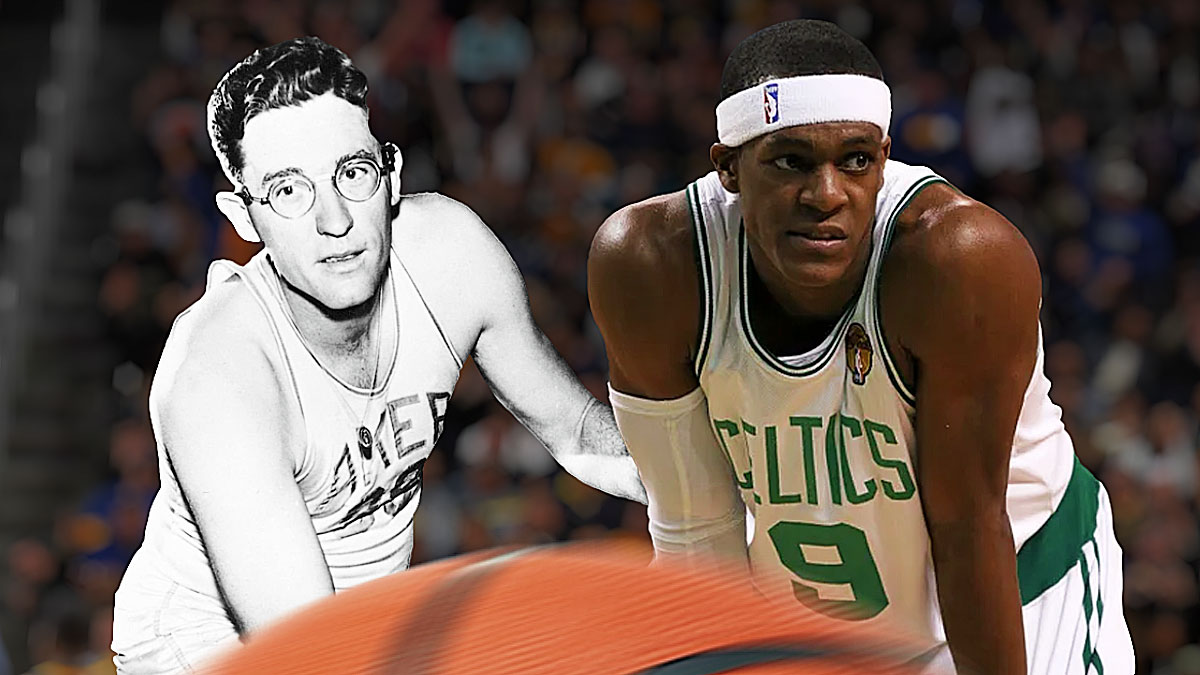
The NBA has been around for over seven decades. However, as time passed by, the game also evolved. While some players have become dominant, their play didn’t contribute well to the growth of the game. Thus, this forced league officials to make rule changes in order to keep the game interesting and advancing. Here are some famous NBA players throughout history who forced the league to make rule changes.
George Mikan
George Mikan is the hooper who basically popularized and perfected the layup. That statement makes it clear that Mikan played in the NBA's infancy before the league had ironed out its rules. Mikan towered over the opponents of his era, and due to his towering dominance, the NBA made several rule changes because of him.
For one, there was The Mikan rule, which extended NBA lanes from six to 12 feet in order to make Mikan move more. The offensive three-second rule was actually already around during Mikan's playing days, so an extended lane ensured the big man couldn't just stay a couple of feet away from the basketball all night.
Aside from that, Mikan was also responsible for rules concerning goaltending. Furthermore, he was also one of the figures that paved the way for the 24-second shot clock rule.
Charles Barkley
Charles Barkley was a menace in the shaded area despite being undersized. The generously listed 6-foot-6 forward was known as the Round Mound of Rebound. To alleviate the lack of height, Barkley often backed down bigger defenders for a lengthy amount of time before attempting a shot. He was rarely taller than players of his position, but he was almost always able to out-muscle them.
In order to quicken the pace of the game, the league responded by imposing the five-second rule, or the “Booty rule.” Now, players can't hold onto the basketball for more than five seconds while backing players down. Aside from Barkley, Mark Jackson was also affected by this rule.
Paul George
Paul George suffered a freak injury in a Team USA scrimmage while building up for the 2014 FIBA World Cup. It was one of the most gruesome and devastating injuries in NBA history, as George went up to contest a shot but ended up landing at the base of the basket, which caused him to break his leg.
Fortunately, PG has successfully recovered from the broken leg and pieced together a successful comeback story. In order to prevent this from happening in the NBA stage, the league mandated extra space for both sides of the basketball stanchion. NBA players can run faster and jump higher than just about anyone else in the world, so it made sense to create some extra landing space for players who are so frequently airborne around the basket.
Trent Tucker
While buzzer beaters are often celebrated, there is one that sparked controversy. Trent Tucker nailed a game-winning shot in 1990 at the buzzer with only 0.1 remaining. To the ire of Bulls coach Phil Jackson, the shot shouldn’t have counted with the time given.
In response to the incident, the Trent Tucker Rule was made. The rule limited teams to only make a shot via alley-oop or tip in if the clock is less than 0.3 seconds. Tucker's play was memorable, and it is impressive he got off a shot and made it as quickly as he did, but shooting a jumper in less than 0.3 seconds has since been ruled physically impossible.
Rajon Rondo
Of course, the NBA is about racking up wins and putting up statistics. Rajon Rondo did both at a high level, as he won two championships during his career as a member of the Boston Celtics and Los Angeles Lakers. Additionally, the all-time great facilitator thrice led the NBA in assists and was the steals leader an additional time.
However, the culture of the NBA has extended past just on-court production. The apparel players wear, both on and off the court, has become a staple of basketball. One of the most iconic on-court looks was Rondo's upside-down headband. Eventually, the league forced Rondo to have his headband logo upright. It didn't necessarily change the outcome of any games, but it was an NBA rule change nonetheless.
Allen Iverson
As mentioned above, culture is a big part of the NBA, and no player impacted it more than Allen Iverson. The giant-killing guard was not only known for his scoring ability and killer instinct, but for rocking cornrows, arm sleeves, and tattoos. He'd even enter NBA facilities rocking his own personal style, which often included baggy clothes and jerseys.
Then NBA commissioner David Stern didn't like that, though, and a dress code was create that required players to enter arenas in business casual attire.
Zaza Pachulia
San Antonio Spurs favorite Bruce Bowen was the first to draw the NBA's attention on dangerous shot contests, but it was former Warriors big man Zaza Pachulia that forced the league to strictly enforce a rule change that prevented defenders from getting underneath shooters.
Pachulia was caught in the landing space of the Spurs' Kawhi Leonard while attempting a jump shot in Game 1 of the Western Conference Finals. This led to Leonard’s injury, which played a major role in the Spurs’ 4-0 series defeat at the hands of the Warriors. Pachulia is known as a dirty player, but this offense was one of his worst.
There's no convincing me Zaza Pachulia wasn't trying to injure Kawhi Leonard. Dirty play. pic.twitter.com/O2vn3SSfKd
— Dan Molloy (@DanMolloyTV) May 14, 2017
After the incident, the league implemented a ZaZa rule, which now allows referees to penalize reckless defenders with technicals and flagrants. This helps protect the shooter from injury. On a side note, Pachulia also played a major role in the NBA’s All-Star voting change. Given his popularity in Georgia, Pachulia would’ve been an All-Star starter in the festivities using the previous format despite riding the bench during the regular season.
Shaquille O’Neal
Shaquille was one of the most dominant centers to ever play in the NBA. Teams had no one who could match up with the four-time NBA champ. He was simply too physically imposing. Because of Shaq’s dominance, the league allowed teams to employ a zone defense to limit his dominance in the painted area. Beforehand, man-to-man schemes were the requirement.
While Shaq’s dominance forced the NBA to make a rule change, his weakness also demanded one as well. Shaq dreaded making free throws and only made 52.7% at the stripe for his career. As a result, opposing teams developed the Hack-a-Shaq tactic to offset his dominance. In response to this, the league made a rule change that would reward the fouled team a free throw and possession of the ball. Another change that The Diesel was responsible for was reinforced rims. O'Neal was so big and so explosive as a dunker that backboards often shattered when he slammed down the ball. The NBA had to adapt by implementing rims/backboards that could withstand a 325-pounder.
James Harden
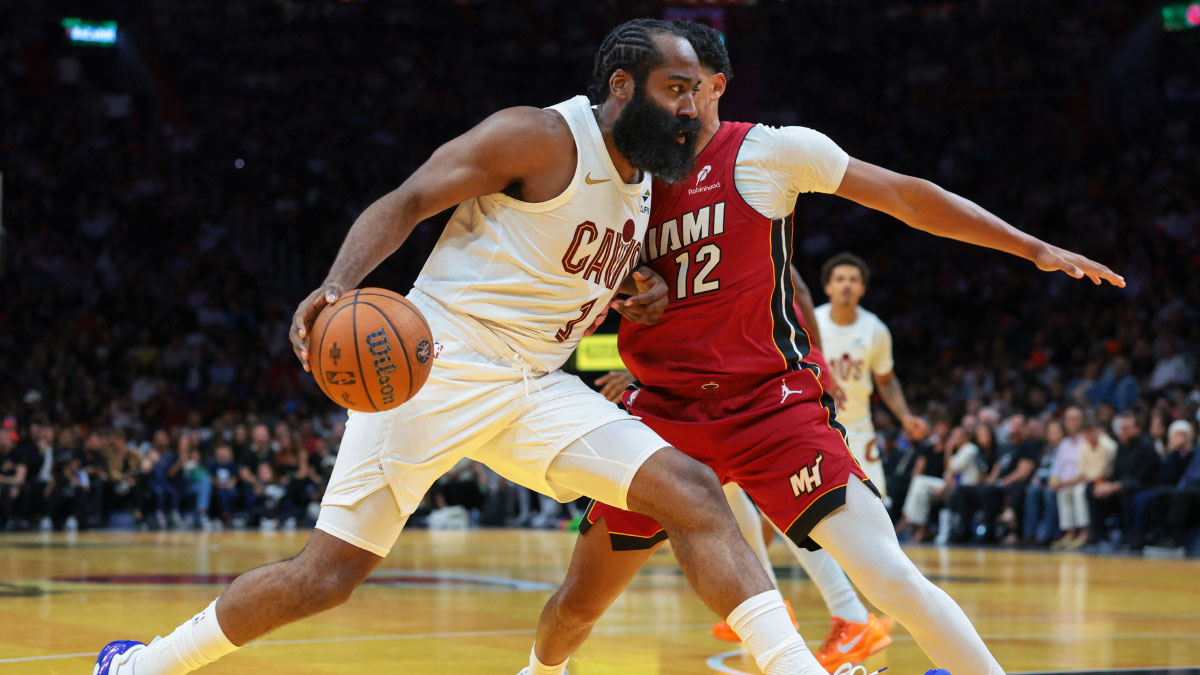
When it comes to scoring, James Harden has turned heads in the league. After all, the former MVP has the highest single-season scoring average for anybody not named Michael Jordan or Wilt Chamberlain. Although his eurosteps and stepbacks have raised eyebrows, especially because he has often seemingly gotten away with a couple extra steps, it’s his ability to draw fouls that catches everyone’s attention.
Before the rule change, Harden was averaging over 10 free throw attempts per game. To limit Harden’s free throw trips, the league enforced the James Harden rule. This prevents players from intentionally drawing fouls with non-basketball moves. An authentic shot has to be attempt to warrant a shooting foul whistle.
Article Continues BelowReggie Miller
Shooting is Reggie Miller’s specialty. He is one of the best shooters ever, and long had a case as the best 3-point shooter in league history, until he was eventually surpassed by the likes of Stephen Curry. Given Miller's competitive nature, he would do anything at his disposal to win. Although he was already happily retired, the league enforced a rule that gave tribute to the former Pacers star, which was known as the Reggie Miller Rule.
The rule prohibits jump shooters from extending any of their legs in order to draw contact. This allows referees to penalize the shooter with an offensive foul for trying to initiate contact. Fortunately for Miller, he was already done building his legacy.
Caron Butler
Lots of players have weird ticks, but perhaps none were weirder than Caron Butler's insistence on chewing straws while playing. Butler was a gifted scorer, and the habit illustrated just how nonchalant he was on the hardwood. The league ruled the habit as a safety concern because the straw was a choking hazard for Butler and a risk to poke other players on the court, so Butler's straw-chewing was shut down.
Ron Artest
A number of players throughout NBA history simply weren't the best of friends with referees. Draymond Green and Rasheed Wallace come to mind, the former for his insistence on committing egregious fouls and constantly yelling, and the latter for being the all-time leader in ejections.
Referees' biggest enemies are often handed technical fouls. Ron Artest, later known as Metta World Peace, is one player who was T'd up a lot, although he doesn't rank in the top 10 all-time. Still, Artest was the main culprit at the Malice at the Palace, and after that event, which remains a stain on the NBA's history, the league made it to where 16 technicals result in a suspension.
Wilt Chamberlain
If there’s a player who completely dominated the league and forced the NBA to make early rule changes, it was Wilt Chamberlain. After all, this is a man who averaged 50 and 25 in a season and once had a 100-point performance. Paired with great size and skill, Chamberlain’s dominance had to be contained by the league in order to keep the game interesting and to alleviate the size and skill difference between him and his competitors.
Chamberlain forced the league to implement rules that prevented offensive goaltending and inbounding over the backboard. Furthermore, he also affected free throw regulations and forced the league to widen its lanes. Chamberlain used to jump past the free throw line and take layups when attempting FTs. Now, players can't cross the free throw line itself.
In other words, Chamberlain was in a class of his own.