
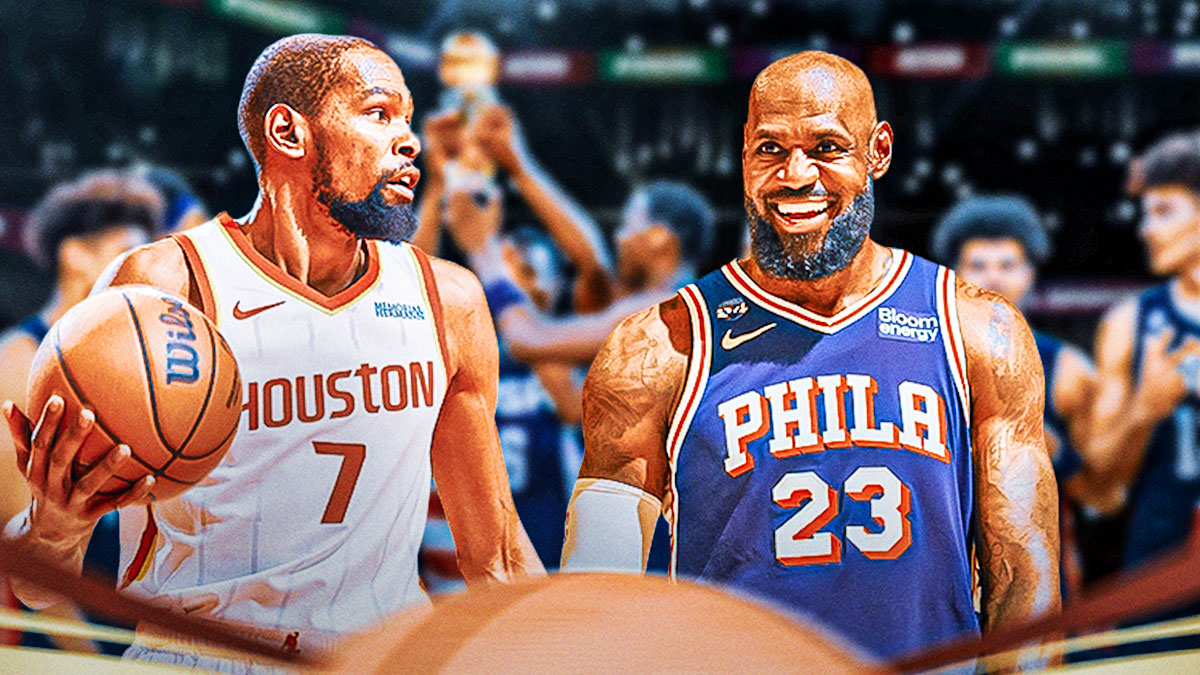
LeBron James and Kevin Durant have enough influence to make people notice a youth basketball league. Whether their Futures Basketball League deserves families’ trust will depend on what happens after the announcement, when compensation, coaching, and competing commitments become everyday responsibilities.
FBL plans to begin in April 2027 with 12 regional teams and a pool of 120 elite players younger than 18, ESPN reports. Its pitch combines national exposure, NIL earnings, and personalized training. That combination offers a compelling opportunity. But if the league wants to improve American basketball development, paying teenagers must represent the beginning of its work.
The strongest argument for Futures comes from the gaps its organizers describe: fragmented competition, inconsistent support, and a calendar that can favor the next event over sustained improvement. A new league can address those problems. A recognizable ownership group cannot solve them simply by showing up.
The Futures Basketball League launches in April 2027 as a 12-team circuit for the top 120 under-18 boys players, backed by LeBron James’ LRMR VENTURES, LLC and Kevin Durant’s Boardroom Sports Holdings.
https://t.co/NuAWuFaDHF pic.twitter.com/iC6PNeSGFU
— Youth Sports Business Report (@YouthSports_Biz) November 10, 2026
What will players receive beyond their NIL checks?
FBL says athletes can collect compensation through cash, an ownership stake, or both, with equity requiring administrative approval. Players can also pursue outside sponsorships, including shoe deals. Those options give the league’s financial pitch substance, although organizers have not disclosed payment amounts.
Derrick Rose told ESPN those earnings could prove “life changing.” For families evaluating an offer, however, the practical details will matter more than the description. What does each option provide? How clearly will players understand the difference between immediate income and a stake in a developing business?
Rose’s plans offer an encouraging starting point. He said he has begun discussions with Northern Trust representatives about financial education for his Chicago team. Teaching athletes how to understand the business surrounding their talent would strengthen the value of paying them.
That support deserves attention because Futures explicitly presents its athletes as commercial figures. Chris Rivers, the league’s basketball operations executive, described young prospects as “brands and media platforms long before college.” Recognizing their earning power makes sense. Helping them navigate that responsibility should carry equal weight.
Rose also supplied one of the announcement’s most meaningful observations: his brothers helped protect him during his own development, while many prospects lack comparable support.
FBL cannot promise every teenager the same family circumstances. It can make dependable guidance a central responsibility. That would give its player compensation model a purpose beyond recruiting.
Players in the Futures Basketball League will be paid through NIL deals and maintain their eligibility for college and high school, according to the start-up's chairman and co-founder: https://t.co/rVZLsITcxg pic.twitter.com/VV0Kz1cV3E
— NBA on ESPN (@ESPNNBA) November 10, 2026
Can FBL make development its daily priority?
The basketball plan offers reasons for interest. HMBL Development will design individual training programs, while coaches holding USA Basketball Gold licenses will lead teams. FBL also promises a schedule that accommodates school competition, recruiting evaluation windows, national team duties, and the NBPA’s prospect camp.
Those commitments establish useful standards against which families can judge the league.
Justin Bright, HMBL’s founder, identified the issue directly: “For too long, the system has prioritized the next tournament over long-term development.”
An individualized plan answers that criticism only if the league gives coaches and trainers the opportunity to follow through. Families should eventually see how the promised instruction connects to each player’s needs across the season.
Futures also plans to put elite prospects against one another regularly, addressing the separation between existing sneaker circuits. Better access to strong opponents supports the league’s argument. Still, its April-through-August season overlaps with those established competitions.
That creates a practical test. If Futures wants to simplify a crowded landscape, its relationships with existing circuits matter. Adding another desirable destination could leave families managing another set of demands unless cooperation matches the league’s ambitions.
Chairman Jason Stein says conversations with sneaker companies have progressed productively. That offers a starting point, while leaving the actual arrangements unresolved.
How will the league balance players and its audience?
Article Continues BelowFutures clearly wants a business that attracts viewers and sponsors. Connor Schell will advise its production and distribution efforts, and organizers envision coverage that follows athletes through recruiting, compensation deals, and their basketball progression.
There is nothing unreasonable about building an audience around compelling competition. Revenue and attention form part of the league’s plan to compensate players and sustain its operation.
The tension comes from the scale of its promise. Futures wants teenagers to improve as athletes while also providing the personalities and stories that help sell the product. Its leaders must show that those goals can coexist within a schedule designed around players.
Several important pieces remain forthcoming, including broadcast partners, sponsors, participating markets, and the complete schedule. Those announcements will make the proposal easier to evaluate. Until then, confidence should reflect the promise rather than treat projected benefits as established results.
The league’s pledge of $1 million to the MADE For All Foundation also deserves recognition. Supporting scholarships and community programs gives the project a contribution beyond its selected prospects, although that commitment cannot substitute for delivering its core program.
James and Durant have helped bring attention to a proposal with meaningful potential. Rose and Paolo Banchero add perspectives from their own development, and the operating partners bring experience within youth basketball.
Now comes the harder part: translating that experience into consistent care, useful instruction, and understandable financial choices.
Futures will earn its strongest endorsement when families can point to what their children gained beyond a payment. That is the standard its own promises demand.