
After two weeks into the 2026 NFL season, the tight end position remains one of the most challenging areas in fantasy football. A player might run numerous routes but still finish the game with only two catches, while someone who was overlooked on draft day can suddenly become relevant due to an injury, a favorable matchup, or an expanded role. This volatility makes streaming tight ends frustrating, but it also means that fantasy managers who waited to select a tight end still have ways to piece together useful production without making a major trade.
In Week 3, there are three particularly intriguing options, as each player has gained fantasy relevance through a different path. One player is stepping into a significantly larger role in the passing game, another has enjoyed consistent early usage paired with a favorable divisional matchup, and the third has a greater reliance on touchdowns but faces one of the most advantageous opponents for the position. Additionally, all three of these players are still available in many Yahoo leagues, with ownership levels well below those typically associated with reliable weekly starters.
Oronde Gadsden II, LAC (@ BUF)

The appeal here lies in opportunity, as Los Angeles entered Week 3 after losing two members of its tight end rotation to injuries. This cleared up much of the competition that previously limited Gadsden's involvement during the first two games.
His statistical production has been modest so far, with four catches for 50 yards over two appearances, but Week 2 provided the first glimpse of what an expanded role could look like. Gadsden caught both of his targets for 18 yards and scored a touchdown, while his involvement significantly increased as the depth chart changed during the game.
So, this trend is more important for fantasy purposes than the mere 18 receiving yards. Streaming tight ends often lack secure target shares, so identifying someone whose snap counts and route opportunities are likely to rise is often more valuable than chasing a player with a single large box score but no corresponding change in their role. Los Angeles now has a clear reason to keep its second-year pass catcher on the field, and his previous performance suggests he can generate more substantial gains when given ample routes.
Buffalo also provides a conducive environment for a streaming tight end. The Chargers are set to face an offense capable of creating scoreboard pressure, which increases the likelihood of a higher-volume passing game instead of a match where Los Angeles can rely on the running game for four quarters. More dropbacks naturally lead to more opportunities for a player whose main concern entering the season was securing enough snaps
There remains a risk involved, of course. A larger role doesn’t automatically guarantee six or eight targets, and the Chargers might distribute the available opportunities across multiple positions rather than concentrating them on the tight end. Additionally, the early touchdown makes his two-game fantasy production appear stronger than the underlying target volume would suggest.
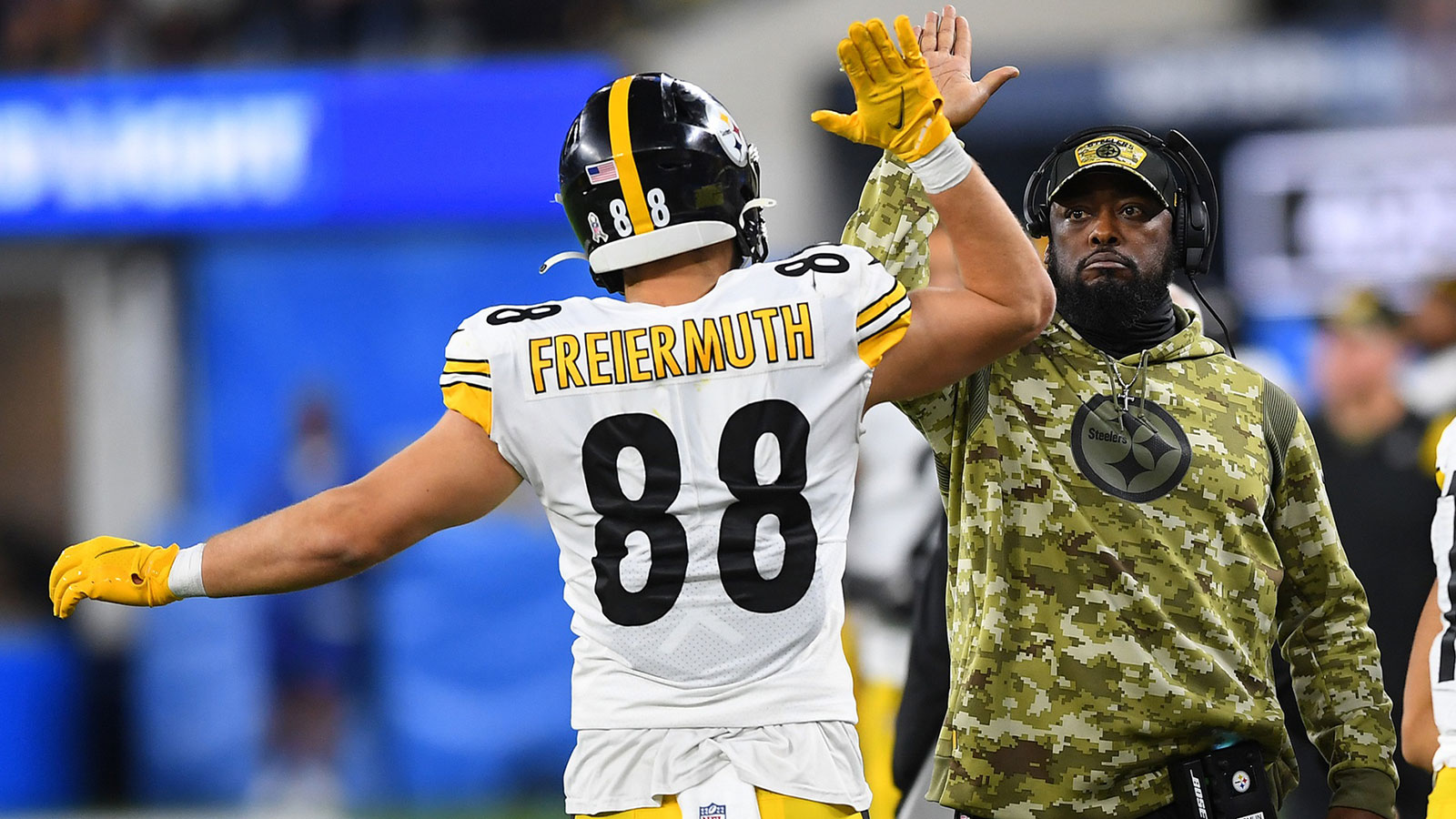
Pat Freiermuth, PIT (vs. CIN)
Freiermuth presents a different profile for fantasy managers, as there’s no need to speculate about a new role for him. Pittsburgh has consistently involved him in their offense, as evidenced by his five targets in each of the first two games, resulting in nine receptions on ten opportunities, totaling 78 receiving yards and one touchdown.
While those numbers aren't explosive, reliable targets hold significant value at the tight end position, especially when other options often leave managers guessing whether a player will receive two passes or seven. His early workload has established a reasonable floor without relying on unusual game scripts, and Week 3 presents a matchup that could lead to substantially higher production.
Cincinnati struggled against tight ends last season and has already shown similar vulnerabilities in 2026. In Week 2, opposing tight ends accumulated 14 receptions and 174 receiving yards against the Bengals, creating a clear avenue for Pittsburgh to attack the middle of the field instead of attempting difficult throws to the outside.
The Steelers may also prioritize manageable completions after their offense struggled to find consistency in Week 2. A tight end who has caught nine of his ten targets is particularly valuable in this situation, as his fantasy output doesn’t solely depend on deep shots or broken plays. If Pittsburgh needs quick completions under pressure or decides to focus more on intermediate routes in the passing game, Freiermuth's existing involvement could naturally result in another afternoon with five or more targets.
However, touchdowns are key to his fantasy value. His score in Week 1 elevated his fantasy potential, while a follow-up performance of four catches for 32 yards produced a much more ordinary result. This underscores the reality of streaming at the tight end position: even a player with consistent usage often needs either a touchdown or significant yardage to stand out from the rest.
Article Continues BelowAJ Barner, SEA (@ WAS)

Barner requires a bit more imagination to consider for fantasy leagues, as his receiving volume has been minimal so far, only three catches for 21 yards through two games. In Week 2, his fantasy production got a boost from a one-yard rushing touchdown, showcasing his unusual role in short-yardage situations, which provides him with an additional avenue to score.
Typically, a player with such a profile might be too reliant on touchdowns to trust consistently, especially given his limited usage in the passing game, which leaves him without a solid foundation, but the matchup against Washington alters that assessment enough to make him intriguing in deeper formats.
The Commanders have shown vulnerability to tight ends early this season, with a significant performance from the position in Week 2. Now, Seattle has the chance to exploit that weakness as they enter the game with a 2-0 record. So, the Seahawks need to move the ball effectively so that red-zone and goal-line opportunities could become more valuable than raw reception numbers. This aligns well with the way Barner has accumulated fantasy points thus far.
His performance in the 2025 season also indicates that his receiving potential is greater than what the first two weeks of 2026 might suggest. Last year, he finished with 52 catches for 519 yards and six receiving touchdowns, demonstrating that he can contribute as a conventional pass catcher. The key question now is whether Seattle will need to utilize that aspect of his game frequently enough for fantasy managers to depend on it.
This makes him a better option for teams looking for upside rather than those trying to avoid a poor score. A couple of receptions without a touchdown could lead to disappointment, but another opportunity in short-yardage situations could significantly improve his fantasy day. Additionally, the matchup offers a decent chance for his involvement in the passing game to increase as well.
Week 3 streaming outlook
The decision regarding tight ends this week hinges more on the type of risk a fantasy roster can accommodate rather than simply selecting the player with the highest total from Week 2. A player with an expanding role presents an opportunity to get ahead of a potential breakout, while consistent targets provide a safer path to reliable production. Alternatively, goal-line involvement offers a higher-risk option for managers willing to pursue touchdowns.
This distinction is important because streaming tight ends isn't about finding a player who suddenly becomes an elite starter for the entire season. Instead, it focuses on identifying enough routes, targets, or scoring chances to get through one week without compromising too much in other areas of the roster.
In Week 3, there are three solid options to achieve this.