
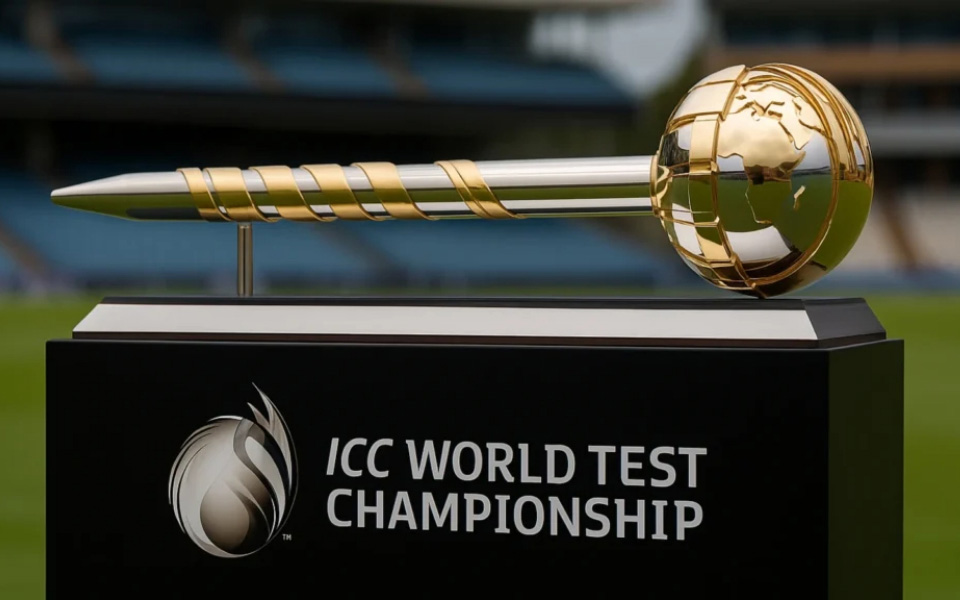
Cricket Australia CEO Todd Greenberg has expressed confidence that a 12-team World Test Championship format will be approved for the 2029-31 cycle.
Cricket Australia CEO Todd Greenberg has expressed confidence that a 12-team World Test Championship model will be approved for the 2029-31 cycle. The proposal represents a significant expansion from the current nine-team format that has operated since the WTC's inception in 2019. Greenberg made his remarks while in Durban ahead of Australia's opening Test against South Africa.
The proposed model would allow one-off Tests to count towards the championship, potentially accommodating Zimbabwe, Ireland and Afghanistan alongside the existing nine nations.
"I think for the next iteration [of the WTC], I can understand why it is that number because they want to give every Test nation the opportunity. But, ultimately, countries are going to have to make hard decisions themselves because if revenues don't continue to come in from the ICC at the levels that we've enjoyed, or they can't generate their own FTP arrangements, then ultimately any business, ours is the same, you can't continue to distribute more than you earn every year. That's where global cricket finds itself in some parts," said Greenberg as quoted by Cricinfo.
The current WTC structure has seen nine nations compete over two-year cycles, with each team playing six Test series comprising three home and three away matches. The proposed 12-team model would fundamentally alter this arrangement and expand international Test cricket's competitive scope. Greenberg has previously indicated that the long-term future of Test cricket will require difficult decisions about which nations remain involved in the format.
Financial sustainability and the future of bilateral series
Financial pressures facing some cricket boards have become increasingly apparent. Cricket West Indies chief executive Chris Dehring recently described their home season, which included visits from Sri Lanka and Pakistan for Tests, as facing severe challenges. Greenberg acknowledged the sustainability issue directly, stating that boards cannot continue to distribute more than they earn every year.
"It wasn't very popular when I said that [about Test cricket], but I still say it's a statement of fact that over time it's getting more and more difficult for countries to play Test cricket because it is so expensive. When I say it's expensive, don't take that comment as being [about] putting on Test matches. It's the ability to invest in your system to create a structure for red-ball cricketers. You can't just magically find 11 players to play Test cricket," said Greenberg.
"I think there is a world where there will be member nations who don't play Test cricket, or they might have to play more away Test cricket than they do at home in order to keep Test cricket in their country [alive] and keep playing that format. I think we've got to think about it differently. This whole reciprocal nature is potentially sending some countries broke," he added.
Australia remains keen to play South Africa across a five-Test series in future, though scheduling challenges present a significant obstacle. Both nations compete during similar periods of the year, making bilateral arrangements difficult to coordinate. From a commercial perspective, Greenberg suggested that Pakistan represents a viable option for longer series given the size of the expatriate community in Australia.
Scheduling the next Future Tours Programme
Pakistan will tour Australia in December 2027 for three Tests, followed by Sri Lanka's visit in February 2028 after the Big Bash League concludes. Cricket Australia has reserved January for the Sydney Test in most years, with exceptions made only during India tour cycles. Australia's confirmed home Test opponents for the 2027-31 period include India in 2028-29 and England in 2029-30, with only the 2030-31 home opponents still to be finalised.
"We would love to host South Africa for a five-Test series. [But] there's a real challenge in that between our organisations because they play in a similar period of the year. I can understand that. It would be like asking us, can we come and play in South Africa during December and January. You know our answer would be 'no, we can't], because we're protecting our own windows," said Greenberg.
"So that's why it's difficult. But we're in constant conversations with them. I'll have conversations while I'm here with them. I think South Africa are a really strong Test-playing country despite their commercial and financial challenges. We'd like to see them continue to play Test cricket. We'd love to host them," he added.