
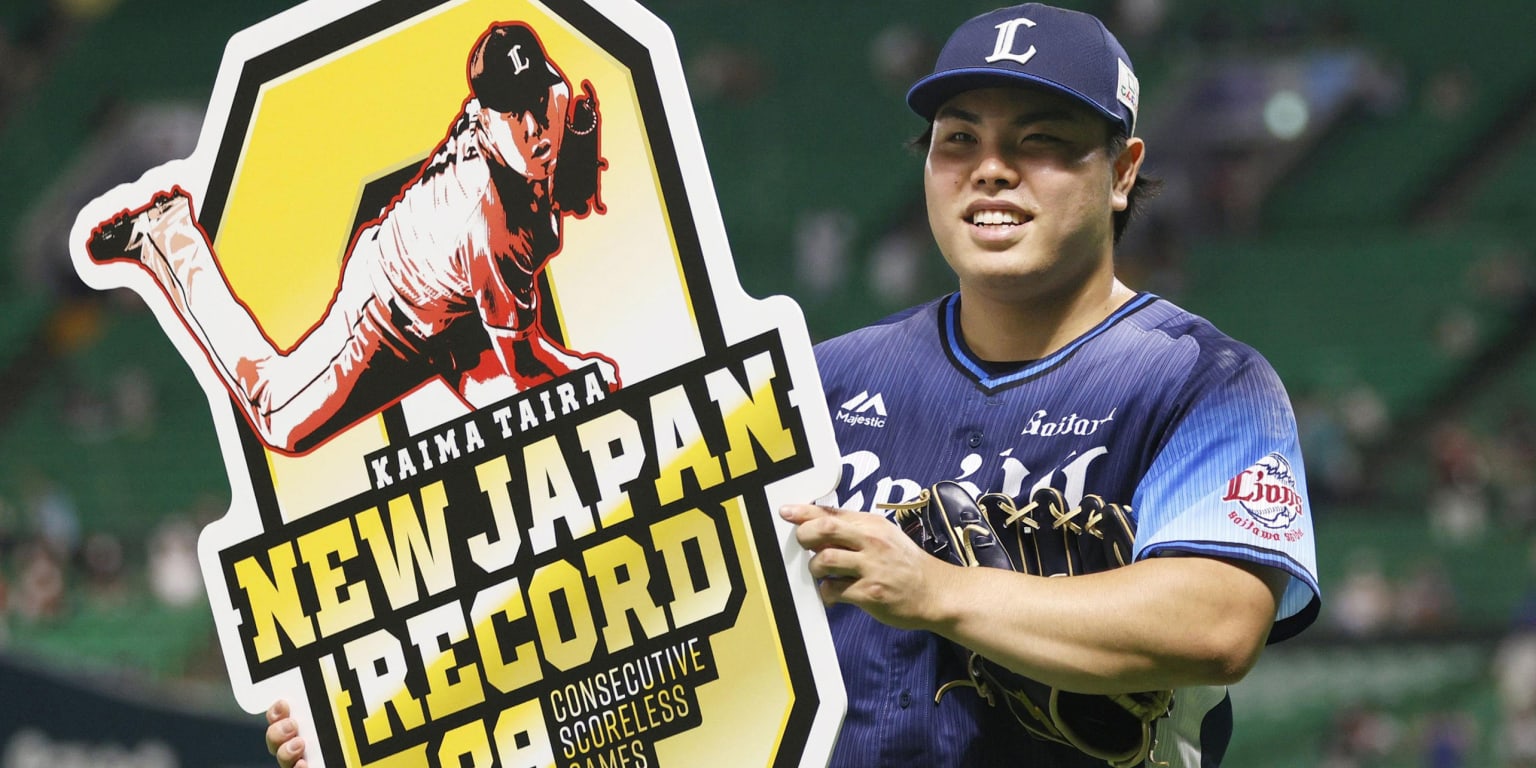
TORONTO -- The most interesting pitcher on the free-agent market just became the most interesting man on the Toronto Blue Jays.
Kaima Taira, all 5-foot-8, 220 pounds of him, is a pitching anomaly.
The Blue Jays agreed to terms on a five-year, $80 million deal with the Japanese right-hander Tuesday, a source told MLB.com. The deal, which the club has not yet announced, includes an opt-out after the 2029 season. Pitchers coming over from Japan’s NPB always have a layer of intrigue from the very beginning, given the move overseas between leagues, but Taira’s unique build and fascinating arsenal add a completely different dimension to this move.
This is a bold move by the Blue Jays, chasing the unknown upside of Taira instead of settling for sturdy, reliable innings on a short-term veteran deal. This tracks with the Blue Jays’ recent shift in philosophy, though, leaning towards starters like Dylan Cease and José Soriano instead of the safer options they’d been drawn to in the past, like Chris Bassitt or José Berríos. They’re going younger, too, grabbing a 27-year-old Taira for his prime years instead of hoping a pitcher in their mid-30s can keep it on the tracks.
This is what you need to know:
Height doesn’t measure … everything
Taira’s height will make plenty of headlines this week and heading into next season, but that’s just one data point. The more important numbers are Taira’s extension and release point, which essentially means: How far down the mound does Taira release the baseball, and how high off the ground?
Our David Adler wrote this excellent, timely breakdown of Taira’s delivery and pitch mix this week, which captures that well. The key word to remember with Taira is “explosiveness,” and it’s all about his lower body.
Taira drives hard down the mound, which sets him up to release his pitch 6.8 feet in front of the rubber. That’s closer to home plate than the MLB average (6.5 feet from the rubber), meaning that Taira makes up for his lack of height and wingspan by driving his body further down the mound. It’s common to see Japanese pitchers make great use of their lower body in their deliveries, but Taira’s seems so much more powerful than most. It’s an aggressive move, built to launch Taira towards the plate.
By the time Taira releases his pitch, though, that release point is just 4.94 feet off the ground on fastballs, which would have been tied with Chris Sale for the second-lowest in MLB last season (behind only Joe Ryan). What an incredible contrast with Trey Yesavage, who at 7.06 feet, had the highest release point among qualified starters last season. Good luck facing those two on back-to-back nights, especially if the submariner Tyler Rogers gets involved out of the bullpen.
Taira’s arsenal runs deep, too. That four-seam fastball is supported by seven other unique pitches, including his cutter, two-seamer, changeup, splitter, slider, sweeper and curveball. Perhaps the Blue Jays tighten that up or push Taira to lean into one of those pitches more often, but that’s a fun project for the pitching staff when camp opens.
What all of this adds up to is an extremely unique look. Taira is a cannonball on the mound, and when his low release point is paired with upper-90s heat, it’s a look few MLB hitters will be comfortable with, especially in Taira’s first trip around the league.
Projecting the role … and the rotation
This rotation is set with Cease, Taira, Soriano, Yesavage and one of Cody Ponce or Spencer Miles. More depth will come, too, but the Blue Jays have to feel awfully confident in the upside of this group.
Managing Taira’s workload will be a major variable, though. Starters typically throw once per week in Japan, and while he’ll adapt to the Major League schedule, it’s something the Blue Jays will need to monitor. This could actually end up working naturally into their planning, at least in the early days of the season.
Cease and Soriano both pitched big innings in 2026, Cease’s ending with some shoulder inflammation. Yesavage missed time, Ponce missed nearly the entire season with a knee injury and Miles, the Rule 5 wonder, had a huge uptick in workload to reach 95 2/3 innings. Add in Taira, and across the board, we’re looking at a pitching staff that could benefit from additional off-days or the odd “sixth starter” early in the season.
We’ve also seen Taira succeed in high-leverage bullpen roles in Japan, both earlier in his career and while his arm health was managed. He’s coming to Toronto to start, though, and this might already be the most intriguing move we see all winter.