
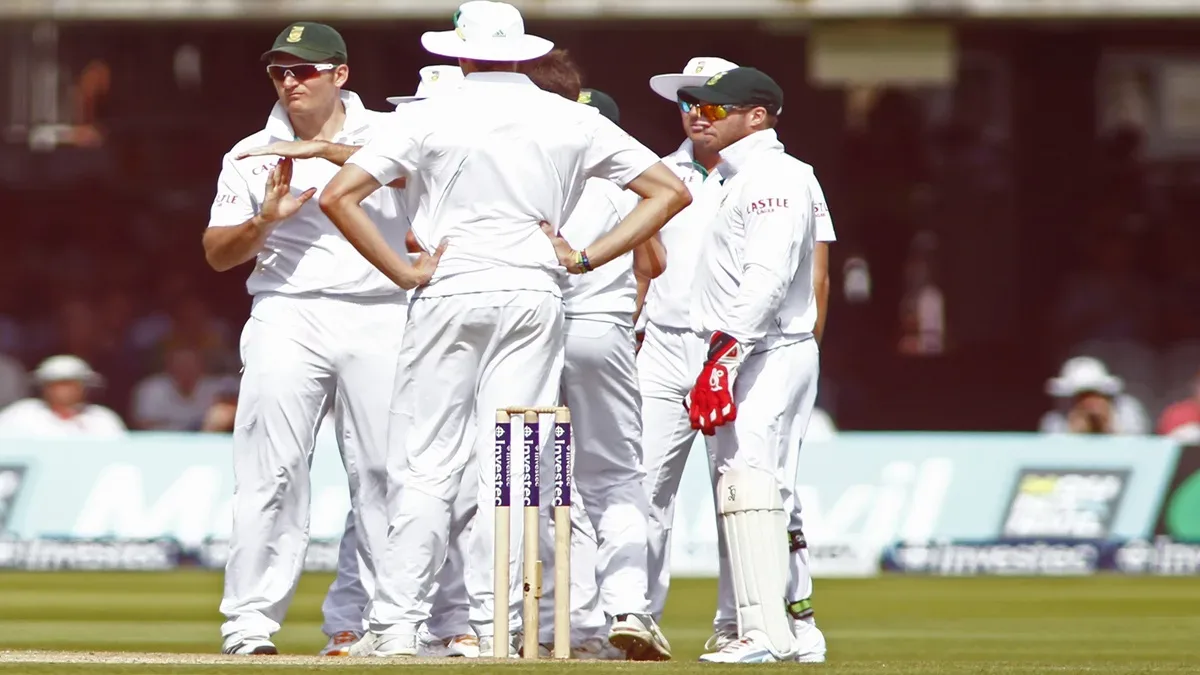
Clive Lloyd tops our ranking of the 15 greatest Test cricket captains of all time, ahead of Steve Waugh, Graeme Smith and Ricky Ponting. Lloyd transformed West Indies into a dominant international side, while Waugh established one of the strongest winning records in Test history.
Determining the greatest captain requires more than counting victories. Leadership involves tactical decisions, managing difficult situations, developing players and building teams capable of winning away from home.
Some captains inherited exceptional squads. Others took charge during periods of uncertainty and changed their country’s fortunes.
This ranking focuses on men’s Test cricket and considers match results, series achievements, leadership qualities, overseas performances and long-term influence.
How the greatest Test captains are ranked
Test cricket has changed considerably since the early 20th century.
Draw rates have varied considerably throughout Test history, with drawn matches particularly common during parts of the mid-to-late 20th century. Changes in playing conditions, scoring rates and tactical approaches make direct comparisons between generations difficult.
Modern leaders face different challenges, including demanding international schedules, increased scrutiny and the additional competitive context of the World Test Championship.
A captain’s winning percentage therefore cannot tell the entire story.
The five main considerations are:
- Test victories and overall winning percentage.
- Major series victories, particularly overseas.
- Tactical awareness and decision-making.
- Developing successful teams and managing players.
- Long-term influence on Test cricket.
The distinction between winning, drawing and losing is particularly important in the longest format.
World in Sport’s guide to Test cricket rules and match outcomes explains how declarations, playing time and match situations influence a captain’s decisions.
The rankings are editorial judgements rather than a mathematical calculation, with greater importance placed on sustained achievement and the circumstances surrounding each captain’s record.
1. Clive Lloyd – West Indies
Embed from Getty ImagesTest captaincy record: 74 matches, 36 wins, 12 defeats, 26 draws.
Clive Lloyd takes first place because he did more than lead an outstanding team. He helped create one.
When Lloyd became West Indies captain in 1974, the Caribbean possessed exceptional individual talent but lacked the consistency required to dominate Test cricket.
Australia exposed those weaknesses during a 5-1 series victory in 1975–76.
Lloyd responded by developing a more formidable side, built around powerful batting, outstanding fielding and a relentless fast-bowling attack.
Andy Roberts, Michael Holding, Joel Garner and Colin Croft became central figures during the team’s development. Their pace and control allowed West Indies to dictate matches in different conditions.
Lloyd also managed a squad representing several Caribbean nations. Creating a unified team was an essential part of his leadership.
West Indies won 36 of the 74 Tests captained by Lloyd. Between 1982 and 1984, the team also completed a 27-match unbeaten run, with Lloyd leading 26 of those matches and Viv Richards captaining the other. The sequence included 11 consecutive victories.
The 1984 tour of England delivered one of his greatest achievements. West Indies won all five Tests, demonstrating their superiority away from home.
Our examination of Clive Lloyd’s West Indies and their rise to world domination explains how the foundations of that success developed during the 1970s.
Lloyd’s influence extended beyond results. He established a competitive culture that continued under his successors, helping West Indies remain a major Test power for years after his retirement.
2. Steve Waugh – Australia
Test captaincy record: 57 matches, 41 wins, nine defeats, seven draws.
Steve Waugh’s captaincy combined exceptional results with an uncompromising approach to winning.
Between 1999 and 2004, Australia won 41 of the 57 Tests Waugh captained, losing nine and drawing seven. His winning percentage of 71.93% remains the highest among men’s Test captains who have led in at least 20 matches.
Waugh inherited a formidable side from Mark Taylor, but his leadership encouraged Australia to become even more aggressive.
He preferred positive declarations, attacking fields and bowling combinations designed to force results rather than settle for draws.
Glenn McGrath and Shane Warne formed the foundation of a devastating bowling attack. Matthew Hayden, Justin Langer, Ricky Ponting and Adam Gilchrist supplied batting strength.
Australia established a sequence of 16 consecutive Test victories between 1999 and 2001, with Waugh captaining 15 of those wins.
His determination was particularly evident in difficult overseas contests.
Waugh’s Australia remained highly competitive in the Caribbean, South Africa and England, although India proved a major obstacle.
The 2001 series in India exposed the limitations of Australia’s attacking philosophy. India recovered from following on at Kolkata and eventually won the series 2-1.
Nevertheless, Waugh’s overall record remains exceptional.
He ranks second because he combined sustained victories with an influential approach to leadership, even if his success benefited from an unusually talented generation of Australian cricketers.
3. Graeme Smith – South Africa
Test captaincy record: 109 matches, 53 wins, 29 defeats, 27 draws.
Graeme Smith holds two major Test captaincy records: the most matches as captain and the most victories.
Smith captained South Africa in 108 Tests and led the ICC World XI in one additional Test against Australia in 2005. His combined total of 109 Tests and 53 victories remains the highest achieved by any captain in men’s Test cricket as of November 2026.
Smith received the South African captaincy in 2003 at just 22, following the country’s disappointing home Cricket World Cup campaign.
He inherited a side facing questions about its direction and leadership.
Rather than rely on established senior figures, Smith gradually developed a team capable of challenging opponents across different continents.
His physical presence, direct communication and willingness to lead from the front became important characteristics.
As an opening batter, Smith also accepted responsibility against the opposition’s strongest bowlers.
South Africa’s 2008 victories in England and Australia established his reputation as an outstanding overseas captain.
The Australian success was particularly significant because South Africa had struggled to win Test series there after returning to international cricket.
Smith later led another series victory in England in 2012.
His leadership helped establish a formidable team containing Jacques Kallis, Hashim Amla, AB de Villiers, Dale Steyn and Morne Morkel.
Longevity alone would not justify such a high ranking. Smith’s achievement was maintaining South Africa’s competitiveness through changing teams, demanding tours and sustained expectations.
4. Ricky Ponting – Australia
Embed from Getty ImagesTest captaincy record: 77 matches, 48 wins, 16 defeats, 13 draws.
Ricky Ponting succeeded Steve Waugh in 2004 and continued Australia’s dominance.
Ponting led Australia to 48 victories in 77 Tests, producing a winning percentage of 62.34%. He remains Australia’s most successful Test captain by number of victories, ahead of Steve Waugh’s 41 wins.
Ponting’s team possessed remarkable strength.
Hayden and Langer provided established opening partnerships, while Ponting, Michael Clarke and Gilchrist offered substantial batting depth.
McGrath and Warne remained central to the bowling attack during the early part of his captaincy.
Australia’s 5-0 Ashes victory in 2006–07 was among Ponting’s greatest achievements.
The result followed England’s memorable 2005 Ashes victory and demonstrated Australia’s determination to regain control of the rivalry.
Ponting also captained Australia through 16 consecutive Test victories between December 2005 and January 2008.
His leadership became more difficult following the retirements of several senior players.
Australia lost the Ashes in England in 2009 and suffered another series defeat in 2010–11, although injury prevented Ponting from captaining the final Test of that contest.
Those setbacks provide context when comparing Ponting with Waugh.
Ponting was an outstanding leader of a dominant side, but maintaining Australia’s standards became increasingly difficult as the squad changed.
His record still places him comfortably among Test cricket’s greatest captains.
5. Sir Donald Bradman – Australia
Test captaincy record: 24 matches, 15 wins, three defeats, six draws.
Sir Donald Bradman’s batting achievements can overshadow his considerable contribution as captain.
He led Australia in 24 Tests between 1936 and 1948, winning 15 and losing only three.
His leadership produced a winning percentage of 62.5%, an exceptional return for his era.
One of Bradman’s most significant achievements came during the 1936–37 Ashes series.
Australia lost the opening two Tests against England, leaving Bradman facing a difficult challenge in his first series as captain.
He responded with two remarkable innings and a change in Australia’s fortunes.
Australia won the remaining three Tests to secure a 3-2 series victory, becoming the first side to overturn a 2-0 deficit in a five-Test series.
Bradman’s greatest captaincy achievement came in 1948.
Australia toured England with an outstanding team that remained unbeaten throughout its first-class programme.
The side became known as the Invincibles.
Australia won the five-Test Ashes series 4-0, with Bradman’s leadership and the team’s exceptional depth ensuring England rarely gained sustained control.
Bradman demanded high standards from those around him. His methods were not universally popular, but his commitment to preparation and performance produced outstanding results.
A shorter captaincy career prevents him from ranking above the leading modern captains, yet his record and historical influence justify a top-five position.
6. Imran Khan – Pakistan
Embed from Getty ImagesTest captaincy record: 48 matches, 14 wins, eight defeats, 26 draws.
Imran Khan’s contribution to Pakistan cricket cannot be judged solely by his winning percentage.
He captained Pakistan in 48 Tests, recording 14 victories, eight defeats and 26 draws, according to the Pakistan Cricket Board’s account of his international career. His leadership helped Pakistan challenge some of the strongest teams of the 1980s.
Pakistan’s ability to compete against West Indies was particularly significant.
During a period when the Caribbean side dominated international cricket, Imran’s Pakistan repeatedly provided serious opposition.
The teams drew important Test series, demonstrating Pakistan’s ability to challenge an opponent that few countries could consistently match.
Imran also oversaw two landmark overseas successes in 1987.
Pakistan won their first Test series in India before recording their first series victory in England later that year.
His captaincy combined tactical awareness with an exceptional understanding of fast bowling.
As one of the leading all-rounders of his generation, Imran could directly influence matches through both his bowling and batting.
He also played an important role in encouraging the development of Pakistan’s fast-bowling talent, including Wasim Akram.
Unlike captains who inherited settled and successful teams, Imran often needed to manage considerable fluctuations in performance and personnel.
His ability to produce competitive performances against stronger opponents gives him an important place in Test cricket history.
7. Sir Vivian Richards – West Indies
Test captaincy record: 50 matches, 27 wins, eight defeats, 15 draws.
Viv Richards inherited one of cricket’s greatest teams from Clive Lloyd.
Maintaining its dominance was a significant challenge.
Richards captained West Indies in 50 Tests, winning 27, losing eight and drawing 15. His winning percentage of 54% exceeded Lloyd’s, although his predecessor had played a greater role in establishing the team’s foundations.
Richards never lost a Test series as West Indies captain.
His leadership reflected his approach to batting: confident, aggressive and unwilling to allow opponents to dictate the contest.
West Indies continued to benefit from a remarkable fast-bowling attack featuring Malcolm Marshall, Courtney Walsh, Curtly Ambrose and other leading bowlers during different stages of his captaincy.
Richards understood the importance of maintaining pressure.
His field placements and approach to declarations generally encouraged West Indies to seek victory whenever conditions allowed.
He also commanded considerable respect within the dressing room.
However, Richards’ captaincy was not without criticism. His aggressive approach occasionally attracted questions about discipline and match management.
The strength of the team he inherited also complicates comparisons with captains who rebuilt struggling sides.
Even so, remaining unbeaten in Test series across such a demanding period represents an extraordinary achievement.
8. Virat Kohli – India
Embed from Getty ImagesTest captaincy record: 68 matches, 40 wins, 17 defeats, 11 draws.
Virat Kohli transformed India’s approach to Test cricket through aggressive leadership, fitness standards and a renewed emphasis on fast bowling.
He became India’s permanent Test captain following MS Dhoni’s retirement from the format in December 2014.
By the time Kohli stepped down in January 2022, India had won 40 of his 68 Tests in charge.
His winning percentage of 58.82% made him one of the most successful long-serving captains in Test history.
Kohli’s most significant achievement came during India’s 2018–19 tour of Australia.
India won the four-match series 2-1, securing their first Test series victory on Australian soil.
The result demonstrated the progress made by an increasingly effective bowling attack.
Jasprit Bumrah, Mohammed Shami, Ishant Sharma, Ravichandran Ashwin and Ravindra Jadeja helped India challenge opponents in different conditions.
Kohli placed considerable importance on taking 20 wickets and frequently supported attacking team selections.
India won all 11 home Test series during Kohli’s captaincy, establishing one of the strongest home records in the country’s history.
His leadership was sometimes confrontational, and overseas defeats against strong opposition exposed weaknesses in India’s batting.
Nevertheless, his commitment to producing a more physically prepared and aggressive Test side left a lasting influence.
Our Virat Kohli career profile examines his captaincy, batting achievements and wider contribution to Indian cricket.
Kohli ranks above several more experienced captains because he combined a substantial winning record with a clear change in his team’s competitive identity.
9. Sir Frank Worrell – West Indies
Test captaincy record: 15 matches, nine wins, three defeats, two draws, one tie.
Frank Worrell’s importance extends far beyond his statistical achievements.
He became West Indies’ first long-term Black Test captain in 1960, leading a team that represented several Caribbean nations during an important period of social and sporting change.
George Headley had previously become the first Black player to captain West Indies in a Test, but Worrell’s appointment established a new direction for the team.
Worrell brought dignity, calm judgement and an ability to unite players from different backgrounds.
His leadership during the 1960–61 Australian tour became one of cricket’s most celebrated examples of sportsmanship.
The series included the famous tied Test at Brisbane, one of only two tied matches in men’s Test history.
Although Australia won the series 2-1, West Indies earned considerable admiration for their performances.
Worrell later captained successful series against India and England.
He won nine of his 15 Tests, producing a 60% winning percentage.
More importantly, his leadership helped strengthen the identity of West Indies cricket.
The ICC’s Hall of Fame profile recognises Worrell’s importance in uniting the team and transforming its international reputation.
His relatively short captaincy career limits comparisons with leaders who remained in charge for a decade.
However, his influence on cricket’s development makes him an essential inclusion.
10. Allan Border – Australia
Embed from Getty ImagesTest captaincy record: 93 matches, 32 wins, 22 defeats, 38 draws, one tie.
Allan Border inherited an Australian team facing considerable difficulties during the mid-1980s.
Australia had been weakened by the retirements of Greg Chappell, Dennis Lillee and Rod Marsh earlier in 1984 when Border took over as captain later that year. The subsequent rebel tours to South Africa in 1985–86 and 1986–87 further depleted the player pool, adding to the difficulties he faced while rebuilding the team.
His record of 32 victories in 93 Tests may appear modest compared with those of Waugh and Ponting.
However, Border’s influence was fundamental to Australia’s subsequent success.
He introduced greater accountability and demanded improved performances from his players.
The development of Steve Waugh, Mark Taylor, David Boon and other important figures helped Australia become increasingly competitive.
Border’s defining Test achievement came during the 1989 Ashes tour.
Australia arrived in England without being widely regarded as favourites.
They won the six-Test series 4-0, reclaiming the Ashes and announcing the arrival of a much stronger Australian team.
The victory established the foundations for a prolonged period of success.
Border eventually retired in 1994, having captained Australia in more Tests than anyone before him.
His leadership demonstrates why rebuilding a struggling side deserves substantial recognition.
The champions who followed benefited from standards Border helped establish.
11. Mike Brearley – England
Test captaincy record: 31 matches, 18 wins, four defeats, nine draws.
Mike Brearley’s reputation rests largely on his tactical intelligence and ability to manage players.
His individual batting record was modest compared with those of most leading international captains.
However, England won 18 of the 31 Tests he captained, losing only four.
Brearley possessed a detailed understanding of bowling changes, field placements and the psychological demands of Test cricket.
He also recognised the importance of individual personalities within a team.
His relationship with Ian Botham became particularly important during the 1981 Ashes.
Botham initially captained England during the series but struggled with the additional responsibility.
Brearley returned as captain after the second Test, with England trailing Australia 1-0.
The change coincided with one of the most remarkable recoveries in Ashes history.
Botham produced extraordinary performances at Headingley, Edgbaston and Old Trafford as England recovered to win the series 3-1.
Brearley did not score the decisive runs or take the wickets, but his leadership helped create an environment in which players could perform.
His ability to understand pressure and make effective tactical decisions remains central to his reputation.
Brearley ranks outside the top ten primarily because his captaincy career was shorter than those of several rivals.
Nevertheless, few captains have demonstrated such a clear distinction between individual playing ability and leadership effectiveness.
12. Richie Benaud – Australia
Test captaincy record: 28 matches, 12 wins, four defeats, 11 draws, one tie.
Richie Benaud combined outstanding leg-spin bowling with adventurous captaincy.
He led Australia in 28 Tests, winning 12 and losing only four.
His captaincy was particularly notable because Australia never lost a Test series under his leadership.
Benaud believed cricket benefited from positive decision-making.
He regularly encouraged attacking fields and was willing to accept calculated risks to secure victories.
His captaincy during the 1960–61 series against West Indies was especially important.
The opening Test at Brisbane ended in a tie, producing one of the most memorable matches in cricket history.
Australia eventually won the series 2-1, but both teams earned widespread admiration.
Benaud’s tactical awareness was also evident during the 1961 Ashes in England.
Australia retained the Ashes with a 2-1 series victory, helped by Benaud’s decisive bowling performance at Old Trafford.
His ability to combine personal contributions with tactical leadership made him particularly effective.
Benaud later became one of cricket’s most respected broadcasters, but his reputation as a captain had already been established.
His influence on attacking Test cricket remains an important part of Australia’s sporting history.
13. Sourav Ganguly – India
Test captaincy record: 49 matches, 21 wins, 13 defeats, 15 draws.
Sourav Ganguly became India’s captain in 2000 during a difficult period for the national team.
His appointment followed the match-fixing scandal that had damaged confidence in Indian cricket.
Ganguly responded by encouraging a more assertive approach.
He supported emerging players and helped develop a team increasingly capable of competing overseas.
Rahul Dravid, VVS Laxman, Virender Sehwag, Harbhajan Singh. Yuvraj Singh became influential figures during the wider period of his leadership, although not all played the same role in Test cricket.
Ganguly’s most memorable home series came against Australia in 2001.
India recovered from losing the opening Test to win the three-match series 2-1.
The remarkable victory at Kolkata, inspired by Laxman and Dravid, became one of India’s defining Test achievements.
Ganguly also helped improve India’s performances overseas.
During the 2003–04 tour of Australia, India drew the four-Test series 1-1.
India’s 2004 tour of Pakistan produced another historic achievement, with the visitors winning the Test series 2-1. Ganguly missed the opening two Tests through injury, leaving Rahul Dravid to captain the side to one victory and one defeat. Ganguly returned for the deciding Test in Rawalpindi, where India completed their first Test series victory in Pakistan.
Ganguly finished with 21 victories from 49 Tests as captain.
Those figures do not match Kohli’s later achievements, but his influence on India’s confidence and team culture was substantial.
He helped prepare the ground for a more successful period of Indian Test cricket.
14. Misbah-ul-Haq – Pakistan
Test captaincy record: 56 matches, 26 wins, 19 defeats, 11 draws.
Misbah-ul-Haq took charge of Pakistan at a time when the national team urgently needed stability.
Following the 2010 spot-fixing scandal, Pakistan faced serious questions about leadership and discipline.
The team also played its home international fixtures outside Pakistan for an extended period because of security concerns.
Misbah provided a calm and consistent approach.
He preferred controlled batting, careful planning and disciplined cricket rather than unnecessary risks.
His captaincy helped Pakistan regain credibility and produce competitive performances against leading opponents.
One of his greatest achievements came in 2014 when Pakistan defeated Australia 2-0 in the United Arab Emirates.
The result demonstrated the effectiveness of Pakistan’s spin bowling and the team’s growing confidence.
Misbah later led Pakistan to the top of the ICC Test rankings in August 2016.
His captaincy career ended with a historic series victory in the West Indies in 2017.
Pakistan won the deciding Test in Dominica to secure their first Test series triumph in the Caribbean.
Misbah finished with 26 victories from 56 Tests, making him Pakistan’s most successful Test captain by victories.
His achievements stand out because he delivered relative stability under circumstances that would have challenged almost any leader.
15. Michael Vaughan – England
Embed from Getty ImagesTest captaincy record: 51 matches, 26 wins, 11 defeats, 14 draws.
Michael Vaughan completes the ranking after overseeing one of England’s most important periods of Test cricket.
He became England captain in 2003 and developed a team capable of challenging Australia’s dominance.
Vaughan’s leadership combined tactical flexibility with a relatively relaxed approach to managing players.
He understood the importance of allowing talented individuals to express themselves while maintaining clear team objectives.
England’s performances improved considerably during 2004.
They won Test series away to West Indies and at home against New Zealand and West Indies, establishing momentum ahead of the 2005 Ashes.
That series became Vaughan’s defining achievement.
Australia arrived in England having dominated the rivalry for nearly two decades.
Although England lost the opening Test at Lord’s, Vaughan’s side recovered through outstanding performances from Andrew Flintoff, Kevin Pietersen, Marcus Trescothick and Andrew Strauss. England’s bowling attack, featuring Matthew Hoggard, Steve Harmison, Simon Jones and Ashley Giles, also played a decisive role in turning the series around.
England eventually won the series 2-1, reclaiming the Ashes for the first time since 1986–87.
Vaughan’s tactical management of his bowlers and handling of pressure were important factors in that success.
His overall record of 26 wins from 51 Tests represents a winning percentage of 50.98%.
However, England’s subsequent performances were less consistent, including a 5-0 Ashes defeat in Australia in 2006–07 under Flintoff’s captaincy while Vaughan was injured.
Vaughan’s inclusion reflects the significance of the 2005 series and the sustained improvement England achieved during the earlier part of his leadership.
What separates the greatest Test captains?
The leading captains achieved success in different ways.
Lloyd created a dominant West Indies team. Waugh maximised the performances of an exceptionally talented Australian side. Smith built a long-lasting South African team, while Kohli helped transform India’s approach to overseas Test cricket.
Bradman and Benaud contributed during very different periods, when playing conditions and tactical expectations differed considerably from those of the modern game.
The contributions of Worrell, Border, Ganguly and Misbah demonstrate why the ability to rebuild teams matters alongside immediate results.
Other notable captains include Stephen Fleming, Ian Chappell, Andrew Strauss, MS Dhoni, Mahela Jayawardene and Alastair Cook. Each has a credible claim to inclusion, particularly when judged against the resources and circumstances of their respective teams.
Selecting a greatest captain inevitably involves judgement.
Waugh’s exceptional winning percentage provides a powerful statistical argument. Smith’s record number of victories and Tests as captain offers another.
However, Lloyd’s ability to establish a dominant side, unite players from across the Caribbean and maintain sustained success gives him the narrow advantage in this ranking.
His greatest achievement was not simply winning Test matches. It was creating a team capable of dominating international cricket and establishing standards that influenced the sport for generations.

World In Sport Forum
Continue the discussion
Join other fans in the World In Sport Forum and debate the biggest talking points from this article.