
When the ninth inning arrived in the Bronx, nothing was more intimidating for opposing hitters than Mariano Rivera jogging out of the bullpen with his iconic âÂÂEnter Sandmanâ entrance music playing. Over 19 seasons with the New York Yankees, Rivera established himself as the greatest closer of all time, retiring as MLB's career leader with 652 saves. The first player ever unanimously elected to the Baseball Hall of Fame, Rivera was at his best when the stakes were highest, helping anchor a Yankees dynasty that won five World Series championships during his career.
From his virtually unhittable cutter to his unmatched composure in October, Rivera became synonymous with dominance in the ninth inning. He recorded an MLB-record 42 postseason saves and a remarkable 0.70 ERA across 141 playoff innings, playing an integral role alongside Derek Jeter, Andy Pettitte, and Jorge Posada in a homegrown group that became known as the Yankees' âÂÂCore Four.âÂÂ
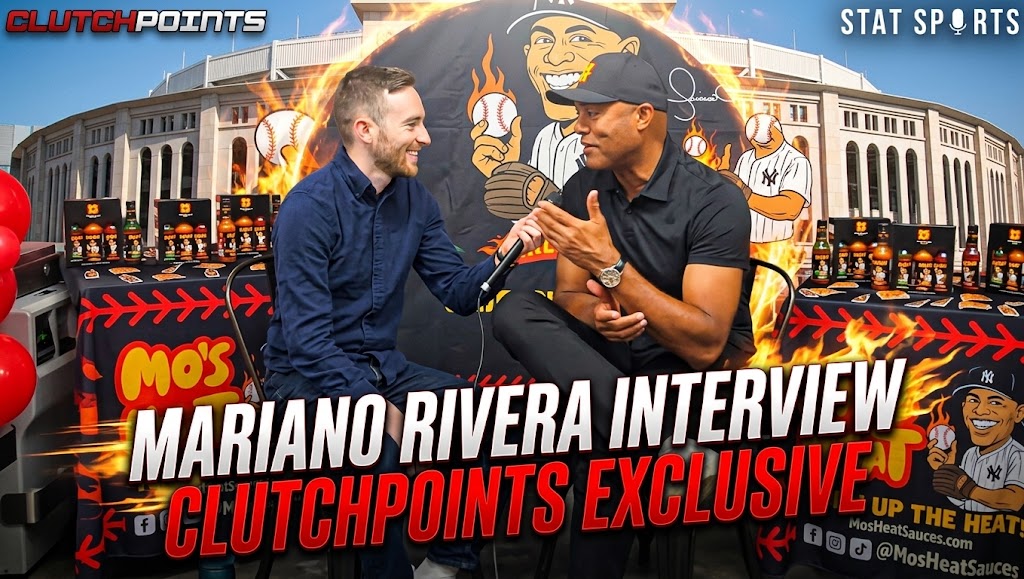
Baseball legend Mariano Rivera with ClutchPoints' Rob Lepelstat for an exclusive interview in the Bronx, NY â just minutes from Yankee Stadium, where Mo spent his entire 19-year MLB career with the Yankees
More than a decade after throwing his final pitch, Rivera's impact continues to extend beyond the mound. The Yankees legend has entered the hot sauce business with Mo's Heat, his new hot sauce brand that gives Rivera an opportunity to bring his competitive mentality into a completely different arena while connecting with fans in a new way.
During an exclusive interview with ClutchPoints' Rob Lepelstat, Rivera discussed the inspiration behind Mo's Hot Sauce, revealed the mentality that allowed him to thrive in baseball's biggest moments, reflected on the Yankees' iconic 1990s dynasty and his relationship with the Core Four, opened up about playing alongside âÂÂThe Captainâ Derek Jeter, and shared his advice for today's Yankees as they attempt to bring a 28th World Series championship to the Bronx.
MoâÂÂs Hot Sauce
Baseball legend Mariano Rivera made a career out of bringing the heat in the ninth inning. Now, the legendary New York Yankees closer is doing it in a much different way.
Rivera has entered the hot sauce business with MoâÂÂs Hot Sauce, adding another venture to a résumé that already includes five World Series championships, a unanimous Baseball Hall of Fame induction, MLB's all-time saves record (652) and recognition as the greatest closer in the history of the sport.
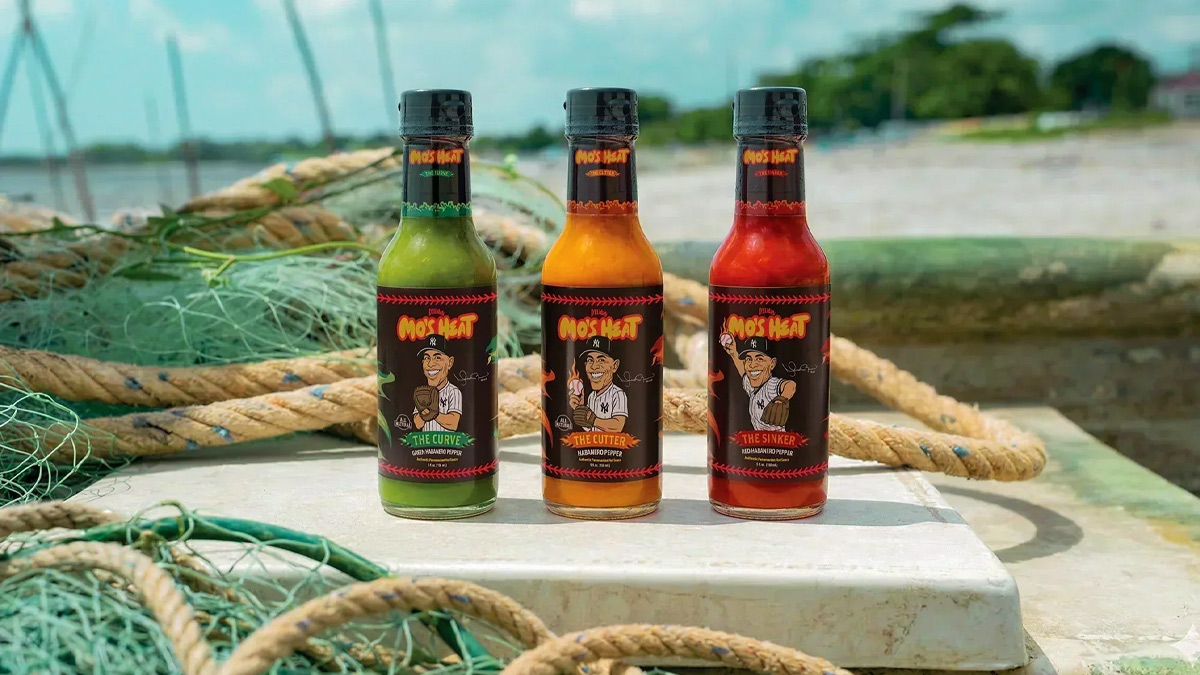
Mariano is proud of his roots, which is why MoâÂÂs Heat features authentic Panamanian flavors, hand-selected habanero peppers, and all-natural ingredients from their 122-year-old hot sauce recipe.
It includes three flavors: The Sinker, The Curve and the signature sauce, The Cutter (of course!), named after Rivera's unhittable pitch.
The venture is about more than simply putting his famous name on a bottle. He explained the motivation behind MoâÂÂs Hot Sauce and why he believes the product can stand out in a crowded market.
âÂÂThis product is something special for me, dear to my heart, so I'm happy that we could come up with this,â Rivera described. âÂÂIt's all what you put in there, you know? Besides the ingredients, you have to put love and passion in there, you know, commitment. AndâÂÂand that's what we have done. You know, besides all the ingredients that are in there, all-natural, by the way, I mean, we're putting a lot of effort, a lot of passion, love, and commitment to make sure that the fans and people love this sauce. Not because Mariano, but because of the sauce.âÂÂ
From the Mo's Heat website: Made with highly selected habanero peppers and spices using a 122-year-old recipe, MoâÂÂs Heat hot sauces offer a unique flavor and aroma to enhance any meal. As an MLB pitcher, Mariano Rivera played every game for his home country, Panama. And he founded MoâÂÂs Heat to celebrate their flavor, character, and fire.
Fans can find out more information, including where to buy, pricing, and flavors, at https://mosheatsauces.com/.
The Closer Mentality
When the Yankees needed three outs to close out a game, there was nobody they trusted more than Rivera.
The numbers speak for themselves. Rivera finished his career as MLB's all-time saves leader with 652, but his dominance became even more pronounced when the lights were brightest. In 96 postseason appearances, Rivera recorded 42 saves while allowing just 11 earned runs, good for the lowest ERA in playoff history (0.70).
Yet Rivera's greatness wasn't simply the product of his famous cutter. His ability to remain calm in moments that could overwhelm even the best players became as much a part of his reputation as the pitch itself.
Rivera explained how he approached those pressure-packed situations and what allowed him to maintain the same mentality whether he was pitching in a regular-season game or trying to record the final outs of a World Series.
âÂÂI tried to simplify the game, I tried to simplify the way I pitch⦠If I can get you out in one pitch, I would try to do that. I wasn't afraid of contact.âÂÂ
That mindset helped Rivera become synonymous with the closer position and gave the Yankees an enormous advantage during their championship years: When No. 42 entered the game, everyone in the ballpark knew exactly what was coming â and hitters still struggled to stop it.
Rivera's Cutter
Few weapons in sports history carry the mythic status of Mariano RiveraâÂÂs cut fastball. Thrown with effortless arm speed and late, violent movement, the pitch shattered hundreds of batsâÂÂand just as many opposing ralliesâÂÂen route to a record 652 career saves, and five World Series rings.
Hitters across Major League Baseball spent nearly two decades studying tape, anticipating the pitch, and bracing for it, yet virtually none could solve it. Ironically, the most unhittable pitch in baseball history wasn't engineered in a lab or perfected through endless trial and error; it was a divine accident that Rivera discovered while trying to do the exact opposite.
Rivcera's cutter came out of the exact same arm slot and had the same visual spin as his standard fastball. Batters had only roughly 0.17 seconds to react and could not tell the difference until it was too late.
The ball traveled at up to 90âÂÂ95 mph and would break sharply by up to 8 inches, usually in the final 10 feet before reaching the plate.
Rivera threw the cutter roughly 88% of the time later in his career, per MLB.com. Hitters knew it was coming for nearly two decades, yet they still could not hit it.
When asked about the origin of his signature weapon, the Hall of Fame closer reflected on how a frustrating bullpen session with pitching coach Mel Stottlemyre ultimately gave birth to baseball perfection.
âÂÂIt was God-given for sure, because we were trying to stop it from moving⦠I told [Mel Stottlemyre], âÂÂHey man, whatever's gonna happen is gonna happen, because I have no control of this pitch, let's leave it.'
The rest is history.
The Yankees' 1990s Dynasty
The Yankees' championship run of the late 1990s remains one of the greatest stretches by any team in modern baseball history.
After winning the World Series in 1996, New York put together a historic 1998 season before completing a three-peat with championships in 1999 and 2000. Over a five-season span, the Yankees won four World Series titles and established a dynasty that has yet to be replicated in MLB since.
Rivera was there for all of it.
Before becoming the Yankees' closer, Rivera played a crucial setup role during the 1996 championship season. Once he took over the ninth inning, he became one of the foundational pieces of a team that seemingly expected to be playing deep into October every year.
Looking back on those teams, Rivera reflected on what made that group so successful and why the Yankees were able to consistently perform when the stakes were at their highest.
The championships featured countless memorable moments, but Rivera believes the culture surrounding those Yankees teams was just as important as the talent on the roster.
Article Continues BelowâÂÂThere was aâÂÂa commitment andâÂÂand a passion and love with 25 players. Well, before was theâÂÂthe owner, you know, Mr. George was amazing, and then uh the coaching staff that they put together, Joe andâÂÂand the rest of the playâÂÂthe rest of the coaches. And then the players. You know, I mean, we were family, we were a team, we were family. And that makes a lot of difference. You know, we don'tâÂÂwe don't try to separate ourselves, we try to unify ourselves even tighter, tighter and tighter. And as results, we have four championships in five years.âÂÂ
The Core 4
As the Yankees continued winning, four homegrown players became constants in the Bronx: Rivera, Derek Jeter, Andy Pettitte, and Jorge Posada.
Eventually dubbed the âÂÂCore Four,â the group came through the Yankees organization together before becoming central figures in one of the most successful eras in franchise history. Rivera, Jeter, Pettitte, and Posada were teammates for five World Series championships, with their careers becoming permanently intertwined in Yankees history.
What made the group unique wasn't simply its success. Each player filled a distinctly different role, yet all four shared the experience of growing from prospects into established stars while dealing with the expectations that came with playing in New York.
Rivera reflected on his relationship with Jeter, Pettitte, and Posada and what it meant to experience so much of his career alongside the same group of teammates.
âÂÂWe're talking about family. We're not talking about teammates or players⦠We grew up together, coming from the minor league system all the way to the big leagues⦠We were just brainwashed: âÂÂWe need to win regardless.' It's not about second place, it's about winning the whole thing.âÂÂ
Years after their final game together, the Core Four remains synonymous with an era when October baseball in the Bronx felt almost inevitable.
The Captain, Derek Jeter
Within that Core Four, Rivera shared an especially remarkable journey with Derek Jeter.
Both made their MLB debuts in 1995. Neither could have known at the time that they would spend nearly two decades together and eventually become two of the most recognizable Yankees of their generation.
Jeter became the captain and face of the franchise. Rivera became the greatest closer in baseball history. Together, they were fixtures on five championship teams and experienced virtually everything the sport had to offer.
Their partnership also produced one of the most memorable moments of Rivera's final season. During his last appearance at Yankee Stadium in 2013, Jeter and Pettitte walked to the mound to remove an emotional Rivera from the game.
Rivera discussed what made Jeter such a special teammate and leader and what stood out about playing alongside him for so many years.
âÂÂDerek was the perfect captain because he had us⦠three players, teammates, that loved him and were willing to do whatever it takes to make him look good. He was the face, he had to be in the media talking about it, but we were all doing the job.âÂÂ
For all their individual accomplishments, their careers will forever be linked by what they accomplished together in pinstripes.
Rivera's Advice for Today's Yankees
ÃÂ
More than a decade after Rivera threw his final pitch, the standard in the Bronx remains the same.
Winning games isn't enough. Making the postseason isn't enough. For the Yankees, success is ultimately measured in championships.
Rivera understands that pressure better than almost anyone. He experienced the expectations that came with wearing the pinstripes while playing for teams that didn't just reach October â they expected to win once they got there.
Today's Yankees face the challenge of creating their own championship legacy while playing under the weight of that history. Rivera offered his advice for the current roster and explained what it takes to succeed in New York when expectations are at their highest.
âÂÂThey know the advice. It's justâÂÂjust you have to push. You have to keep pushing and pushing and pushing to get it done, because I mean, this thing is not easy. People know that winning championships is not easy at all. So, we have the team, we have the players, so we just have to have the determination and the passion to get it done, you know? However, you have to get it done, you have to find a way to get it done, and that's what we're doing.âÂÂ
The names and faces have changed since Rivera's championship years, but the goal hasn't. For a franchise with 27 World Series titles, the winningest team in North American professional sports history, the expectation will always be to add another one.
âÂÂ