
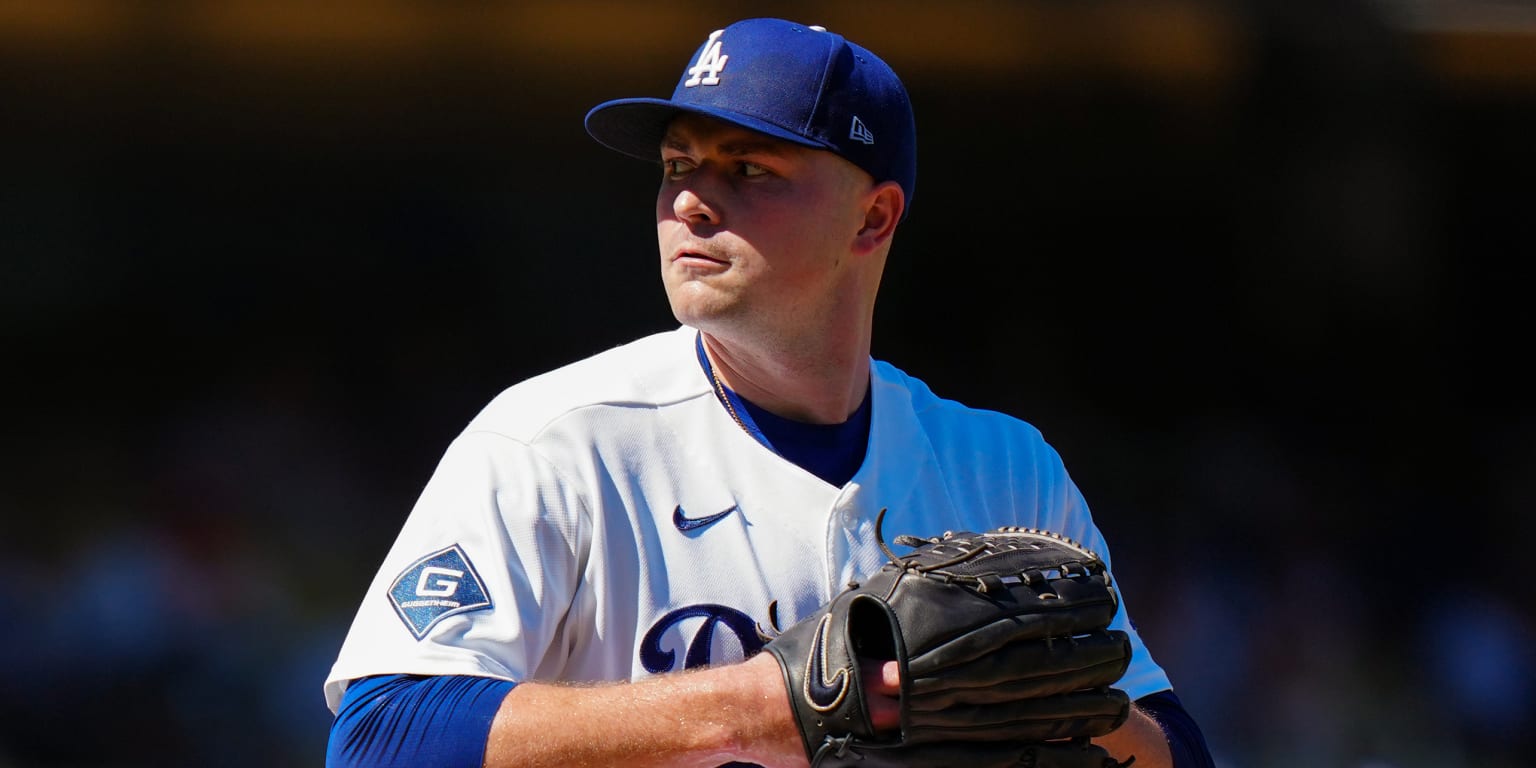
TORONTO -- With the offseason officially underway at the GM Meetings in Las Vegas, the Blue Jays are once again being linked to the biggest name on the market. This year, it’s Tarik Skubal.
The Blue Jays have done plenty of work on Skubal heading into this offseason, which is obviously the case for most big-spending teams in this market. In addition, Jon Heyman reported Wednesday that the Blue Jays will soon meet with Skubal, joining the Mets, Dodgers, Padres and potentially other clubs.
At this elite tier of free agency, the courting process tends to be more structured, especially when agent Scott Boras is involved. We learned this through the Blue Jays’ interest in Juan Soto a couple of offseasons ago, then through the Shohei Ohtani saga the year prior (although that did not involve Boras).
Big money demands big meetings.
For now, consider this the expected due diligence from the Blue Jays, who have fully established themselves among baseball’s financial powerhouses. With a $500 million extension for Vladimir Guerrero Jr. and their $210 million contract for Dylan Cease, there’s proof out there now that Toronto is willing to spend big. Players notice that, and agents certainly do, too.
How realistic is Skubal for the Blue Jays?
Tempting as it may be to dream on a one-two punch of Skubal and Cease in the Blue Jays’ rotation, this club has significant needs elsewhere, and even the big spenders have limitations.
If Toronto were to swing big on Skubal, it would be thinner on cash elsewhere, making it more difficult to upgrade a lineup that just scored the fewest runs in baseball in 2026. The mid-range hitting market isn’t exactly spilling over with upside, either, so a major commitment to pitching might require the Blue Jays to look to the trade market to find bats capable of raising their ceiling.
The opposite of that feels likelier. If Toronto were to spend big on bats -- with Seiya Suzuki topping the market as a perfect fit on paper -- it would still be capable of spending on mid-tier pitching, which seems to offer more options in this market.
What’s the price tag?
The record for a pitcher’s annual salary in Major League Baseball is $43.3 million, which both Max Scherzer and Justin Verlander have hit. You can use that, or a few dollars north of it, as a rough starting point for the average annual value of a deal.
The landscape has changed recently, though, with more players being open to shorter-term deals with even higher annual price tags. Kyle Tucker and Bo Bichette opted for this last offseason. On the pitching side, Framber Valdez opted for a three-year, $115 million deal in Detroit with some deferrals involved, instead of a more traditional long-term deal.
So far, the Blue Jays have leaned toward more traditional deals, and uncertainty around the next CBA remains the biggest unknown. Presuming Skubal signs a more traditional deal, though, he could be earning in the range of $45 million per season, well north of the $30 million annual salary the Blue Jays pay Cease.
The Boras factor
Remember when this would be a negative for Toronto? Boras once trademarked “the blue flu”, bemoaning that the Blue Jays weren’t bringing in headliners or spending enough, but that was nearly a decade ago.
More recently -- including the club’s signing of Cease, a Boras client -- Boras has been one of this organization’s biggest champions. At that press conference to announce Cease last December, he had high praise for Edward Rogers, chairman of the Blue Jays.
“Listening was a very important part to the ascension of his franchise because they listened to what players wanted in amenities, what players wanted in technology to help them improve, what players needed and wanted in the routines medically,” Boras said. “And the staffing for that was provided. The facilities are certainly in the player community held as best in class. They've set an example in the game about both Minor League and Major League facilities and care for players.”
Suddenly, Boras is the Blue Jays’ marketing department’s dream.
“I've always felt that Toronto should be clearly one of the top five standards in Major League Baseball,” Boras continued. “I think that they are now reaching that pinnacle, and certainly their performance on the field shows that.”
The 2026 season didn’t stay on that track, but that’s why the Blue Jays are right back here, shopping at the top of another market.