

Buffalo heads into Monday night's matchup against Los Angeles with significant uncertainty at wide receiver, as D.J. Moore is questionable with the shoulder injury he aggravated against New England after missing practice Thursday and Friday before returning as a limited participant Saturday, while Joshua Palmer has already been ruled out after suffering his own shoulder injury during practice. The Bills plan to make a decision on Moore's status by game time, creating an awkward situation for fantasy managers who may not know whether he is available until most of the Week 5 slate has already been completed.
If Moore is unable to play, Buffalo will be without two receivers who have accounted for a meaningful portion of Josh Allen's downfield opportunities, which would elevate Keon Coleman and Khalil Shakir into larger roles while potentially pushing the Bills back toward the multiple-tight-end packages that worked so well earlier in the season. Week 4 already offered a useful glimpse of how the targets might shift when Moore is limited, as the two most obvious beneficiaries produced their best games of the season at exactly the right time.
Keon Coleman carries the biggest upside if D.J. Moore cannot play

Coleman should be the first Buffalo receiver fantasy managers target if Moore is inactive, because his Week 4 performance showed more than a temporary spike in the box score, with the third-year wideout catching six of seven targets for 116 yards and a touchdown while consistently winning on intermediate and downfield opportunities against New England. Moore managed only one reception for 11 yards after aggravating his shoulder, and with Buffalo forced to redistribute its passing volume, Coleman accounted for five of the team's six longest completions, including a 34-yard touchdown that highlighted his first 100-yard game of the season.
Some caution is still warranted when evaluating his season-long usage because Buffalo has spread targets among a deep group of receivers, tight ends and running backs instead of funneling the passing game through one player, though Coleman's role becomes much easier to project if Moore and Palmer are removed from the lineup. Through four games, he has recorded 14 catches for 217 yards and a touchdown, with two of his strongest performances coming while Moore was limited by the shoulder injury, including six receptions for 63 yards against Detroit before the breakout against New England.
That makes Coleman especially appealing as a WR3 or flex option, since Allen is likely to continue attacking downfield even if the personnel around him changes, while the 6-foot-3 receiver gives Buffalo its best available combination of size, contested-catch ability and vertical upside. The Rams are capable of generating pressure and should have Aaron Donald available Monday night, which could make it more difficult for Allen to consistently extend deeper passing concepts, but Buffalo has already shown it can involve Coleman on intermediate routes rather than treating him strictly as a field-stretching option.
Los Angeles has allowed several receivers to produce useful PPR totals through the opening month, and a matchup featuring Allen and Matthew Stafford carries enough scoring potential that fantasy managers should be willing to chase Coleman's expanded opportunity rather than overreact to one individual matchup.
Shakir sits just behind Coleman and may actually be the safer choice in full-PPR formats because his game is built around shorter and intermediate routes, giving him a more stable reception floor when Buffalo struggles to create explosive plays. He caught seven passes for 82 yards against New England, bringing his season totals to 15 receptions and 176 yards on 23 targets, while his eight targets in Week 4 led the team as Allen increasingly leaned on him while the receiving rotation changed around Moore's injury.
Coleman carries the stronger touchdown and big-play ceiling, while Shakir's route profile makes five or six catches easier to project if Moore sits, especially if the Rams generate enough pressure to encourage Allen to release the ball quickly. Fantasy managers choosing between them should consider scoring format and lineup construction, with Coleman fitting teams that need more upside and Shakir making sense for managers searching for a steadier WR3 or flex result.
Dalton Kincaid becomes more interesting, even with a difficult matchup
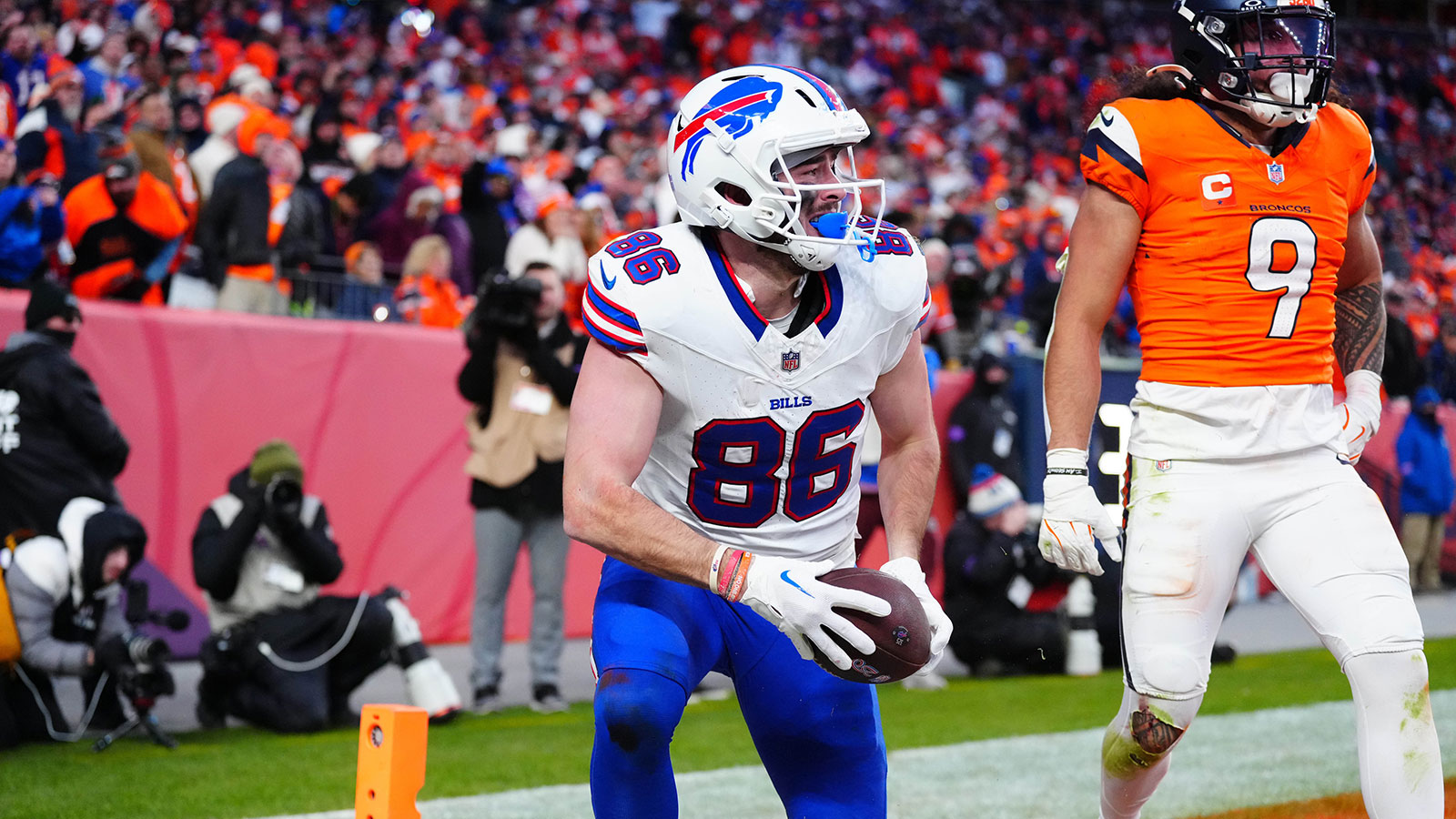
Moore's absence would also reopen the conversation around Dalton Kincaid, who started the season strongly before his involvement declined over the last two games, as he recorded 12 receptions for 225 yards and a touchdown across Weeks 1 and 2 before managing only three catches for 45 yards combined against the Chargers and Patriots. His one-catch, seven-yard performance last Sunday made the reduced role especially difficult for fantasy managers to ignore, even though Buffalo's personnel situation could now force the offense to involve him more often.
Article Continues BelowLos Angeles has been one of the tougher defenses against tight ends this season, so Kincaid should not be treated as an automatic beneficiary simply because targets need to be redistributed, yet the loss of Palmer and potential absence of Moore could give Buffalo another reason to lean on formations that keep him and Dawson Knox on the field together. The Bills used multiple-tight-end packages extensively during their high-scoring opening weeks before moving away from them as the season progressed, and a thinner receiver room could make that personnel grouping useful again instead of asking inexperienced wideouts to absorb every available snap.
That matters for fantasy purposes because Kincaid still carries significantly more upside than most waiver-wire tight ends, even if the matchup lowers his floor, particularly when Allen has already shown a willingness to target him beyond short checkdowns. Managers with another strong option at tight end do not need to force him into the lineup, but Moore being ruled out would make Kincaid easier to justify than his recent target totals suggest.
Knox remains more dependent on touchdowns in deeper formats and should not be treated as a priority addition, while rookie Skyler Bell belongs on fantasy benches despite Buffalo confirming that he will be active for his NFL debut. Bell could absorb some of Palmer's snaps and become relevant later in the season, but expecting immediate fantasy production in his first regular-season appearance on Monday Night Football would be difficult to justify when Coleman and Shakir already have established roles with Allen.
James Cook also is one of Buffalo's safest fantasy starters regardless of Moore's status, and a depleted receiving corps could encourage the Bills to lean even more heavily on an efficient rushing attack averaging 5.1 yards per carry through four games, and he does not need extra receiving volume to remain a must-start, although fewer established wideouts could naturally create a few more checkdowns and screens if Los Angeles consistently pressures Allen.
The biggest complication for fantasy managers is the timing of Moore's Monday night designation, which means anyone planning to start him should have a late-game replacement available instead of waiting until kickoff with no alternative. If Moore is ruled out, Coleman should be the first Buffalo receiver to target, with Shakir close behind in PPR formats, while Kincaid gains enough potential volume to remain a viable tight-end option despite the difficult matchup; Bell belongs on the watch list rather than in starting lineups, and Cook's role remains secure regardless of how the Bills ultimately handle their depleted receiving corps.