
MILWAUKEE -- The Rays couldn’t have asked for a much better start to Game 2 of the World Series.
After a frustrating one-run loss in Game 1 marked by a lack of timely hitting, they jumped out to a four-run lead in the first inning Saturday night thanks to big hits from their biggest hitters and a huge two-run homer from Liam Hicks. Plus, they were about to send Drew Rasmussen to the mound -- and when Rasmussen pitches, the Rays win.
Not this time, though. Not against these indomitable Brewers. Not when their ace finally faltered and an increasingly fallible bullpen couldn’t stop the bleeding.
This time, the Rays were dealt a 5-4 defeat at American Family Field. Two games into the Fall Classic, with the scene shifting to Tropicana Field, they have their backs against the wall and must figure out how to get back in the Series before it’s too late.
“We saw their last series. We know how they play,” reliever Kevin Kelly said. “We didn’t think it was, like, over with or anything like that.”
Halfway through a 33-minute first inning in Game 2, it seemed like it could be. Five batters into the game, the Rays had scored more runs than they did in all of Game 1. The way they’ve pitched all year, scoring four runs is usually enough. They were 75-17 in the regular season, and entered Saturday 4-0 in the postseason, when scoring more than three runs.
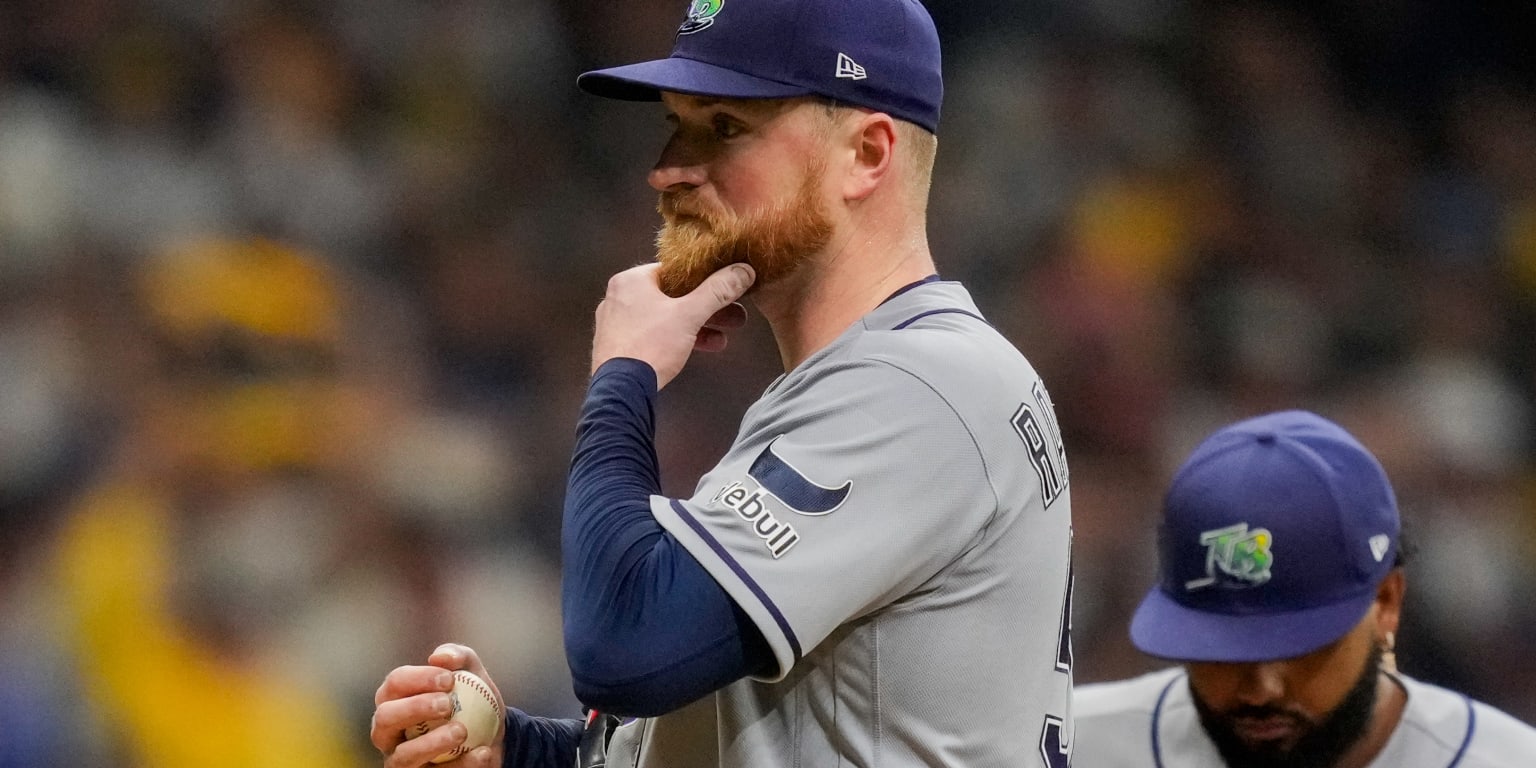
But Milwaukee made Rasmussen seem mortal in his fourth postseason start. He quickly gave back two runs on four hits, all singles, and didn’t get any help from his defense as first baseman Jonathan Aranda dropped a foul pop-up that would have been the second out.
The Brewers capitalized by making Rasmussen throw 29 pitches in the first inning. The right-hander has thrown 196 2/3 innings this year, and he has had only seven that required at least that many pitches. It was the earliest sign he wasn’t quite as dominant as usual, and that became clearer as he threw only 11 first-pitch strikes to the 20 batters he faced.
“Just wasn't as sharp, wasn't as crisp,” manager Kevin Cash said. “They put together a bunch of good at-bats throughout the entirety of the game.”
Indeed, the Brewers made Rasmussen work. They whiffed on only nine of their 45 swings and fouled off 22 of the 89 pitches he threw on the night.
It took 19 pitches for Rasmussen to get through the second and 18 to finish the third, and he couldn’t complete the fourth after a pair of walks and a critical error by Aranda that allowed another run to score. Just like that, the Brewers were within a run, and Rasmussen was out after 3 2/3 innings -- his shortest start since recording only seven outs against the Yankees on July 9.
“They fouled off some really good pitches. They took some really quality pitches,” Rasmussen said. “They just fought, they scrapped, and they put pitches in play.”
Rasmussen left with a lead, but the Brewers’ comeback almost felt inevitable when he exited that early. The Rays reached this point primarily on the strength of the five pitchers who finished the regular season in their starting rotation, and a short start exposed what might be their most glaring weakness, especially compared to the Brewers’ shutdown relief corps.
Left-hander Cam Booser did his job, as he has done all month, recording four outs to keep the Rays’ lead intact heading into the sixth. Then in came lefty Ian Seymour, who has been used often in high-leverage moments the past few weeks after spending most of the season as a starter.
Seymour, too, fell victim to the Brewers’ approach. Sal Frelick fouled off four pitches before sending the ninth pitch of the at-bat out to center for a game-tying homer.
“They executed their game plan of wearing us down. That was that,” Seymour said. “From my point of view, those guys down there [in the bullpen] do a great job. I think just me, personally, I've been the one to not step up. It's more of a me thing than them.”
It’s becoming more of an “everyone” thing, though. Tyler Wells allowed a double and a long flyout to begin the seventh, then Cash turned to Kelly, one of the Rays’ most reliable options all year, looking for a ground ball or a strikeout.
Instead, Cooper Pratt shot a 78.4 mph single to right field to plate the go-ahead run.
“They’re definitely grindy. They’ll keep fouling stuff off until they get their pitch, basically, or a walk,” Kelly said. “They're definitely seeing the ball well and doing a good job with it.”
The Rays never recovered. They haven’t had a ninth-inning lead for closer Bryan Baker to protect. And they haven’t quite figured out a way to contain these never-say-die Brewers.
“We’re gonna have to dig deep, and we’re going to have to compete from here on out,” Rasmussen said. “I think we understand what’s in front of us and what it’s going to take. Obviously, we would like to be in a better situation.”