

The San Francisco 49ers celebrated DeForest Buckner's return with an enthusiastic pregame introduction before their 38-17 victory over the Las Vegas Raiders. This marked Buckner's first game back with the team after returning from the Indianapolis Colts. San Francisco reacquired their former first-round pick in exchange for a 2027 fourth-round selection, adding a seasoned defender to a team with serious Super Bowl aspirations.
The Colts have started to move on without Buckner by signing defensive tackle Adetomiwa Adebawore to a two-year contract worth $35 million. Meanwhile, the 49ers also bolstered their offense by acquiring veteran wide receiver Keenan Allen, making two significant additions before the trade deadline. However, despite these acquisitions, general manager John Lynch left a notable weakness unaddressed. The 49ers are in need of another reliable edge rusher to complement Nick Bosa and Buckner, especially given their ongoing struggles to generate consistent pressure throughout the season.
49ers failed to address their lack of consistent edge pressure
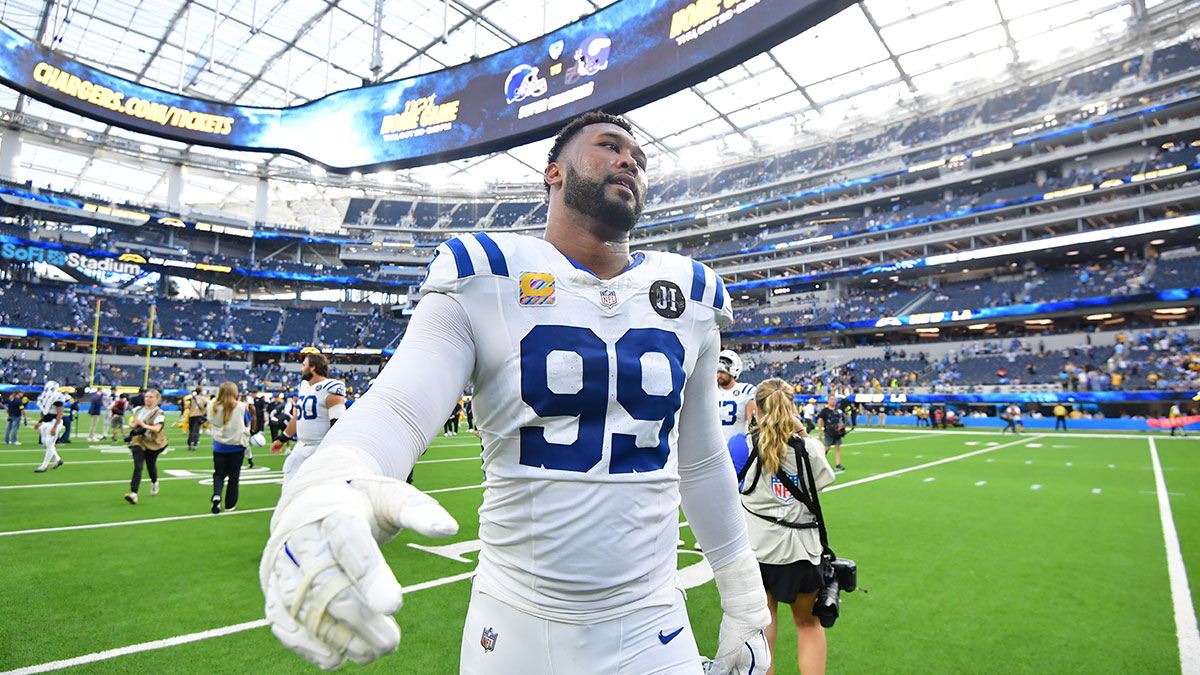
Buckner's arrival gives San Francisco a reliable defensive presence who has proven himself to be one of the more productive interior linemen in the league. During his time with Indianapolis, he recorded 47 sacks and 122 quarterback hits, showcasing his ability to disrupt opposing offenses through physical play and penetration. His presence should complicate things for offensive lines, making it harder for them to focus solely on San Francisco's outside pass rushers, especially when Nick Bosa is on the field, but the 49ers' issues go beyond their defensive tackles, and simply adding another interior defender does not guarantee that the effectiveness of their edge rush will improve.
As of Week 10, San Francisco had recorded only 15 sacks over eight games, which put significant pressure on its secondary to maintain coverage for extended periods. The defense has struggled to finish plays, even when generating initial pressure, allowing quarterbacks opportunities to escape the pocket or find open receivers as they progress through their reads. These concerns were evident in Sunday's victory over Las Vegas, where the 49ers forced five turnovers but failed to register a single sack, and while the defense controlled the game and disrupted the Raiders' passing attack, its inability to take down the quarterback highlighted a significant issue that could become even more problematic against stronger opponents.
For a team aiming to compete deep, relying on turnovers cannot be the primary solution to an inconsistent pass rush. Opponents with disciplined quarterbacks and solid offensive lines will present tougher challenges, making it increasingly important for the defense to generate pressure without relying on additional defensive backs.
Nick Bosa needs reliable support along the defensive line
Bosa's return against Las Vegas was an encouraging development after the veteran missed five games due to a calf injury. His combination of explosiveness, technical skill, and experience provides defensive coordinator Raheem Morris with a proven pass-rushing threat capable of influencing opposing protection schemes. However, there is concern about placing too much responsibility on Bosa immediately after his return from an extended absence. He has faced injuries that have limited his availability over the past two seasons, and San Francisco must manage his workload carefully if they want him to perform at his best during the postseason.
The remaining edge defenders show potential, but none have consistently demonstrated the ability to replace Bosa's production. Rookie Romello Height has recorded 1.5 sacks and has shown encouraging athleticism and effort, but he is still adjusting to the professional level and has dealt with a broken hand that required additional protection during games. Mykel Williams and Keion White bring versatility to the defensive front, allowing Morris to experiment with different alignments based on the situation. Their ability to contribute both inside and outside provides useful flexibility, although versatility does not always translate into reliable pressure against experienced offensive tackles.
A veteran edge specialist could have added additional production on obvious passing downs, allowing younger defenders to develop without having to take on responsibilities they may not be fully prepared for. Such an acquisition would also have eased the physical demands on Bosa, who remains one of the team's most critical defensive players. Maintaining a productive rotation is especially valuable during the final months of the season when injuries and fatigue can significantly impact defensive performance.
While the 49ers did not necessarily need another expensive star, an experienced rotational defender could have addressed a specific weakness without sacrificing the premium draft capital usually associated with major acquisitions. There is no confirmation that a suitable player was available at an acceptable price, making it difficult to pinpoint a specific missed opportunity. Nevertheless, the absence of an additional addition means San Francisco will have to rely on internal improvements from a pass rush that has struggled for much of the season.
San Francisco's championship ambitions demanded greater defensive depth
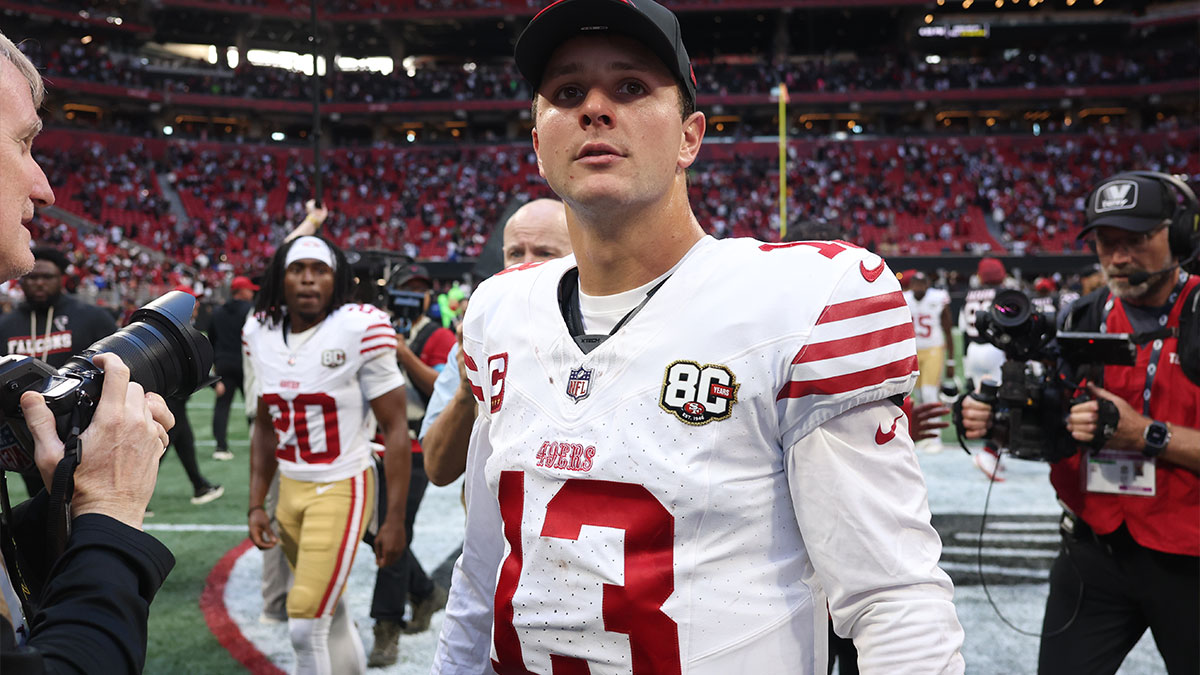
The 49ers entered the second half of the season with a 7-1 record, benefiting from an offense that continues to perform efficiently under head coach Kyle Shanahan. Quarterback Brock Purdy has provided stability, while Christian McCaffrey remains central to the team's ability to create favorable matchups and sustain drives. The acquisition of defensive tackle DeForest Buckner also gives San Francisco an experienced player to support the defense, especially with wide receiver Mike Evans sidelined and Deebo Samuel returning from injury. This transaction demonstrated that General Manager John Lynch recognizes the importance of reinforcing the roster while the team is among the NFC's strongest contenders.
But the decision to leave the edge rotation unchanged is particularly questionable, especially as the defense continues to deal with injuries. Rookie defensive tackle Gracen Halton suffered a fractured and dislocated ankle in a game against Las Vegas, an injury expected to end his season. Although San Francisco still has options in the interior with Sebastian Valdez and James Thompson Jr., and C.J. West is working toward returning from a knee injury, their presence does not directly address the lack of established outside pressure.
The secondary has also faced uncertainty, with Renardo Green and Deommodore Lenoir dealing with injuries that could complicate defensive assignments for coordinator Steve Wilks. When cornerbacks are unavailable or not at full strength, generating pressure becomes even more crucial because opposing quarterbacks can exploit coverage weaknesses if they have enough time.
Buckner's arrival should improve San Francisco's ability to collapse the pocket, particularly when paired with pass rusher Nick Bosa. However, successful postseason defenses generally need multiple contributors capable of disrupting passing plays. This prevents opponents from neutralizing their most dangerous rushers through double teams and protection adjustments.
For a franchise with realistic Super Bowl aspirations, leaving this defensive concern unresolved stands as its biggest mistake at the 2026 NFL trade deadline.