
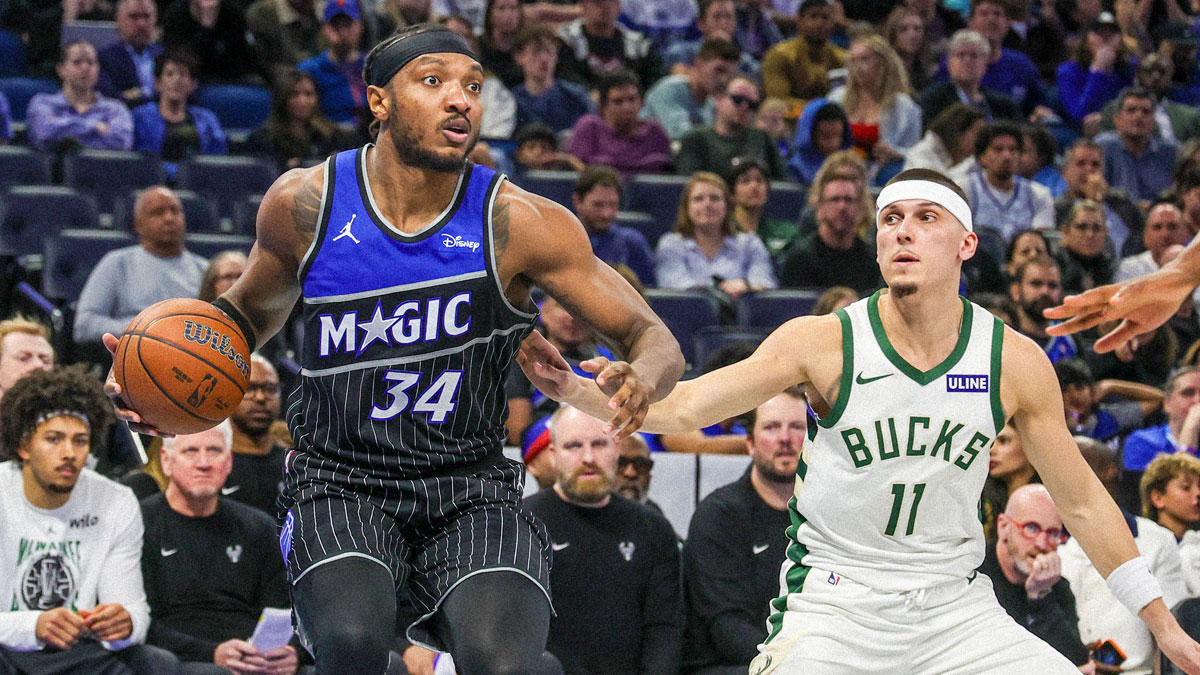
Despite losing superstar guard Anthony Edwards to arthroscopic right knee surgery four games into the 2026-27 season, the Minnesota Timberwolves have shocked the Western Conference by racing out to an 11-4 start. Powered by an elite fourth-ranked defense and strong backcourt play from offseason addition LaMelo Ball and Ayo Dosunmu, Chris Finch’s squad has proven it can survive without its franchise cornerstone. Still, with Edwards admitting he has no firm timetable for his return and Donte DiVincenzo sidelined until spring while recovering from Achilles surgery, Minnesota’s frontcourt depth behind 34-year-old center Rudy Gobert remains dangerously thin.
If president Tim Connelly wants to keep Minnesota near the top of the West until Edwards returns, and solidify a true championship rotation for April, he should strike early and target Orlando Magic big man Wendell Carter Jr.
The Proposed Deal
Minnesota Timberwolves receive:
- Wendell Carter Jr.
Orlando Magic receive:
- Donte DiVincenzo
- Bones Hyland
- Trey Lyles
- 2032 first-round pick swap
Why Wendell Carter Jr. Elevates Minnesota’s Ceiling
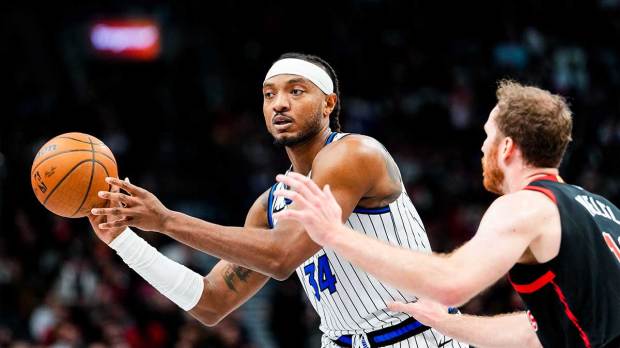
Right now, Minnesota relies heavily on rookie Joan Beringer and veteran Trey Lyles to spell Gobert and fill minutes alongside Jaden McDaniels and Jonathan Kuminga. While that group has held up in November, postseason basketball demands a reliable, physical two-way big who can both anchor the paint and stretch the floor.
Carter Jr. checks every box. Through 14 appearances this season, the 27-year-old center is averaging 13.4 points and 8.8 rebounds per game while shooting an impressive 56.4 percent from the field and 40.5 percent from three-point range. Unlike Gobert, whose offensive game is restricted to the dunker spot, Carter Jr. gives Ball, Dosunmu, and eventually Edwards a legitimate pick-and-pop threat who clears driving lanes and punishes switches. Defensively, he is strong enough to bang with Western Conference bruisers like Nikola Jokic and Alperen Sengun while offering switchability on the perimeter.
Article Continues BelowWhy the Deal Makes Sense for Both Front Offices
Because the Timberwolves sit below the league’s second tax apron, they are permitted to combine multiple contracts in a trade, allowing Minnesota to package DiVincenzo ($12.5 million), Hyland ($2.8 million), and Lyles ($2.4 million) to match Carter Jr.’s $18.1 million salary while trimming slightly below the first apron and keeping roster minimums intact. Meanwhile, offering a 2032 first-round pick swap gives Orlando upside, since Minnesota’s 2031 first-rounder is already spoken for.
For Orlando, moving Carter Jr. makes practical sense. With Nikola Vucevic in town on a one-year deal and Goga Bitadze capable of handling backup minutes, the Magic can cash in on Carter Jr.’s hot start to address a glaring perimeter need. DiVincenzo gives Orlando an elite high-volume shooter once healthy, while Hyland and Lyles provide immediate bench depth on expiring contracts to clear future cap flexibility.
Minnesota’s 11-4 start has bought the front office breathing room, not an excuse to wait. Landing Carter Jr. early bridges the gap until Edwards returns and gives the Timberwolves the frontcourt versatility required to win a championship.